Android Auto's Major Overhaul: Google Unveils a Smarter, More Immersive In-Car Experience
Google is set to revolutionize the in-car experience with a significant update to Android Auto, introducing a more personalized design, interactive widgets, and enhanced navigation. This overhaul aims to make driving safer and more intuitive by integrating advanced AI capabilities and a visually richer interface. Drivers can anticipate a seamless blend of entertainment, communication, and navigation, all designed to adapt to their individual needs.
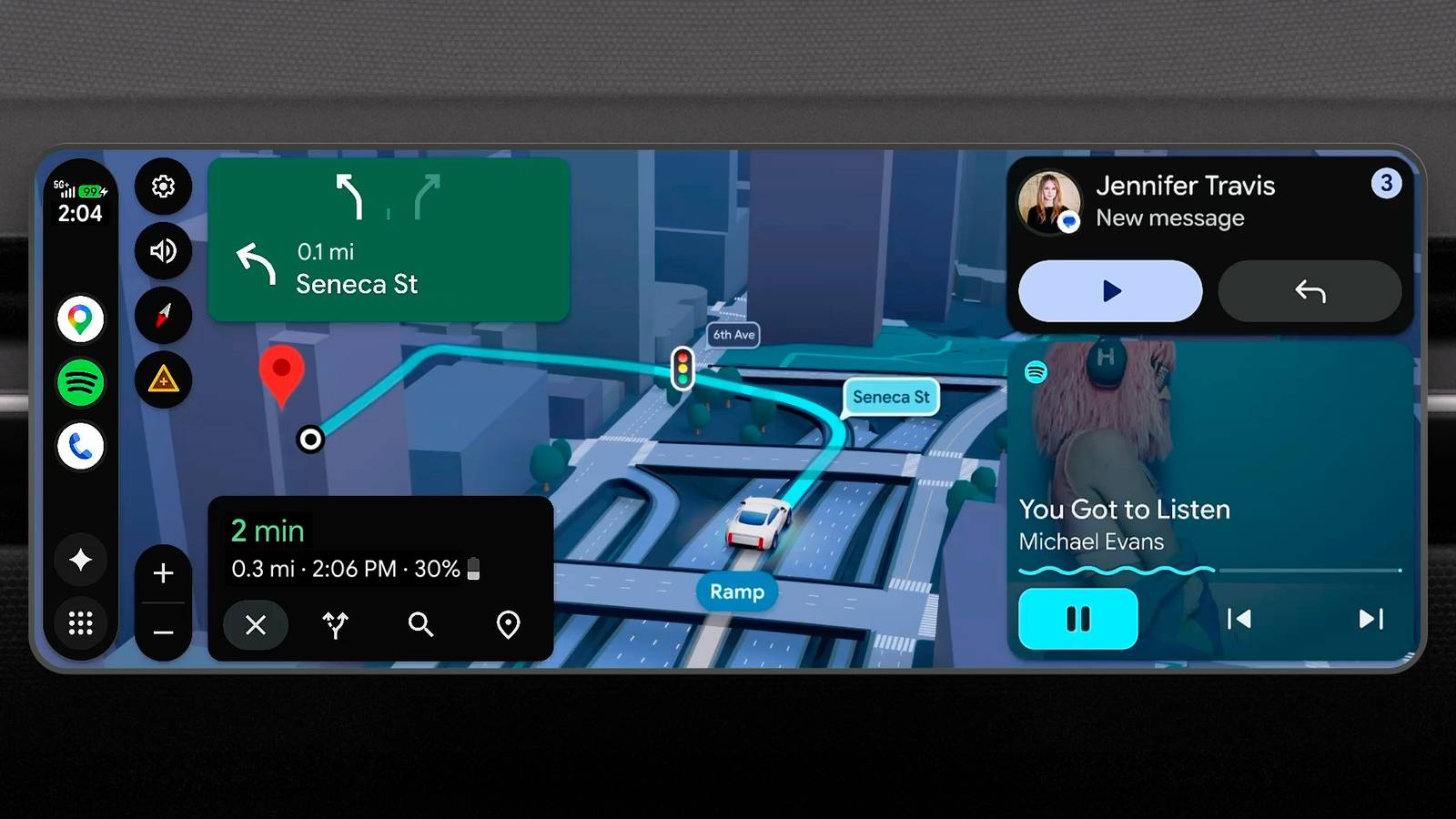
The digital dashboard of our vehicles is no longer just a display for speed and fuel; it's rapidly evolving into a sophisticated command center, and Google is leading the charge with a monumental refresh of Android Auto. Far from a mere cosmetic update, this ambitious overhaul promises to transform the driving experience, making it more intuitive, personalized, and, crucially, safer. As vehicles become increasingly connected, the tech giant is positioning Android Auto not just as an infotainment system, but as an indispensable co-pilot, seamlessly integrating our digital lives with the road ahead.
For years, Android Auto has served as a bridge between our smartphones and car dashboards, offering access to navigation, music, and messaging. However, its interface, while functional, often felt somewhat utilitarian. This new iteration, however, signals a profound shift in philosophy. Google is moving towards an immersive, intelligent platform that anticipates driver needs, reduces distractions, and provides richer, more contextual information at a glance. This strategic pivot reflects a broader industry trend where software is becoming as critical as hardware in defining the automotive experience.
The Dawn of Dynamic Dashboards: Widgets and Personalization
The most immediately noticeable changes in the new Android Auto experience revolve around personalization and dynamic content. Gone are the days of static layouts; users can now expect a dashboard that adapts to their preferences and current driving context. A key feature in this transformation is the introduction of widgets. These customizable mini-applications will allow drivers to access crucial information—such as weather updates, calendar appointments, or quick controls for smart home devices—without needing to delve into separate apps. Imagine glancing at your dashboard and seeing your next turn, the estimated arrival time, and a quick toggle for your garage door, all neatly arranged and easily accessible. This level of customization is not just about convenience; it's about reducing cognitive load and keeping the driver's eyes on the road.
Furthermore, Google is emphasizing a more cohesive design language. The new interface promises a cleaner aesthetic, with improved readability and a more natural flow between different functionalities. This design philosophy extends to how Android Auto integrates with various vehicle types and screen sizes, ensuring a consistent and optimized experience whether you're in a compact sedan or a large SUV. The goal is to create an environment where the technology fades into the background, allowing the driver to focus on the primary task of driving while still having essential information readily available.
Navigation Reimagined: 3D Views and Immersive Guidance
Navigation has always been a cornerstone of Android Auto, but the upcoming updates elevate it to an entirely new level. Google Maps is receiving a significant upgrade, introducing 3D views with detailed renderings of buildings, lanes, traffic lights, and even stop signs. This isn't just about visual flair; it's a critical enhancement for clarity and safety. Navigating complex intersections or unfamiliar cities can be daunting, but with a more realistic representation of the environment, drivers can better anticipate turns, understand lane requirements, and react more effectively to traffic signals. This level of detail reduces ambiguity and helps prevent missed exits or sudden lane changes, which are common sources of road incidents.
Beyond static 3D models, Google is also touting immersive navigation. This suggests a more dynamic and interactive mapping experience, potentially incorporating augmented reality elements or more sophisticated real-time traffic flow visualizations. The integration of Gemini car features further hints at an AI-powered co-pilot that can offer proactive suggestions, optimize routes based on real-time conditions, and even learn driver preferences over time. For instance, if you frequently stop for coffee on your morning commute, Gemini might suggest your favorite café en route, taking into account current traffic. This proactive assistance moves beyond simple turn-by-turn directions to a truly intelligent guidance system.
The Power of AI: Gemini and a Smarter Co-pilot
The underlying engine driving much of this innovation is Google's Gemini AI. While specific details about its full integration into Android Auto are still emerging, the implications are vast. Gemini is designed to be multimodal, meaning it can process and understand various types of information—text, images, audio, and more—to provide more relevant and contextual responses. In the car, this could translate to a voice assistant that understands complex commands, anticipates needs, and offers personalized recommendations without requiring explicit prompts.
Consider a scenario where you're driving to a new restaurant. Gemini could not only provide directions but also suggest parking options, display the menu, or even make a reservation, all through natural voice commands. This level of integration moves beyond simple task execution to a more conversational and intelligent interaction. Furthermore, Gemini's ability to learn from user behavior means that over time, Android Auto could become an even more personalized and predictive companion, tailoring its suggestions and interface elements to individual driving habits and preferences. This represents a significant leap from current voice assistants, which often struggle with context and multi-step requests.
Security, Privacy, and the Road Ahead
As with any significant technological advancement, concerns around security and privacy are paramount. Google has a strong track record in these areas, and it's expected that the new Android Auto will incorporate robust measures to protect user data and ensure secure interactions. The increasing reliance on cloud-based services and AI means that data encryption, secure authentication, and transparent privacy policies will be crucial for user adoption and trust. Drivers need assurance that their personal information, location data, and driving habits are protected from unauthorized access.
Looking ahead, the evolution of Android Auto is intrinsically linked to the broader future of automotive technology. As electric vehicles become more prevalent and autonomous driving capabilities advance, the in-car digital experience will only grow in importance. Google's vision for Android Auto is not just about enhancing current vehicles but also about laying the groundwork for the cars of tomorrow. This includes potential integrations with vehicle diagnostics, advanced driver-assistance systems (ADAS), and even vehicle-to-everything (V2X) communication, which could allow cars to communicate with infrastructure and other vehicles for enhanced safety and efficiency. The journey from a simple phone mirroring system to a fully intelligent, integrated automotive platform is well underway, promising a future where our cars are not just modes of transport, but truly smart, connected spaces.
Stay Informed
Get the world's most important stories delivered to your inbox.
No spam, unsubscribe anytime.
Comments
No comments yet. Be the first to share your thoughts!