Apple Maps Poised for Ad Integration with iOS 26.5 Beta, Raising Privacy Questions
Apple is moving closer to integrating advertisements into its Apple Maps application, as evidenced by new features in the iOS 26.5 Beta 2. This development signals a significant shift in Apple's strategy, aiming to monetize its mapping service through location-based and search-driven ads, while also sparking discussions around user privacy and the future of ad-supported services on the platform.
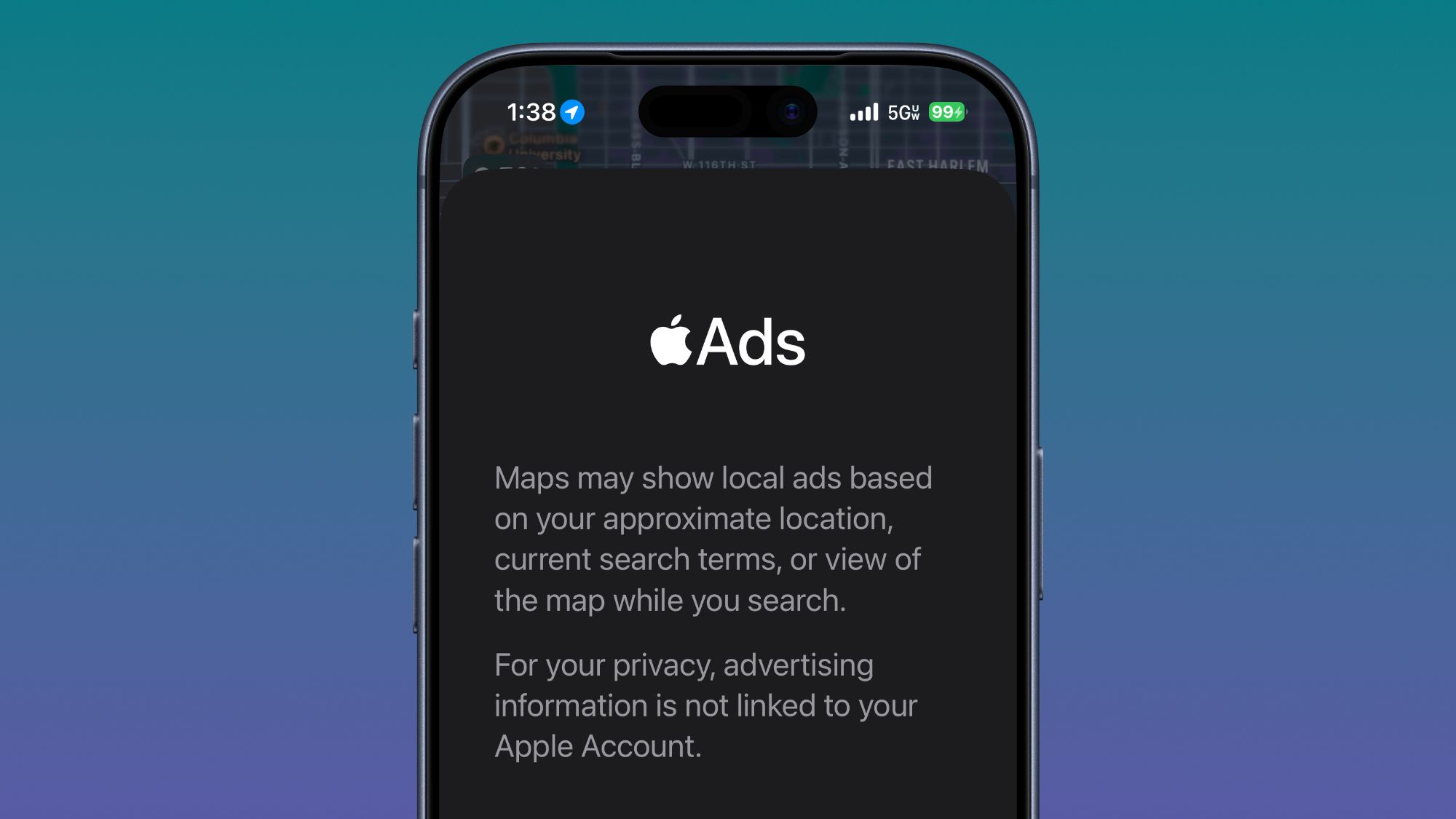
Cupertino, CA – Apple, a company long lauded for its commitment to user privacy, appears to be taking a decisive step towards monetizing one of its core services: Apple Maps. With the release of the second beta of iOS 26.5, developers and keen observers have noted significant preparations for the introduction of advertisements within the mapping application, a move that could redefine the user experience and spark renewed debate over data privacy.
The most prominent indicator of this impending shift is a new splash screen appearing in the Apple Maps app within the iOS 26.5 Beta 2. This screen explicitly informs users that ads will be displayed based on several criteria: approximate location, current search terms, or a user's view of the map when conducting a search. Furthermore, the "Suggested Places" section, a feature introduced in the first beta, is also slated to host these new advertisements. This multi-pronged approach suggests a comprehensive strategy to integrate sponsored content seamlessly into the navigation and discovery experience.
For years, Apple has maintained a relatively ad-free environment across many of its first-party applications, especially when compared to rivals like Google, whose mapping service has long incorporated advertising. This distinction has often been a selling point for Apple, reinforcing its image as a premium, privacy-centric brand. The decision to introduce ads into Apple Maps, therefore, represents a notable departure from this established philosophy, hinting at a broader strategic pivot towards new revenue streams.
Industry analysts believe this move is a natural evolution for a tech giant constantly seeking to diversify its income beyond hardware sales. Services, including App Store commissions, Apple Music, and iCloud, have become increasingly vital to Apple's financial health. Integrating ads into Maps could unlock a substantial new revenue stream, particularly given the high value of location-based advertising for local businesses and retailers.
However, the introduction of ads, especially those tied to location and search data, inevitably raises questions about user privacy. While Apple is expected to implement these features with its customary emphasis on privacy-preserving technologies – perhaps utilizing on-device processing to anonymize data or provide users with granular control over ad personalization settings – the very presence of ads will likely prompt scrutiny. Users will be keen to understand the extent to which their mapping activity influences the ads they see and what controls they have over this data.
The company's challenge will be to balance its revenue ambitions with its long-standing privacy principles. How Apple communicates these changes, and the transparency it offers regarding data usage for advertising, will be crucial in maintaining user trust. The coming months, leading up to the official release of iOS 26.5, will undoubtedly see intense discussion and analysis of this significant development, as Apple navigates the complex intersection of monetization and user expectation in the digital age.