ASEAN's Energy Crucible: Navigating Sovereignty, Security, and a Sustainable Future Amidst Global Strife
The recent ASEAN Summit highlighted a critical paradox: while member states possess diverse energy resources, their interconnectedness is vital for regional stability. With global supply chains disrupted, Southeast Asia faces the urgent task of balancing national sovereignty with collective energy security and a sustainable transition. This article explores how ASEAN is forging a path towards a resilient, green energy future, overcoming geopolitical challenges and internal complexities.
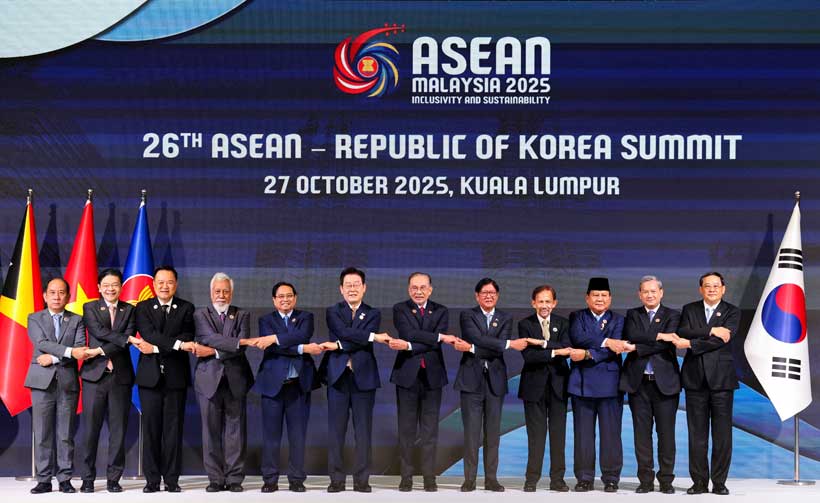
The Association of Southeast Asian Nations (ASEAN) Summit, which convened in the Philippines on May 7, 2026, placed energy security squarely at the forefront of the regional agenda. Against a backdrop of persistent disruptions to oil flows through the Strait of Hormuz, a consequence of the ongoing Iran war, leaders confronted a stark reality: the region's energy future, and indeed its stability, hinges on a delicate balance between national sovereignty and collective action. This summit, far from being a mere diplomatic formality, served as a crucible for defining ASEAN's strategic response to a world grappling with geopolitical volatility and the inexorable march of climate change.
Southeast Asia, a vibrant economic bloc of over 670 million people, is a mosaic of energy producers and consumers. Brunei's oil, Myanmar's gas, and Indonesia's coal are vital commodities that frequently traverse national borders, underscoring a fundamental truth: energy reserves and demand centers rarely align perfectly within sovereign territories. This inherent geographical disparity creates what experts term the "Sovereignty Paradox" – individual nations hold dominion over their resources, yet their energy security is inextricably linked to the free flow and equitable distribution across the region. The challenge for ASEAN is to transform this paradox from a potential point of friction into a catalyst for deeper integration and shared prosperity.
The Geopolitical Imperative: A Region Under Pressure
The current global energy landscape is defined by instability. The conflict in the Middle East has not only threatened the world's most critical oil chokepoint but has also sent ripple effects through global supply chains, driving up prices and exacerbating inflationary pressures. For ASEAN nations, many of whom are net energy importers, this translates into higher costs of living, reduced industrial competitiveness, and increased vulnerability to external shocks. The urgency to diversify energy sources and strengthen regional energy grids has never been more pronounced.
Historically, ASEAN's approach to energy cooperation has been characterized by a blend of bilateral agreements and multilateral initiatives, such as the ASEAN Power Grid (APG) and the Trans-ASEAN Gas Pipeline (TAGP). While these projects have laid foundational infrastructure, their full potential has often been hampered by nationalistic tendencies, differing regulatory frameworks, and a lack of harmonized investment policies. The 2026 summit aimed to inject new impetus into these initiatives, recognizing that a fragmented approach is no longer tenable in the face of escalating global threats.
Furthermore, the geopolitical competition between major global powers, particularly the United States and China, casts a long shadow over Southeast Asia. Both powers vie for influence, often through infrastructure development and energy investments. ASEAN's ability to maintain its strategic autonomy while leveraging external partnerships for its energy transition is a critical diplomatic tightrope walk. The region's leaders are acutely aware that energy independence, or at least resilience, is a cornerstone of true sovereignty.
The Dual Challenge: Security and Sustainability
Beyond immediate supply concerns, ASEAN faces the monumental task of transitioning towards a sustainable energy future. Many member states are highly reliant on fossil fuels – coal, in particular, remains a dominant power source for rapidly industrializing economies like Indonesia and Vietnam. The commitment to the Paris Agreement and the growing global pressure for decarbonization necessitate a rapid shift towards renewables, including solar, wind, hydropower, and geothermal energy.
This transition presents a dual challenge: ensuring energy security during the shift while simultaneously meeting ambitious climate targets. It requires massive investment in renewable energy infrastructure, smart grids, and energy storage solutions. It also demands a fundamental rethinking of energy policy, moving away from a fossil fuel-centric model to one that prioritizes clean, distributed, and resilient energy systems. For instance, the Philippines, hosting the summit, has significant geothermal potential, while Vietnam and Thailand are rapidly expanding their solar and wind capacities. The key lies in regional cooperation to share best practices, pool resources, and create a unified market for green energy technologies.
Key initiatives and considerations for this transition include: * ASEAN Power Grid (APG) Expansion: Accelerating the development of cross-border electricity interconnections to facilitate renewable energy sharing and enhance grid stability. This could allow countries with surplus solar or hydro power to export to neighbors with deficits, optimizing resource utilization. * Trans-ASEAN Gas Pipeline (TAGP) Modernization: While natural gas is a fossil fuel, it is considered a bridge fuel in the transition away from coal. Modernizing and expanding the TAGP can enhance regional energy security in the short to medium term. * Renewable Energy Targets: Harmonizing and strengthening national renewable energy targets and developing regional mechanisms to track progress and facilitate technology transfer. * Carbon Pricing and Markets: Exploring regional carbon pricing mechanisms or emissions trading schemes to incentivize decarbonization and attract green investments. * Energy Efficiency: Implementing region-wide standards and policies to improve energy efficiency across all sectors, reducing overall demand.
Forging a Path Forward: Regional Integration and Innovation
The 2026 ASEAN Summit underscored a renewed commitment to regional integration as the primary mechanism for overcoming the energy paradox. Leaders discussed concrete steps to enhance the ASEAN Plan of Action for Energy Cooperation (APAEC), focusing on strengthening energy infrastructure, promoting clean energy technologies, and fostering a more integrated energy market. The emphasis was on creating a regulatory environment that encourages cross-border investment and facilitates the seamless flow of energy, much like the free movement of goods and capital envisioned by the ASEAN Economic Community.
Innovation will be paramount. The region is ripe for the adoption of emerging energy technologies, from advanced battery storage to small modular reactors (SMRs) and green hydrogen production. Singapore, for example, is investing heavily in hydrogen research and import infrastructure, while Indonesia is exploring carbon capture utilization and storage (CCUS) for its vast coal reserves, albeit as a transitional measure. The challenge is to scale these innovations rapidly and equitably across all member states, ensuring that no country is left behind in the energy transition.
Furthermore, financing remains a significant hurdle. The estimated investment required for ASEAN to achieve its renewable energy targets runs into trillions of dollars. Attracting both public and private capital, including foreign direct investment and green bonds, will be crucial. This necessitates transparent governance, predictable regulatory frameworks, and robust project pipelines that can instill confidence in investors.
The Road Ahead: A Collective Destiny
The path forward for ASEAN is complex, but the stakes are too high for inaction. The "Sovereignty Paradox" is not merely an academic concept; it is a lived reality for millions whose livelihoods depend on stable and affordable energy. The 2026 summit served as a powerful reminder that while individual nations possess sovereign rights over their resources, their collective destiny is intertwined.
By fostering deeper regional cooperation, embracing innovative technologies, and strategically navigating geopolitical currents, ASEAN can transform its energy challenges into opportunities. The vision is clear: a resilient, sustainable, and interconnected energy community that not only powers its own growth but also contributes significantly to global efforts against climate change. The success of this endeavor will not only secure the region's energy future but also solidify ASEAN's role as a proactive and influential bloc on the world stage, demonstrating that unity in diversity is indeed its greatest strength in the face of a rapidly changing world. The journey will be arduous, but the commitment forged in the Philippines suggests a collective will to prevail.
Stay Informed
Get the world's most important stories delivered to your inbox.
No spam, unsubscribe anytime.
Comments
No comments yet. Be the first to share your thoughts!