Baltic Skies: US Army Tests Stratospheric Balloons for Multi-Domain Command in Europe
In a significant leap for modern warfare, U.S. Army Soldiers from Multi-Domain Command – Europe recently launched Micro High-Altitude Balloons (MHABs) from Sweden. These tests, integrated into multinational exercises Sword 26 and Aurora, aim to enhance battlefield awareness and communication capabilities across vast distances. The initiative underscores a strategic shift towards leveraging the stratosphere for intelligence, surveillance, and reconnaissance (ISR) and data relay, marking a new era in European defense cooperation and technological integration.
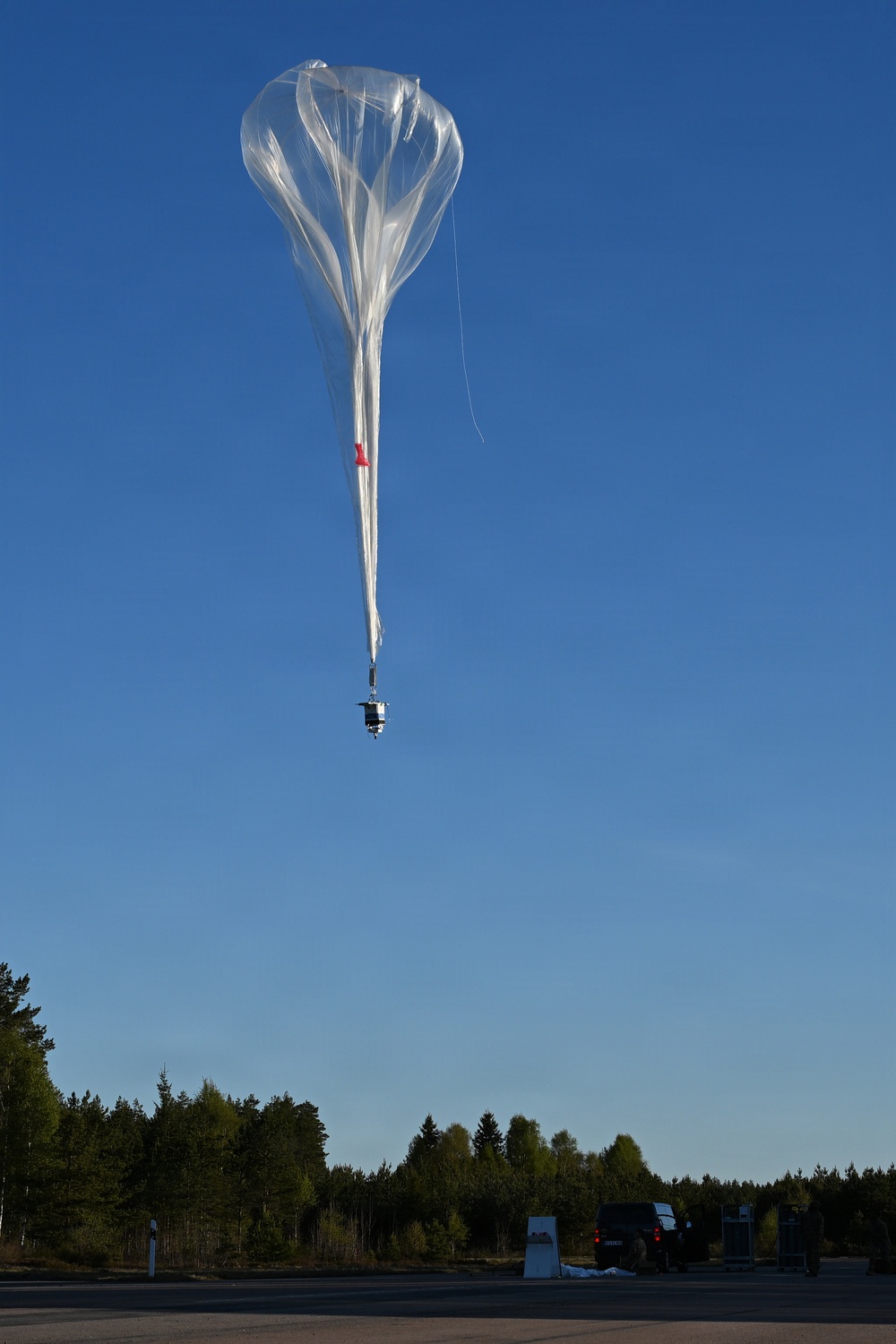
The serene skies above the Baltic Sea, long a stage for geopolitical maneuvering, are now witnessing a quiet revolution in military technology. On May 9, 2026, U.S. Army Soldiers assigned to Multi-Domain Command – Europe (MDC-E) embarked on a series of groundbreaking Micro High-Altitude Balloon (MHAB) launches from Sweden. This wasn't merely a routine exercise; it was a pivotal moment in multinational training, intricately tied to the larger Sword 26 and Swedish exercise Aurora, signaling a profound evolution in how allied forces perceive and utilize the stratospheric layer for defense and intelligence.
The Dawn of Stratospheric Warfare: MHABs Explained
Micro High-Altitude Balloons, or MHABs, represent a fascinating intersection of simplicity and sophistication. Unlike their larger, more complex counterparts used for scientific research or weather forecasting, these balloons are designed for rapid deployment, cost-effectiveness, and versatility in military applications. Operating in the stratosphere, typically at altitudes between 60,000 and 90,000 feet (18 to 27 kilometers), MHABs exist in a unique 'near-space' environment, above commercial air traffic but below traditional satellites. This strategic positioning offers several distinct advantages:
* Persistent Surveillance: MHABs can loiter over target areas for extended periods, providing continuous intelligence, surveillance, and reconnaissance (ISR) capabilities that satellites might miss due to orbital mechanics. * Enhanced Communication Relay: They can act as ad-hoc communication nodes, extending network reach in areas with degraded or non-existent infrastructure, crucial for multi-domain operations. * Cost-Effectiveness: Compared to launching and maintaining satellites or deploying manned aircraft for similar missions, MHABs offer a significantly more economical alternative. * Flexibility and Rapid Deployment: Their relatively small size and simple launch requirements allow for quick deployment from various locations, including austere environments.
The recent launches from Sweden are a testament to the U.S. Army's commitment to exploring and integrating these nascent technologies into its operational doctrine. The data gathered from these tests will be instrumental in refining MHAB capabilities, understanding their operational limits, and integrating them seamlessly into existing command and control structures.
Multi-Domain Command – Europe: A New Paradigm for Defense
The involvement of Multi-Domain Command – Europe (MDC-E) in these exercises is particularly significant. MDC-E is at the forefront of developing and implementing the Multi-Domain Operations (MDO) concept, a revolutionary approach to warfare that seeks to integrate capabilities across all domains – land, sea, air, space, and cyber – to achieve synergistic effects against adversaries. The core idea behind MDO is to present multiple dilemmas to an opponent, overwhelming their decision-making cycles and denying them sanctuary in any single domain.
For MDC-E, MHABs are not just another piece of equipment; they are a critical enabler for MDO. By providing persistent ISR, secure communication links, and potentially even targeting data from the stratosphere, MHABs can bridge gaps between traditional domains, enhancing the overall effectiveness of joint and combined forces. This is especially pertinent in the complex European theater, characterized by diverse geographies, dense populations, and the need for seamless interoperability among NATO allies and partners.
Major General Joerg See, the commander of MDC-E, has often emphasized the importance of innovation and adaptability. “Our adversaries are constantly evolving,” he stated in a recent address, “and we must stay ahead by embracing new technologies and integrating them into a cohesive, multi-domain fighting force.” The MHAB tests are a direct manifestation of this philosophy, pushing the boundaries of what's possible in modern military strategy.
Sweden and the Baltic: A Strategic Nexus
The choice of Sweden as the launch location for these stratospheric balloons is highly strategic. Sweden, having recently joined NATO, brings significant geographical and technological advantages to the alliance. Its long coastline along the Baltic Sea and its proximity to key strategic areas make it an ideal location for exercises that simulate real-world scenarios. The Baltic Sea region has become an increasingly critical area for NATO, given its geopolitical sensitivities and the heightened military activity in recent years.
Exercises Sword 26 and Aurora, in which these MHAB launches were embedded, are large-scale multinational drills designed to test the readiness and interoperability of allied forces. Sword 26, a NATO-led exercise, focuses on collective defense and crisis response, often involving thousands of personnel and a wide array of military assets. Aurora, Sweden's largest national exercise in decades, simulates a high-intensity conflict scenario, testing the nation's total defense capabilities, from military operations to civilian resilience.
The integration of MHABs into these exercises demonstrates a forward-thinking approach to defense planning. It allows for the realistic assessment of how these new assets perform under operational stress, how they integrate with existing command structures, and how they contribute to the overall picture of the battlefield. This collaboration not only strengthens military ties but also enhances the collective security posture of the region.
Implications for Future Warfare and European Security
The successful testing and potential integration of MHABs into European defense strategies carry profound implications:
* Enhanced Situational Awareness: Allied forces will gain an unprecedented level of persistent, real-time intelligence over vast areas, allowing for quicker decision-making and more effective responses to threats. * Resilience in Contested Environments: In scenarios where satellite communications or GPS might be jammed or degraded, MHABs offer a resilient alternative for data relay and navigation support. * Asymmetric Advantage: For relatively low cost, MHABs can provide capabilities traditionally associated with much more expensive and complex platforms, offering an asymmetric advantage against potential adversaries. * Deepening Interoperability: The shared development and deployment of such technologies foster deeper interoperability and trust among allied nations, creating a more cohesive defense network.
However, challenges remain. These include developing robust data security protocols for information transmitted via MHABs, ensuring their survivability in contested airspace, and establishing clear operational doctrines for their use across different national forces. The legal and ethical frameworks for persistent surveillance from near-space also require careful consideration.
Looking ahead, the skies above Europe are becoming an increasingly vital domain for military operations. The MHAB tests conducted by MDC-E in Sweden are not just about balloons; they are about pioneering a new frontier in defense, demonstrating a proactive approach to security in a rapidly changing world. As the multi-domain concept matures, these stratospheric assets will undoubtedly play a crucial role in shaping the future of European security, ensuring that allied forces maintain their technological edge and their ability to deter aggression. The silent sentinels of the stratosphere are poised to become indispensable eyes and ears in the complex tapestry of modern warfare, heralding an era where the sky is no longer the limit, but a new battleground for peace and security.
Stay Informed
Get the world's most important stories delivered to your inbox.
No spam, unsubscribe anytime.
Comments
No comments yet. Be the first to share your thoughts!