Beyond Sight: How Advanced Robotic Vision is Redefining Automation and Industry
The era of static robots is over. Today's industrial and service robots demand sophisticated vision systems to navigate complex environments, perform intricate tasks, and interact dynamically. This article explores the groundbreaking advancements in robotic vision, from enhanced perception to integrated AI, and how companies like GMSL are driving this technological revolution, paving the way for unprecedented levels of automation and efficiency across diverse sectors.
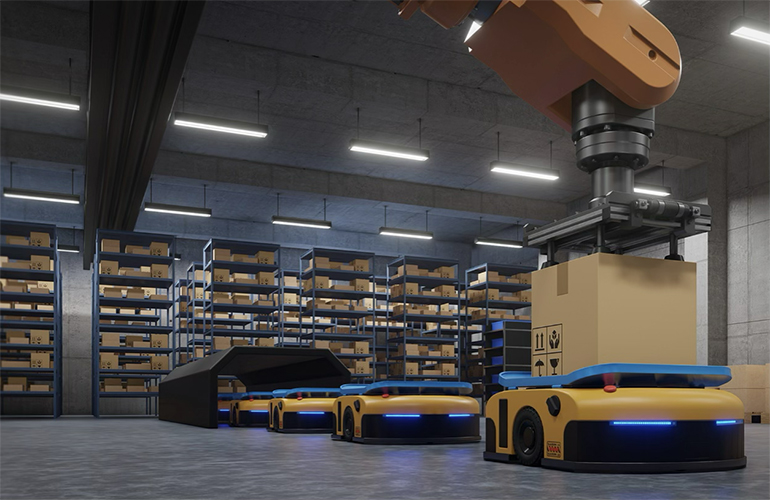
The industrial landscape is undergoing a profound transformation, driven by a new generation of robots that do more than just move from point A to point B. The simple, repetitive tasks that once defined automation are giving way to complex operations requiring nuanced perception and intelligent decision-making. At the heart of this evolution lies robotic vision, a field that has matured from basic object detection to sophisticated environmental understanding, enabling machines to 'see' and interpret their surroundings with unprecedented clarity and speed.
Just a few years ago, the primary concern for many site owners was merely the robot's ability to execute a pre-programmed path. Today, the demands are exponentially higher. Robots are expected to operate faster, navigate dynamic spaces, handle delicate items, and even collaborate with human counterparts. This paradigm shift necessitates a robust and adaptable visual intelligence, moving beyond mere sensing to true comprehension. The implications are vast, impacting manufacturing, logistics, healthcare, agriculture, and beyond, promising not just efficiency gains but entirely new possibilities for automation.
The Evolution of Robotic Perception: From Pixels to Intelligence
The journey of robotic vision mirrors the rapid advancements in computing power and artificial intelligence. Early systems were rudimentary, often relying on 2D cameras and simple algorithms for tasks like barcode reading or part inspection on a conveyor belt. Their limitations were clear: they struggled with variations in lighting, object orientation, and cluttered environments. The world, as seen by these robots, was flat and predictable.
The advent of 3D vision marked a significant leap forward. Technologies like structured light, stereo vision, and Time-of-Flight (ToF) cameras allowed robots to perceive depth, enabling them to grasp objects, avoid obstacles in three dimensions, and perform more precise manipulation. This was crucial for tasks like bin picking, where robots needed to identify and extract specific items from a jumbled container. However, even 3D vision, in its initial forms, often required carefully controlled environments and extensive pre-programming.
The true revolution began with the integration of Artificial Intelligence (AI), particularly Machine Learning (ML) and Deep Learning (DL). These powerful computational models allow robots to learn from vast datasets, recognize patterns, and make intelligent inferences. Instead of being explicitly programmed for every scenario, a deep learning model can be trained to identify objects regardless of their orientation, lighting, or partial occlusion. This has unlocked capabilities such as:
* Advanced Object Recognition: Identifying and classifying thousands of different objects with high accuracy. * Semantic Segmentation: Understanding the role of different parts of an image (e.g., distinguishing a road from a sidewalk). * Pose Estimation: Determining the precise position and orientation of objects or even human body parts. * Scene Understanding: Interpreting the overall context of an environment, crucial for autonomous navigation and human-robot interaction.
This AI-driven vision is not just about seeing; it's about understanding and predicting, allowing robots to adapt to unforeseen circumstances and operate in unstructured environments that were once the exclusive domain of human workers.
GMSL: Powering the Next Generation of Vision Systems
Companies like GMSL (Global Manufacturing Solutions Ltd.) are at the forefront of developing the specialized hardware and software necessary for these advanced robotic vision systems. Their expertise lies in creating robust, high-performance computing platforms that can handle the immense data streams generated by multiple high-resolution cameras and process complex AI algorithms in real-time. This is not a trivial task; it requires a blend of high-speed data acquisition, powerful processing units (often including GPUs for parallel computation), and efficient software architectures.
GMSL's role extends beyond just providing components; they are enabling an entire ecosystem. They understand that a robot's vision system is not a standalone module but an integral part of a larger, interconnected system. This involves:
* High-Bandwidth Data Transfer: Ensuring that image data from multiple sensors can be transmitted quickly and reliably to the processing unit. * Edge Computing Capabilities: Performing initial data processing close to the sensors to reduce latency and bandwidth requirements. * Ruggedized Hardware: Designing systems that can withstand harsh industrial environments, including vibrations, extreme temperatures, and dust. * Scalable Architectures: Providing solutions that can be adapted for various applications, from small collaborative robots to large autonomous guided vehicles (AGVs).
Their contributions are critical for industries demanding precision and reliability. For instance, in manufacturing, GMSL's solutions might power robots performing intricate assembly tasks, quality control inspections, or even delicate handling of semiconductor wafers. In logistics, their technology could enable autonomous forklifts to navigate crowded warehouses or drones to inspect inventory. The core challenge they address is translating raw visual data into actionable intelligence for the robot's control system, ensuring that the robot not only 'sees' but also 'acts' appropriately and efficiently.
The Interconnected Ecosystem: More Than Just Cameras
Modern robotic vision systems are rarely simple camera-and-processor setups. They are complex ecosystems involving a multitude of components and software layers that work in concert. This includes:
* Diverse Sensors: Beyond standard RGB cameras, systems often incorporate infrared cameras for night vision, thermal cameras for temperature sensing, LiDAR for precise distance mapping, and ultrasonic sensors for proximity detection. Each sensor provides a different modality of data, enriching the robot's understanding of its environment. * Advanced Illumination: Controlled lighting, including structured light projectors and specific wavelengths, is often crucial for enhancing feature detection and overcoming ambient light challenges. * Sophisticated Software Frameworks: These include libraries for image processing (e.g., OpenCV), machine learning frameworks (e.g., TensorFlow, PyTorch), and specialized robot operating systems (e.g., ROS) that integrate all components. * Human-Robot Interface (HRI): As robots become more integrated into human workspaces, their vision systems also contribute to safe and intuitive interaction, recognizing human gestures, intentions, and even emotional states. * Cloud Connectivity and Data Analytics: For many advanced applications, robots leverage cloud resources for heavier computational tasks, software updates, and to contribute data for continuous learning and improvement of AI models.
This interconnectedness allows for a holistic approach to robotic intelligence, where vision is just one, albeit critical, input among many. The synergy between these components is what enables robots to perform tasks that were once considered science fiction.
Impact and Future Outlook: A Clearer Vision for Tomorrow
The implications of advanced robotic vision systems are profound and far-reaching. Industries are experiencing unprecedented gains in productivity, safety, and quality. For example:
* Manufacturing: Robots can now perform highly precise assembly, real-time quality inspection, and adaptive material handling, reducing defects and increasing throughput. * Logistics: Autonomous mobile robots (AMRs) and automated guided vehicles (AGVs) use vision to navigate complex warehouse layouts, sort packages, and optimize inventory management, leading to faster and more accurate fulfillment. * Healthcare: Surgical robots employ advanced vision for minimally invasive procedures, while assistive robots can help with patient care and rehabilitation, enhancing precision and reducing strain on human staff. * Agriculture: Vision-guided autonomous tractors and harvesters can monitor crop health, target weeds, and selectively pick produce, improving yields and reducing resource consumption.
Looking ahead, the trajectory of robotic vision points towards even greater autonomy and intelligence. We can anticipate:
* Hyper-realistic Perception: Further advancements in sensor fusion and AI will enable robots to perceive their environment with a level of detail and understanding approaching, or even surpassing, human capabilities. * Enhanced Adaptability: Robots will become even more adept at learning on the fly, adapting to novel situations, and performing tasks in highly dynamic and unpredictable environments without extensive pre-programming. * Seamless Human-Robot Collaboration: Vision systems will play a crucial role in making human-robot interaction more natural, safer, and intuitive, allowing robots to anticipate human actions and respond appropriately. * Miniaturization and Cost Reduction: As technology matures, vision systems will become smaller, more energy-efficient, and more affordable, democratizing access to advanced robotics for a wider range of businesses.
The future of automation is intrinsically linked to the future of robotic vision. As companies like GMSL continue to push the boundaries of what's possible, robots will not only 'see' clearly but will also 'understand' deeply, transforming every aspect of our industrial and daily lives. The era of truly intelligent, perceptive machines is not just on the horizon; it is already here, shaping a more efficient, safer, and innovative world.
Stay Informed
Get the world's most important stories delivered to your inbox.
No spam, unsubscribe anytime.
Comments
No comments yet. Be the first to share your thoughts!