Beyond the Bluster: How Trump's China Visit Signaled a New Era for Global Superpowers
Donald Trump's visit to China, marked by uncharacteristic decorum, offered a rare glimpse into a potential shift in the relationship between the world's two dominant powers. Drawing parallels to ancient rivalries like Rome and Persia, experts suggest both nations may be learning to coexist, recognizing the perils of perpetual confrontation. This nuanced approach could redefine global dynamics, moving from outright competition to a more complex, interdependent future. The visit hinted at a pragmatic understanding of shared interests despite deep ideological differences.
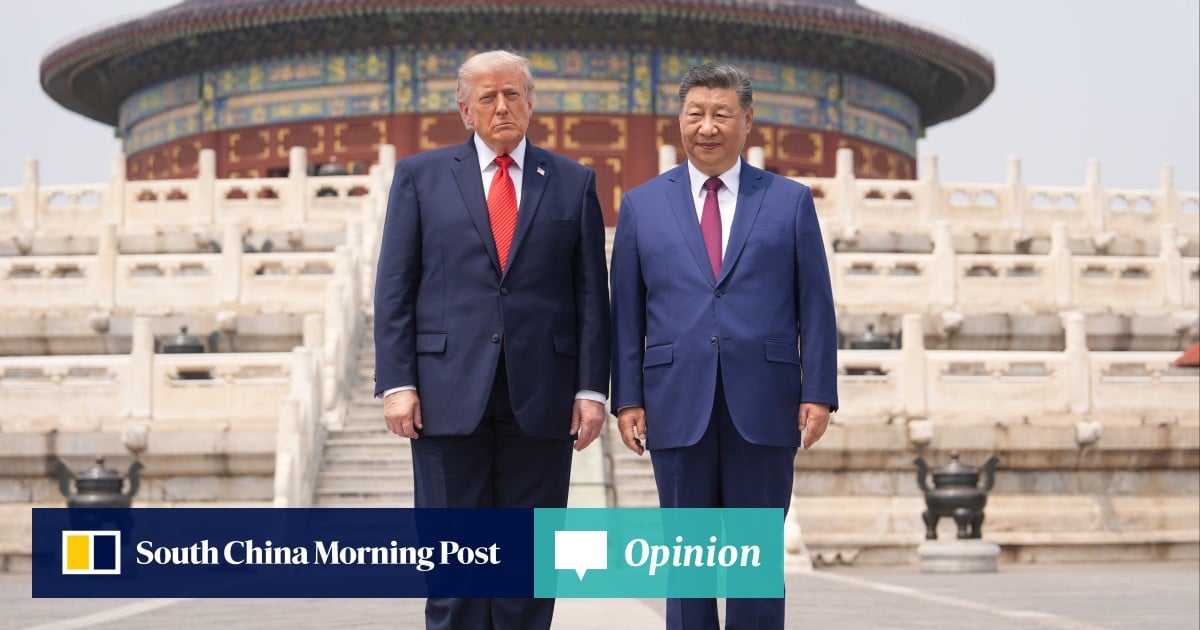
In a world accustomed to geopolitical theatrics and escalating rhetoric, former President Donald Trump's 2017 visit to Beijing presented a surprisingly different narrative. Far from the usual bombast, Trump appeared remarkably composed, engaging in diplomatic niceties and showcasing an uncharacteristic restraint. This departure from his signature style, often described as 'bombastic' or 'unpredictable,' was not merely a superficial shift; it was a subtle yet significant indicator that the 'two eyes of the world' – the United States and China – might be, however grudgingly, learning to navigate a shared future, perhaps drawing lessons from the ancient rivalry between Rome and Persia.
The Unlikely Diplomat: Trump's Beijing Demeanor
During his state visit to China, Trump's public persona was notably subdued. Gone were the sharp criticisms and confrontational stances often directed at Beijing. Instead, he was seen glad-handing officials, participating in elaborate state dinners, and even praising President Xi Jinping. This was not the Trump who routinely lambasted China for trade imbalances or currency manipulation; it was a figure seemingly committed to a temporary truce, a strategic pause in the ongoing geopolitical chess match. This shift was widely observed by international media and analysts, who noted a stark contrast between his domestic political rallies and his conduct on Chinese soil. The spectacle of a US president, known for his 'America First' isolationist rhetoric, engaging so cordially with a rising global power was, for many, a moment of profound geopolitical reflection. It suggested a recognition, even by the most nationalistic of leaders, that the intricate web of global economics and security demands a degree of cooperation, or at least managed competition, between the world's two largest economies.
Echoes of Antiquity: Rome, Persia, and Modern Superpowers
The comparison of the US-China dynamic to the millennia-long rivalry between the Roman and Persian empires offers a compelling historical lens. For centuries, these ancient superpowers engaged in intermittent warfare, ideological clashes, and strategic maneuvering, yet they also maintained periods of uneasy peace, trade, and even cultural exchange. Both empires, despite their profound differences, eventually recognized the futility and immense cost of perpetual, all-out conflict. They learned to live in a state of 'managed rivalry,' where direct confrontation was often balanced by a pragmatic understanding of mutual interests and the need for stable borders. Similarly, the US and China, despite their divergent political systems, economic models, and strategic ambitions, are inextricably linked through global supply chains, climate change, and nuclear proliferation concerns. The sheer scale of their interdependence – with bilateral trade reaching hundreds of billions annually and each holding significant portions of the other's debt – means that a complete decoupling or outright conflict would be catastrophic for both, and indeed, for the global economy. This historical parallel underscores the idea that even the fiercest competitors can find common ground, or at least a modus vivendi, when the stakes are high enough.
The Economic Intertwine: A Double-Edged Sword
The economic relationship between the United States and China is arguably the most complex and consequential in modern history. For decades, the US benefited from cheap Chinese manufacturing, while China ascended as a global economic powerhouse through exports and foreign investment. This symbiosis, however, has also been a source of tension, particularly regarding trade deficits, intellectual property theft, and market access. Trump's visit, despite its diplomatic tone, did not erase these underlying issues. Instead, it highlighted the intricate balance both nations must strike: how to compete fiercely in certain sectors while cooperating in others. For instance, while the US might seek to curb China's technological ambitions, both nations stand to lose immensely from a complete breakdown of trade relations. The global financial system, heavily reliant on both economies, would face unprecedented instability. This economic interdependence acts as a powerful deterrent against full-scale conflict, forcing leaders to seek diplomatic solutions and compromise, even if begrudgingly. Data from the US Census Bureau consistently shows China as one of the largest trading partners for the US, illustrating the depth of this intertwining.
Beyond Geopolitics: Shared Challenges and Future Prospects
While geopolitical competition often dominates headlines, the US and China face numerous shared challenges that transcend national borders. Climate change, global pandemics, and the threat of nuclear proliferation are issues that demand international cooperation, particularly from the world's two largest emitters and military powers. During Trump's visit, discussions on North Korea's nuclear program were prominent, demonstrating a recognition that regional stability requires concerted effort from both Washington and Beijing. This aspect of their relationship, often overshadowed by economic and military rivalry, is crucial for global well-being. Looking forward, the trajectory of US-China relations remains uncertain. While the Trump visit offered a glimpse of potential pragmatism, subsequent administrations have continued to grapple with an increasingly assertive China. However, the underlying lesson from that Beijing trip, and from historical precedents, remains: sustained global peace and prosperity hinge on these 'two eyes of the world' finding a way to coexist, to manage their competition, and to collaborate on shared existential threats. The alternative is a future of escalating tensions, economic instability, and potentially catastrophic conflict, a path that neither Rome nor Persia ultimately desired, despite their long and bloody history.
Conclusion: A Delicate Balance for a New Global Order
The image of a subdued Donald Trump in Beijing was more than just a momentary anomaly; it was a powerful symbol of the complex, often contradictory, nature of US-China relations. It suggested that beneath the rhetoric and the rivalry, there lies a pragmatic understanding that these two titans of the 21st century must, to some extent, learn to live together. Like Rome and Persia, they are bound by a shared global stage, and their interactions will define the coming decades. The challenge for leaders in both Washington and Beijing will be to maintain this delicate balance – to compete where necessary, cooperate where possible, and always avoid the precipice of unmanageable conflict. The future of global stability rests on their ability to master this intricate dance, transforming potential adversaries into pragmatic partners in an increasingly interconnected world.
Stay Informed
Get the world's most important stories delivered to your inbox.
No spam, unsubscribe anytime.
Comments
No comments yet. Be the first to share your thoughts!