BRICS Navigates West Asia's Geopolitical Minefield: Internal Divisions Threaten United Front
The recent BRICS foreign ministers' meeting was fraught with internal discord over a joint statement on West Asia, highlighting the complex geopolitical dynamics within the expanded bloc. Disagreements, particularly between Iran and the UAE, underscore the challenges of forging a unified stance on sensitive regional issues. This internal friction reveals the inherent difficulties in balancing diverse national interests within a group aspiring to reshape global governance. The episode casts a shadow over BRICS's ability to act as a cohesive alternative to Western-led institutions.
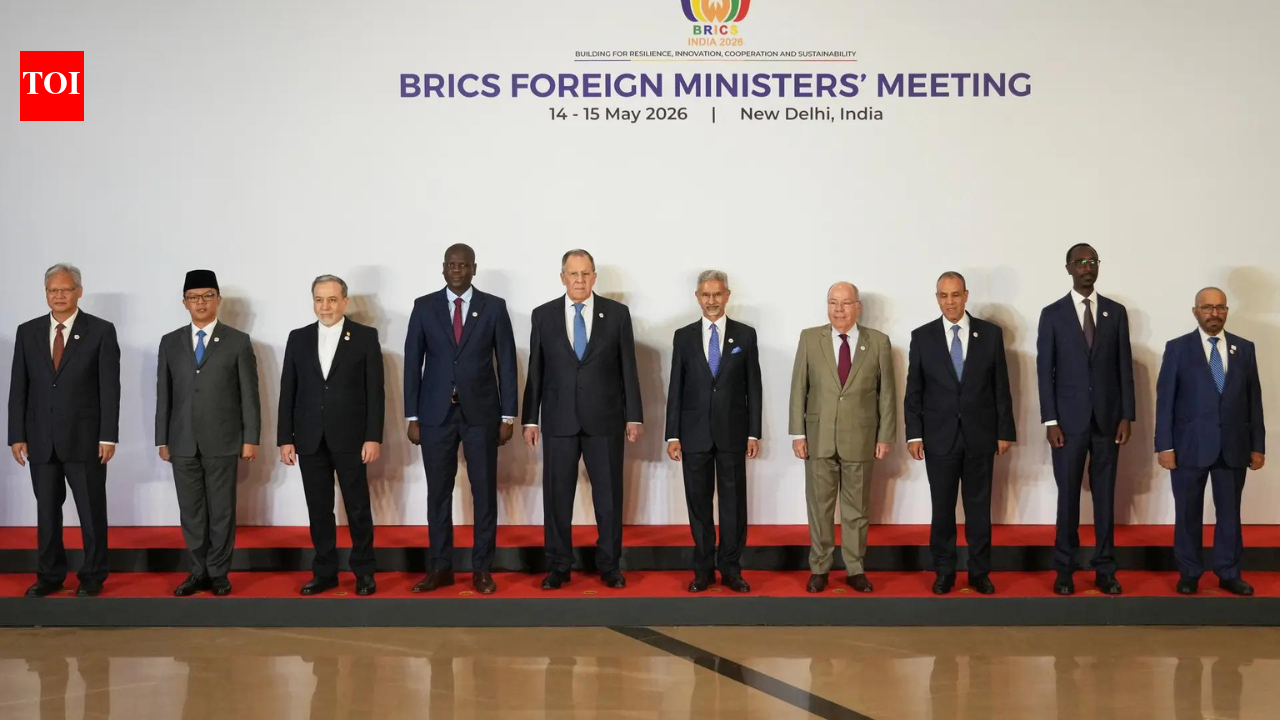
The recent gathering of BRICS foreign ministers, intended to solidify the expanded bloc's geopolitical influence, instead laid bare deep-seated divisions, particularly concerning the volatile landscape of West Asia. What was anticipated to be a routine diplomatic exercise aimed at crafting a joint statement on regional affairs quickly devolved into a tense standoff, with a consensus on the West Asia situation hanging by a thread. This internal friction, primarily between Iran and the United Arab Emirates (UAE), underscored the formidable challenge BRICS faces in presenting a united front on critical international issues, even as it seeks to position itself as a powerful alternative to established Western-dominated global governance structures.
The diplomatic impasse, described by sources as a "knife-edge" situation, saw protracted negotiations stretching late into the night. The core of the disagreement revolved around the specific wording and emphasis regarding the Gaza conflict and the broader Israeli-Palestinian issue. While all member states expressed concern over the humanitarian crisis, the nuances of their national interests and regional alliances proved to be a significant hurdle. Iran, a new member with direct involvement in the region's complex power plays, sought a strong condemnation of Israeli actions and a clear affirmation of Palestinian rights. Conversely, the UAE, which has normalized relations with Israel through the Abraham Accords, advocated for a more balanced approach, emphasizing de-escalation and a two-state solution without singling out any party for disproportionate blame. This fundamental divergence threatened to derail the entire joint statement, exposing the inherent difficulties in harmonizing the foreign policy objectives of a diverse group of nations.
The Expanding BRICS and Its Geopolitical Ambitions
The BRICS bloc, originally comprising Brazil, Russia, India, China, and South Africa, recently underwent a significant expansion, welcoming Egypt, Ethiopia, Iran, Saudi Arabia, and the UAE as full members from January 2024. This enlargement was touted as a strategic move to amplify the group's collective voice on the global stage, particularly from the Global South. The inclusion of key West Asian players like Iran, Saudi Arabia, and the UAE was seen as crucial for enhancing BRICS's economic clout and geopolitical leverage, especially in energy markets and regional security dialogues. However, this expansion also brought with it the inherent complexities of regional rivalries and historical animosities that now reside within the bloc itself.
The ambition of BRICS is not merely economic cooperation but also the establishment of a multipolar world order, challenging the unipolarity perceived to be dominated by the United States and its allies. By offering an alternative platform for dialogue and cooperation, BRICS aims to advocate for reforms in international institutions, greater representation for developing nations, and a more equitable distribution of global power. Yet, the recent West Asia deadlock highlights a critical vulnerability: the lack of a unified foreign policy doctrine. While members may agree on broad principles like sovereignty and non-interference, their specific interests in conflict zones often diverge sharply, making consensus-building an arduous task. The aspiration for a collective foreign policy voice demands a level of internal cohesion that the current BRICS configuration is struggling to achieve, particularly on issues where members have direct and often conflicting stakes.
West Asia: A Crucible of Regional and Global Power Dynamics
West Asia, a region synonymous with geopolitical volatility, has long been a focal point of international concern due to its vast energy reserves, strategic waterways, and intractable conflicts. The Israeli-Palestinian conflict, the Syrian civil war, the Yemen conflict, and the broader Iran-Saudi rivalry are just a few of the interconnected crises that define the region. For BRICS, navigating this complex terrain is not merely a diplomatic exercise but a test of its capacity to influence global security. The inclusion of Iran, Saudi Arabia, and the UAE means that regional tensions are now directly internalized within the bloc's discussions, transforming what might have been external policy debates into internal diplomatic challenges.
Historically, the region has been a battleground for proxy wars and external interventions, further complicating efforts to achieve lasting peace. The Abraham Accords, which saw the UAE and Bahrain normalize relations with Israel, represented a significant shift in regional alignments, creating new fault lines. Iran, on the other hand, remains a staunch opponent of Israeli normalization and a key supporter of various non-state actors across the region, often clashing with Saudi and Emirati interests. These deep-seated geopolitical realities mean that any BRICS statement on West Asia must delicately balance these competing narratives and interests, a task that proved exceedingly difficult during the recent meeting. The very act of attempting a joint statement on such a contentious issue forces BRICS members to confront their own divergent strategic priorities and regional allegiances, potentially exposing the limits of their collective action.
Implications for BRICS's Future and Global Governance
The inability to easily forge a consensus on West Asia carries significant implications for the future trajectory of BRICS. Firstly, it raises questions about the bloc's effectiveness as a unified geopolitical actor. If fundamental disagreements persist on core international security issues, BRICS's ability to present a cohesive alternative to Western-led initiatives, such as those from the G7 or the UN Security Council, could be severely hampered. The world is watching to see if BRICS can transcend its members' individual national interests to act as a truly collective force for global change.
Secondly, the incident underscores the challenge of managing an expanded membership. While more members bring greater collective power, they also introduce a wider array of national interests, historical grievances, and strategic partnerships that can complicate decision-making. The "BRICS+" model, while ambitious, requires robust internal mechanisms for conflict resolution and consensus-building that may still be in their nascent stages. The current impasse suggests that the bloc needs to develop more sophisticated diplomatic tools to bridge such divides, especially on issues where members' vital interests are at stake.
Finally, this episode serves as a reminder that the aspiration for a multipolar world is not without its own internal contradictions. A multipolar order, by definition, implies multiple centers of power, each with its own agenda. While BRICS seeks to empower the Global South, its internal dynamics demonstrate that this empowerment does not automatically translate into a unified voice or a harmonious foreign policy. The path to a truly multipolar and equitable global order will be fraught with such internal negotiations and compromises, testing the resolve and diplomatic acumen of emergent blocs like BRICS.
Moving Forward: The Path to Cohesion
Despite the recent difficulties, the BRICS foreign ministers' meeting ultimately concluded with a joint statement, albeit one that likely reflected significant compromises and perhaps a more generalized language on West Asia to accommodate all members. This outcome, while demonstrating a commitment to maintaining a united front, also highlights the delicate balancing act required. For BRICS to truly fulfill its potential as a significant force in global governance, it must develop more effective mechanisms for internal dialogue and conflict resolution. This could involve establishing dedicated working groups on sensitive geopolitical issues, fostering greater bilateral trust between member states, and perhaps even defining a clearer framework for when and how the bloc will intervene or comment on regional conflicts.
The challenge for BRICS is to transform its diverse membership from a potential source of division into a wellspring of strength. By embracing the complexity of its members' perspectives, and by investing in robust diplomatic processes, the bloc can gradually build the cohesion necessary to articulate a powerful and unified voice on the world stage. The West Asia deadlock was a stark reminder of the obstacles ahead, but also an opportunity for BRICS to refine its approach to global diplomacy and solidify its position as a serious contender in shaping the future of international relations. The journey towards a multipolar world is not just about challenging existing powers, but also about building internal consensus among the emerging ones, a task that BRICS is now actively, and sometimes painfully, undertaking.
Stay Informed
Get the world's most important stories delivered to your inbox.
No spam, unsubscribe anytime.
Comments
No comments yet. Be the first to share your thoughts!