China's Robot Revolution: Hype, Reality, and the Quest for Profitability
China's robotics sector is awash with capital, yet profitability remains an elusive goal. Despite technological advancements and government backing, the industry faces significant hurdles in commercialization and business model viability. This deep dive explores the challenges and potential solutions for China's ambitious robot manufacturers.
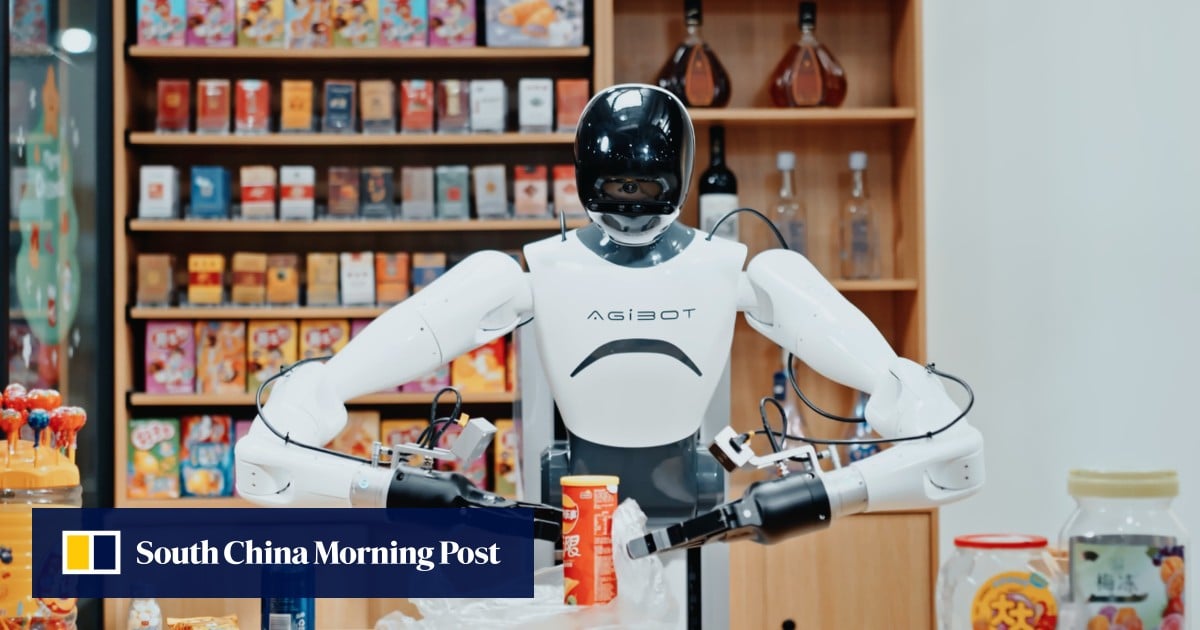
The hum of servo motors and the precise, almost balletic movements of robotic arms are becoming an increasingly common sight across China. From industrial behemoths to burgeoning startups, the nation has poured unprecedented capital into its robotics sector, aiming to dominate a market projected to reach trillions globally. Yet, beneath the gleaming surfaces and impressive demonstrations of AI-powered dexterity, a stark reality check is underway: profitability remains stubbornly elusive. Is China’s robot revolution more hype than real cash flow, or are these merely the growing pains of an industry poised for global leadership?
The Investment Deluge and Its Discontents
For years, China has championed robotics as a strategic industry, a cornerstone of its "Made in China 2025" initiative. This national directive, aimed at transforming China into a high-tech manufacturing powerhouse, has fueled an investment frenzy. Venture capitalists, state-backed funds, and even individual investors have flocked to robotics companies, eager to capture a slice of the future. The sheer volume of capital injected into the sector is staggering, creating a vibrant ecosystem of innovation and competition. Hundreds of new robotics firms emerge annually, pushing the boundaries of what machines can do, from intricate surgical procedures to mundane household chores.
However, this capital influx has not always translated into robust financial returns. Many companies, particularly those focused on niche applications or early-stage technologies, struggle to move beyond prototype development and into mass commercialization. The problem isn't a lack of technological prowess; Chinese engineers and researchers are among the world's best. Instead, it often boils down to the business model itself. The cost of research and development, coupled with the high price tags of sophisticated robotic systems, makes it difficult to achieve economies of scale and attractive profit margins, especially in a market that is still maturing.
Commercialization Conundrums: Bridging the Gap from Lab to Market
The core challenge facing China's robot industry is the gap between technological capability and market demand. While robots can perform an ever-expanding array of tasks – folding laundry, preparing milk tea, or constructing intricate structures from building blocks – convincing businesses and consumers to adopt these solutions at scale requires more than just functionality. It demands reliability, cost-effectiveness, ease of integration, and a clear return on investment.
Consider the example of service robots. While fascinating to observe, many are still too expensive for widespread adoption in smaller businesses or homes. Industrial robots, though more established, face intense competition and pressure to lower costs, often leading to razor-thin margins. Furthermore, the lack of standardized components and interoperability across different manufacturers creates integration headaches for potential buyers, further slowing adoption. This fragmentation means that each robotic solution often requires significant customization, driving up costs and complexity.
Another critical factor is the maturity of the supply chain. While China excels in manufacturing, the specialized components required for advanced robotics – high-precision sensors, sophisticated actuators, and advanced AI chips – often still rely on foreign suppliers. This dependence can lead to higher costs and potential supply chain vulnerabilities, impacting both production efficiency and profitability. Developing a robust domestic supply chain for these critical components is a long-term goal, but one that is essential for the industry's sustained success.
The Human Element: Workforce Adaptation and Ethical Considerations
The integration of robots into society also brings significant human-centric challenges. On one hand, there's the perennial concern about job displacement. As robots become more capable, questions arise about the future of human labor, particularly in manufacturing and service sectors. While proponents argue that robots create new, higher-skilled jobs in design, maintenance, and operation, the transition period can be disruptive, requiring massive investments in workforce retraining and education. China, with its vast population, faces a unique imperative to manage this transition carefully to avoid social unrest.
Beyond employment, ethical considerations are also coming to the forefront. The use of AI-powered robots in sensitive areas like healthcare, elder care, or security raises questions about accountability, privacy, and bias. Who is responsible when a robot makes a mistake? How is data collected by service robots protected? These are not merely philosophical debates but practical concerns that need to be addressed through robust regulatory frameworks and industry best practices. The public's trust in robotic systems will be paramount for widespread adoption, and this trust can only be built on a foundation of ethical design and transparent operation.
Navigating the Future: Strategies for Sustainable Growth
For China's robotics industry to move beyond the "hype" phase and achieve sustainable profitability, several strategic shifts are necessary:
* Focus on Niche Applications with Clear ROI: Instead of broad-brush approaches, companies should identify specific problems where robots offer undeniable economic advantages. This could be in hazardous environments, tasks requiring extreme precision, or areas with severe labor shortages. * Develop Integrated Solutions: Moving beyond selling individual robots, firms should offer complete, end-to-end solutions that include software, integration services, and ongoing support. This adds value and creates recurring revenue streams. * Strengthen Domestic Supply Chains: Reducing reliance on foreign components will lower costs, improve supply chain resilience, and foster greater innovation within China. * Standardization and Interoperability: Industry-wide standards for communication protocols and component interfaces will simplify integration and accelerate adoption. * Government Support with a Profitability Lens: While government subsidies are crucial for R&D, future policies should increasingly incentivize commercial success and market penetration, rather than just technological breakthroughs. * Talent Development: Investing in education and training programs to cultivate a skilled workforce capable of designing, deploying, and maintaining advanced robotic systems.
The journey from technological marvel to commercial success is rarely linear, and China's robotics sector is currently navigating this complex path. The initial investment boom has laid a strong foundation of innovation and capability. The next phase, however, will require a sharper focus on market realities, business model innovation, and a pragmatic approach to commercialization. If these challenges can be effectively addressed, China’s robot revolution has the potential to not only transform its own economy but also redefine the global landscape of automation and artificial intelligence, moving decisively from impressive demonstrations to substantial, sustainable cash flow. The world watches with keen interest as this technological titan seeks to convert its immense potential into tangible, profitable realities.
Stay Informed
Get the world's most important stories delivered to your inbox.
No spam, unsubscribe anytime.
Comments
No comments yet. Be the first to share your thoughts!