Chinese Giants Go Global: Foxconn and BYD Lead Record Overseas Revenue Surge
Chinese A-share companies, spearheaded by industrial titans like Foxconn and BYD, have achieved an unprecedented milestone, with overseas revenues soaring to 12.4 trillion yuan (US$1.8 trillion). This figure now accounts for nearly 17 percent of their total income, marking a significant shift in China's economic strategy towards global expansion. The trend highlights a maturing domestic market and an aggressive push for international market share, driven by technological innovation and strategic investments. This global pivot has profound implications for international trade, supply chains, and geopolitical dynamics.
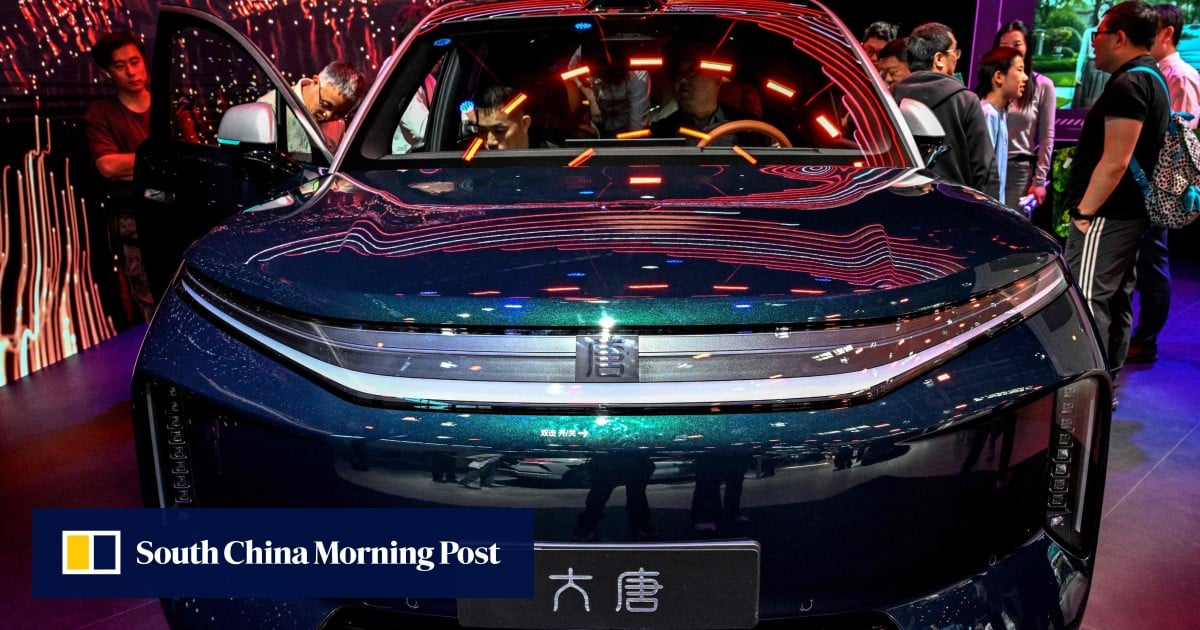
In a landmark shift signaling China's deepening integration into the global economy, A-share listed companies have reported an all-time high in overseas revenues, reaching an astounding 12.4 trillion yuan (approximately US$1.8 trillion) last year. This unprecedented figure now constitutes nearly 17 percent of their total income, a testament to the aggressive international expansion strategies adopted by some of the nation's most prominent industrial players. At the forefront of this global charge are manufacturing behemoths like Foxconn Technology Group and electric vehicle giant BYD, whose diversified operations and innovative products have resonated across international markets.
This surge in overseas earnings is not merely a statistical anomaly but reflects a calculated and strategic pivot by Chinese enterprises. Faced with a maturing domestic market and increasing competition, these companies are actively seeking new growth frontiers beyond their national borders. The implications of this trend are far-reaching, impacting global supply chains, international trade relations, and the competitive landscape across various industries.
The Global Footprint: A New Era for Chinese Enterprises
For decades, China has been known as the "world's factory," primarily focused on manufacturing goods for export under foreign brands. While that model brought immense economic growth, the current trend signifies a qualitative leap. Chinese companies are no longer just manufacturing for others; they are building their own global brands, establishing direct market presence, and competing head-on with established international players. This evolution is particularly evident in sectors like electronics, automotive, and renewable energy, where Chinese firms have invested heavily in research and development, supply chain optimization, and international marketing.
Foxconn, a Taiwanese-headquartered company with extensive operations in mainland China, exemplifies this global reach. As the world's largest contract electronics manufacturer, its revenue streams are inherently international, tied to the global sales of its major clients like Apple. However, Foxconn's strategy extends beyond contract manufacturing; it is increasingly investing in new technologies and expanding its manufacturing footprint into countries like India, Vietnam, and the United States, diversifying its geopolitical risk and tapping into new labor pools and markets. This strategic diversification ensures resilience and continued growth even amidst shifting global trade dynamics.
Similarly, BYD, initially known for its batteries, has transformed into a global leader in electric vehicles (EVs) and renewable energy solutions. Its aggressive expansion into Europe, Latin America, and Southeast Asia, coupled with its vertically integrated supply chain, has allowed it to capture significant market share. BYD's success is a prime example of a Chinese company leveraging its technological prowess and cost efficiencies to challenge incumbents in highly competitive global markets. Their direct sales models and localized production facilities are key to their international success.
Drivers of International Expansion: Beyond Domestic Saturation
The motivations behind this aggressive internationalization are multifaceted. One primary driver is the saturation and increasing competition within China's vast domestic market. While still growing, the pace has moderated, prompting companies to look abroad for higher growth potential. Furthermore, the Chinese government's "Belt and Road Initiative" (BRI) has provided a strategic framework and financial impetus for many companies to invest in infrastructure and establish commercial ties across Asia, Africa, and parts of Europe.
Another significant factor is the pursuit of advanced technology and intellectual property. Chinese firms are increasingly acquiring foreign companies, investing in overseas R&D centers, and forming strategic partnerships to gain access to cutting-edge innovations and talent. This strategy not only enhances their product offerings but also strengthens their competitive edge on the global stage. The desire to move up the value chain, from low-cost manufacturing to high-tech innovation, is a central theme.
Moreover, geopolitical considerations play an undeniable role. Diversifying revenue streams and manufacturing bases away from a sole reliance on China can mitigate risks associated with trade tensions, supply chain disruptions, and evolving regulatory environments. Establishing a global presence allows companies to adapt more flexibly to international political and economic shifts.
Economic Implications and Global Repercussions
The record overseas revenues have profound implications, both for China and the global economy. For China, it signifies a maturation of its industrial base and a successful transition from an export-led economy to one with a more balanced global presence. It also contributes to the country's foreign exchange reserves and enhances the global standing of Chinese brands. This international success provides a buffer against domestic economic slowdowns and fosters a more resilient national economy.
Globally, the rise of Chinese multinational corporations intensifies competition across various sectors. This can lead to lower prices for consumers, faster innovation, and new market opportunities. However, it also raises concerns among incumbent Western companies about market share erosion and the potential for unfair competition, particularly regarding state subsidies and intellectual property practices. The increased presence of Chinese firms in strategic industries also sparks debates about national security and economic sovereignty in host countries.
Supply chain diversification is another key outcome. As Chinese companies expand their manufacturing operations globally, they are creating new supply chain hubs and fostering economic development in host countries. This shift can reduce over-reliance on single-country production, making global supply chains more robust but also more complex.
Challenges and the Road Ahead
Despite the impressive growth, Chinese companies venturing abroad face a myriad of challenges. Cultural differences, regulatory complexities, and geopolitical scrutiny are significant hurdles. Navigating diverse legal frameworks, labor laws, and consumer preferences requires significant investment in local expertise and adaptation strategies. The recent increase in trade protectionism and national security reviews in Western countries also poses a substantial challenge, potentially limiting market access and investment opportunities.
Furthermore, building global brand recognition and trust remains a long-term endeavor. While companies like BYD are gaining traction, many Chinese brands still struggle to shed the perception of being merely low-cost producers. Overcoming this requires sustained investment in quality, innovation, and ethical business practices.
Looking ahead, the trend of Chinese companies expanding their global footprint is set to continue, albeit with evolving strategies. We can expect to see: * Increased localization: Greater emphasis on local R&D, manufacturing, and talent acquisition to better serve regional markets. * Strategic partnerships: More joint ventures and collaborations with international firms to navigate complex markets and share risks. * Focus on high-value sectors: Continued push into advanced manufacturing, artificial intelligence, biotechnology, and renewable energy, where China aims to be a global leader. * Enhanced corporate governance: Greater adoption of international best practices in transparency and sustainability to build trust and attract global investors.
The record overseas revenues achieved by A-share companies mark a pivotal moment in China's economic narrative. It underscores a strategic pivot towards global integration, driven by a desire for sustained growth and technological leadership. While challenges persist, the ambition and scale of this international expansion suggest that Chinese enterprises will continue to reshape the global economic landscape for years to come, making them indispensable players in the new world order.
Stay Informed
Get the world's most important stories delivered to your inbox.
No spam, unsubscribe anytime.
Comments
No comments yet. Be the first to share your thoughts!