Diplomatic Discord: Netanyahu's 'Secret UAE Visit' Claim Ignites Regional Tensions Amidst War
A startling claim by Israeli Prime Minister Benjamin Netanyahu's office regarding a secret wartime meeting with UAE President Mohammed bin Zayed Al Nahyan has been vehemently denied by Abu Dhabi. This diplomatic spat, unfolding amidst the US-Israel-Iran conflict, casts a shadow over the Abraham Accords and highlights the complexities of Middle Eastern alliances. The incident raises questions about communication, trust, and the future of regional diplomacy, especially as the war intensifies.
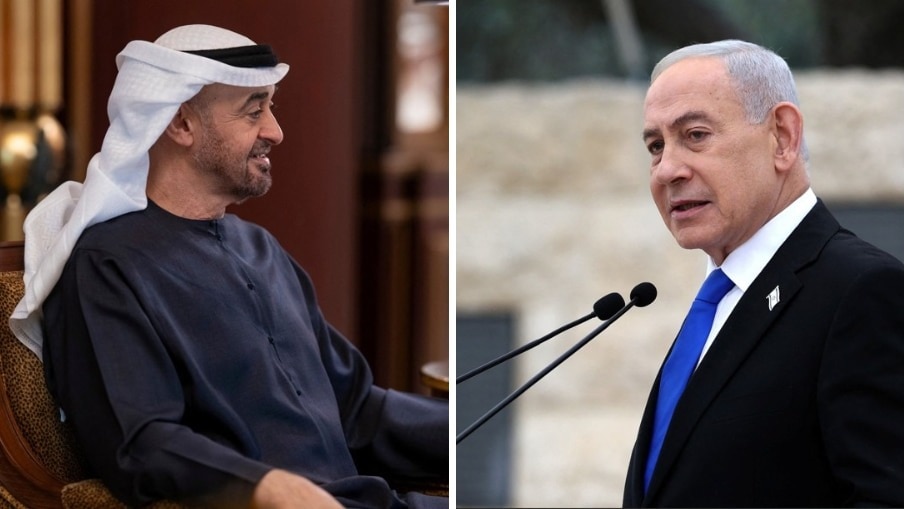
In a dramatic turn of events that has sent ripples through the already volatile landscape of Middle Eastern diplomacy, the office of Israeli Prime Minister Benjamin Netanyahu recently asserted that a clandestine meeting took place between Netanyahu and UAE President Mohammed bin Zayed Al Nahyan. This alleged encounter, according to Jerusalem, occurred during the ongoing US-Israel-Iran war, a conflict that has significantly reshaped regional dynamics. However, Abu Dhabi wasted no time in issuing a swift and unequivocal denial, stating emphatically that no such visit ever occurred and reiterating its policy of conducting relations with Israel transparently under the framework of the Abraham Accords.
The conflicting narratives have not only created a significant diplomatic incident but have also underscored the deep-seated mistrust and complex geopolitical maneuvering that characterize the region. For a relationship that was hailed as a breakthrough for peace and normalization, this public disagreement serves as a stark reminder of the fragile nature of alliances forged amidst historical animosities and current conflicts.
The Anatomy of a Denial: Abu Dhabi's Stance
The United Arab Emirates' rejection of Netanyahu's claim was not merely a polite refutation; it was a firm and public dismissal. UAE officials emphasized that their engagement with Israel, particularly since the signing of the Abraham Accords in 2020, has always been conducted openly and with full transparency. This stance is crucial for the UAE, which seeks to project an image of stability, reliability, and adherence to international norms. A secret wartime meeting, especially one that is then publicly disclosed by one party without the consent of the other, would contradict these principles and potentially undermine the UAE's standing in the Arab world and on the global stage.
Sources close to the Emirati leadership indicated that the assertion from Netanyahu's office was not only false but also deeply perplexing. "Our channels of communication with Israel are well-established and open," an anonymous Emirati diplomat reportedly stated, "There is no need for secret rendezvous, especially not during a period of such heightened regional tension." This sentiment suggests that if any communication were necessary, it would have followed established diplomatic protocols, not an unannounced, covert visit.
Israel's Motivation: A Strategic Leak or Miscalculation?
The Israeli Prime Minister's office, known for its strategic communications, has yet to provide further details or evidence to substantiate its claim, nor has it retracted the statement following the UAE's denial. This silence, in itself, is telling. Several theories have emerged regarding Jerusalem's motivation behind the assertion. One possibility is that it was a deliberate leak intended to project an image of Israel's continued diplomatic influence and reach, even amidst a major regional conflict. By suggesting high-level engagement with a key Arab partner, Netanyahu might have aimed to reassure his domestic audience, signal strength to adversaries like Iran, or even subtly pressure the UAE on certain regional issues.
Another theory posits that the claim could have been a miscalculation or an attempt to test the waters. In the high-stakes world of Middle Eastern politics, such maneuvers are not uncommon. However, the swift and unequivocal denial from Abu Dhabi indicates that if it was a test, it failed spectacularly, potentially damaging the very trust the Abraham Accords sought to build. The timing is also critical; the US-Israel-Iran war has placed immense pressure on regional actors, forcing them to carefully calibrate their alliances and public statements. A perceived breach of trust could have significant ramifications for future cooperation.
The Abraham Accords Under Scrutiny
The Abraham Accords, brokered by the Trump administration, represented a paradigm shift in Middle Eastern diplomacy, normalizing relations between Israel and several Arab nations, including the UAE, Bahrain, Sudan, and Morocco. They were lauded as a pathway to regional peace and economic prosperity. However, incidents like this recent diplomatic spat place the durability and depth of these accords under intense scrutiny.
While the accords have facilitated significant economic and cultural exchanges, the political dimension remains complex, particularly when regional conflicts escalate. The UAE has consistently maintained that its normalization with Israel does not equate to an endorsement of all Israeli policies, especially concerning the Palestinian issue. A public disagreement over a high-level meeting highlights the limits of this normalization and the sensitivity surrounding public perceptions in the Arab world. The UAE, despite its warming ties with Israel, must also balance its relationships with other Arab and Muslim nations, many of whom remain critical of Israel's actions.
Broader Regional Implications and the US Role
The US-Israel-Iran war serves as the backdrop for this diplomatic friction, adding layers of complexity to an already intricate situation. The United States, a key ally to both Israel and the UAE, finds itself in a delicate position. Washington has consistently championed the Abraham Accords as a cornerstone of its Middle East policy, aiming to create a united front against Iranian influence. This public disagreement between two of its crucial partners could complicate US efforts to foster regional stability and coordinate responses to the ongoing conflict.
Furthermore, the incident could embolden regional adversaries and critics of the Abraham Accords, who might interpret it as a sign of underlying instability in the new alliances. It reinforces the narrative that these agreements are transactional rather than rooted in genuine political alignment, especially when tested by major crises. The perception of disunity among allies could be exploited by actors seeking to destabilize the region further.
Looking Ahead: Rebuilding Trust and Clarifying Communication
The immediate aftermath of this diplomatic exchange calls for careful damage control and a clear articulation of future engagement protocols. For the Abraham Accords to truly flourish and withstand the inevitable pressures of regional politics, transparency and mutual respect are paramount. Both Israel and the UAE have a vested interest in ensuring that such misunderstandings do not recur, as they risk undermining the significant progress made in recent years.
Moving forward, it will be crucial for both nations to re-establish clear lines of communication and, perhaps, to issue a joint statement reaffirming their commitment to the principles of open diplomacy. The incident serves as a potent reminder that even in an era of normalization, the path to lasting peace in the Middle East is fraught with challenges, requiring constant vigilance, careful communication, and an unwavering commitment to trust-building. The future of regional cooperation, particularly in confronting shared threats, hinges on the ability of these nations to navigate such diplomatic minefields with greater cohesion and understanding. The world will be watching closely to see how this delicate relationship evolves in the shadow of ongoing conflict and competing narratives.
Stay Informed
Get the world's most important stories delivered to your inbox.
No spam, unsubscribe anytime.
Comments
No comments yet. Be the first to share your thoughts!