Erika Kirk's 'DEI' Doctorate Sparks Hypocrisy Debate Amidst Conservative Backlash
Erika Kirk, widow of conservative firebrand Charlie Kirk, has ignited a fierce debate after accepting an honorary doctorate, despite her late husband and the broader conservative movement's vocal opposition to Diversity, Equity, and Inclusion (DEI) initiatives. Critics are calling out the perceived hypocrisy, highlighting the complex and often contradictory stances taken on academic and social frameworks. This incident underscores the ongoing culture wars surrounding DEI and its interpretation across the political spectrum, raising questions about consistency in public discourse.
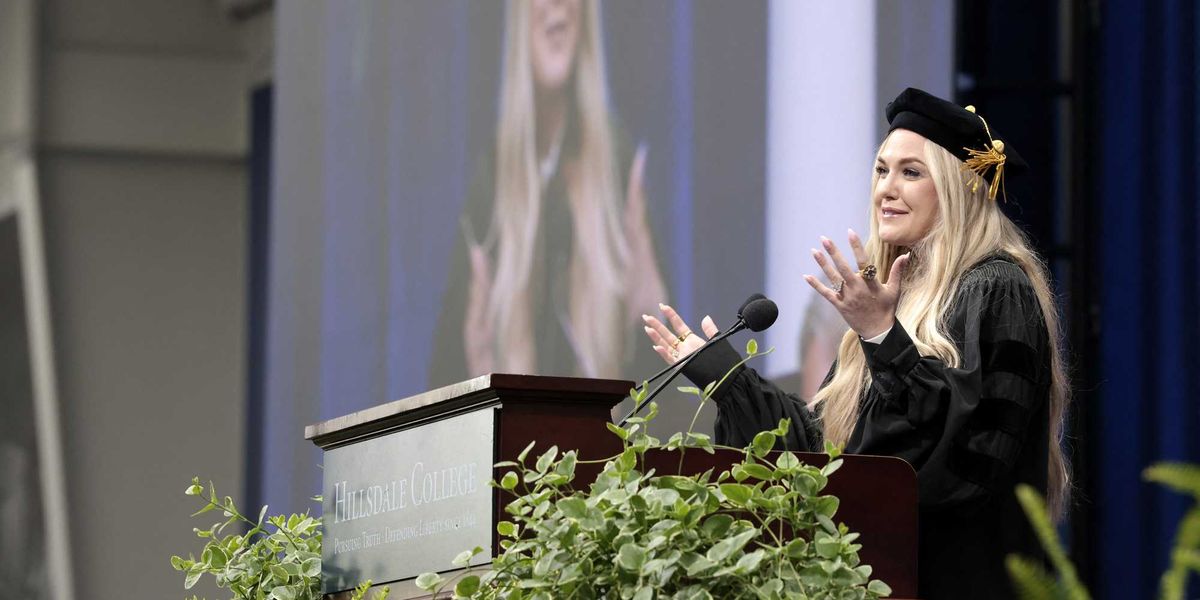
In a development that has sent ripples through conservative circles and beyond, Erika Kirk, widow of the late conservative activist and founder of Turning Point USA, Charlie Kirk, has found herself at the center of a burgeoning controversy. The uproar stems from her acceptance of an honorary doctorate, an academic accolade that, for many, stands in stark contrast to the vociferous opposition her husband and the broader right-wing movement have consistently voiced against Diversity, Equity, and Inclusion (DEI) initiatives. This perceived contradiction has sparked widespread accusations of hypocrisy, forcing a re-examination of the principles and practices surrounding DEI, and the consistency with which they are applied or rejected.
The Heart of the Controversy: A Question of Consistency
The core of the current debate revolves around the concept of an 'honorary doctorate' itself, and how it intersects with the often-maligned framework of DEI. While an honorary degree is typically awarded in recognition of exceptional achievements and contributions to a field or society, critics are quick to point out that many modern academic institutions, particularly those granting such degrees, are deeply intertwined with DEI principles. These principles, designed to foster a more inclusive and equitable environment, often guide curriculum development, faculty hiring, and even the selection of honorees. The conservative movement, led in part by figures like Charlie Kirk, has frequently lambasted DEI as divisive, discriminatory, and a form of 'woke' ideology that undermines meritocracy and traditional American values. For Erika Kirk to accept an honor from an institution that likely embodies elements of the very framework her late husband so vehemently opposed has, for many, exposed a glaring inconsistency.
This isn't merely an isolated incident; it's a microcosm of a larger, ongoing ideological battle. The right's critique of DEI often centers on the argument that it promotes reverse discrimination, fosters resentment, and prioritizes group identity over individual achievement. They contend that DEI initiatives, rather than achieving true equality, instead create new forms of division and perpetuate a victimhood mentality. The irony, as critics of Erika Kirk are quick to highlight, is that accepting an honorary degree from an institution operating within this contested academic landscape appears to tacitly endorse the very system that has been so heavily criticized. This incident, therefore, serves as a flashpoint, illuminating the often-complex and sometimes contradictory relationship between conservative rhetoric and practical engagement with institutions perceived as 'liberal.'
DEI: A Shifting Landscape of Definitions and Debates
To fully grasp the weight of this controversy, it's crucial to understand the multifaceted nature of Diversity, Equity, and Inclusion. DEI is not a monolithic concept but rather a broad framework encompassing various strategies and philosophies aimed at creating more just and representative organizations and societies. Diversity refers to the presence of differences within a given setting, including race, ethnicity, gender, sexual orientation, socio-economic status, age, physical abilities, religious beliefs, political beliefs, or other ideologies. Equity is about ensuring fair treatment, access, opportunity, and advancement for all, while at the same time striving to identify and eliminate barriers that have prevented the full participation of some groups. Inclusion is about creating an environment where everyone feels welcome, respected, supported, and valued to fully participate. These concepts, while seemingly benign and even laudable to many, have become highly politicized, especially in the United States.
Under the Trump administration, where figures like Charlie Kirk gained significant influence, DEI was often framed as an ideological threat. Policies were introduced to restrict diversity training in federal agencies, and a strong narrative emerged portraying DEI as an assault on American values and individual liberty. This narrative has been amplified across conservative media, shaping public perception and fueling a deep distrust of DEI initiatives in education, corporate settings, and government. The current backlash against Erika Kirk is a direct consequence of this sustained campaign, where any perceived alignment with DEI, even indirectly, is met with swift condemnation from those who have internalized the anti-DEI message.
The Broader Implications: Navigating the Culture Wars
This incident is more than just a personal attack; it reflects the intensifying culture wars that define much of contemporary political discourse. The debate over DEI is not simply about academic policy; it's about fundamental questions of identity, justice, and the future direction of society. For conservatives, the pushback against DEI is often framed as a defense of meritocracy and individual freedom against what they see as collectivist ideologies. For progressives, DEI is an essential tool for rectifying historical injustices and building a more equitable society. The chasm between these perspectives appears to be widening, with little room for common ground.
The Erika Kirk controversy also highlights the challenges faced by public figures in maintaining ideological purity, especially when their actions are scrutinized against the backdrop of their stated beliefs or those of their influential relatives. In an era of instant communication and social media, perceived inconsistencies are quickly amplified, leading to public shaming and accusations of hypocrisy. This creates a high-stakes environment where every action, no matter how seemingly innocuous, can be interpreted through a highly politicized lens. The incident serves as a potent reminder that in the current political climate, actions speak volumes, and perceived deviations from established ideological lines can have significant repercussions for public figures and their associated movements.
Expert Analysis and Future Outlook
Political analysts suggest that this episode will further entrench existing divisions rather than fostering dialogue. "The 'DEI' label has become a potent political cudgel," explains Dr. Evelyn Reed, a sociologist specializing in cultural politics. "For many on the right, it's a shorthand for everything they oppose in modern academia and progressive thought. When someone associated with their movement appears to contradict that stance, it's seen as a betrayal, not an opportunity for nuance." She adds that the emotional intensity of these debates makes it difficult for any individual to bridge the gap without facing severe criticism from their own ideological base.
Looking ahead, the debate surrounding DEI is unlikely to abate. As institutions continue to grapple with issues of diversity and inclusion, and as political polarization intensifies, we can expect more such controversies. The Erika Kirk incident serves as a potent case study in the complexities of navigating these fraught waters, where personal actions are inextricably linked to broader ideological battles. It underscores the ongoing struggle to define what equality and fairness truly mean in a diverse society, and the challenges of achieving those ideals amidst deeply entrenched political divides. The question for many remains: can a movement that so adamantly rejects a framework like DEI ever truly engage with the institutions that embrace it, without facing accusations of inconsistency or outright hypocrisy? The answer, for now, appears to be a resounding 'no' from many corners of the internet and political sphere, ensuring that this debate will continue to evolve and ignite new flashpoints in the foreseeable future.
Stay Informed
Get the world's most important stories delivered to your inbox.
No spam, unsubscribe anytime.
Comments
No comments yet. Be the first to share your thoughts!