Fela Kuti's Enduring Legacy: Why His Family Refused to Sell the Iconic Afrobeat Catalogue
Femi Kuti, son of the legendary Afrobeat pioneer Fela Kuti, has revealed the family's unwavering commitment to preserving his father's artistic and political legacy. Despite numerous lucrative offers, the Kuti family has consistently rejected the sale of Fela's extensive music catalogue. This decision underscores a deep-seated belief in maintaining creative control and protecting the integrity of Fela's revolutionary message for future generations. The move highlights a growing trend among artists' estates prioritizing cultural impact over commercial gain.
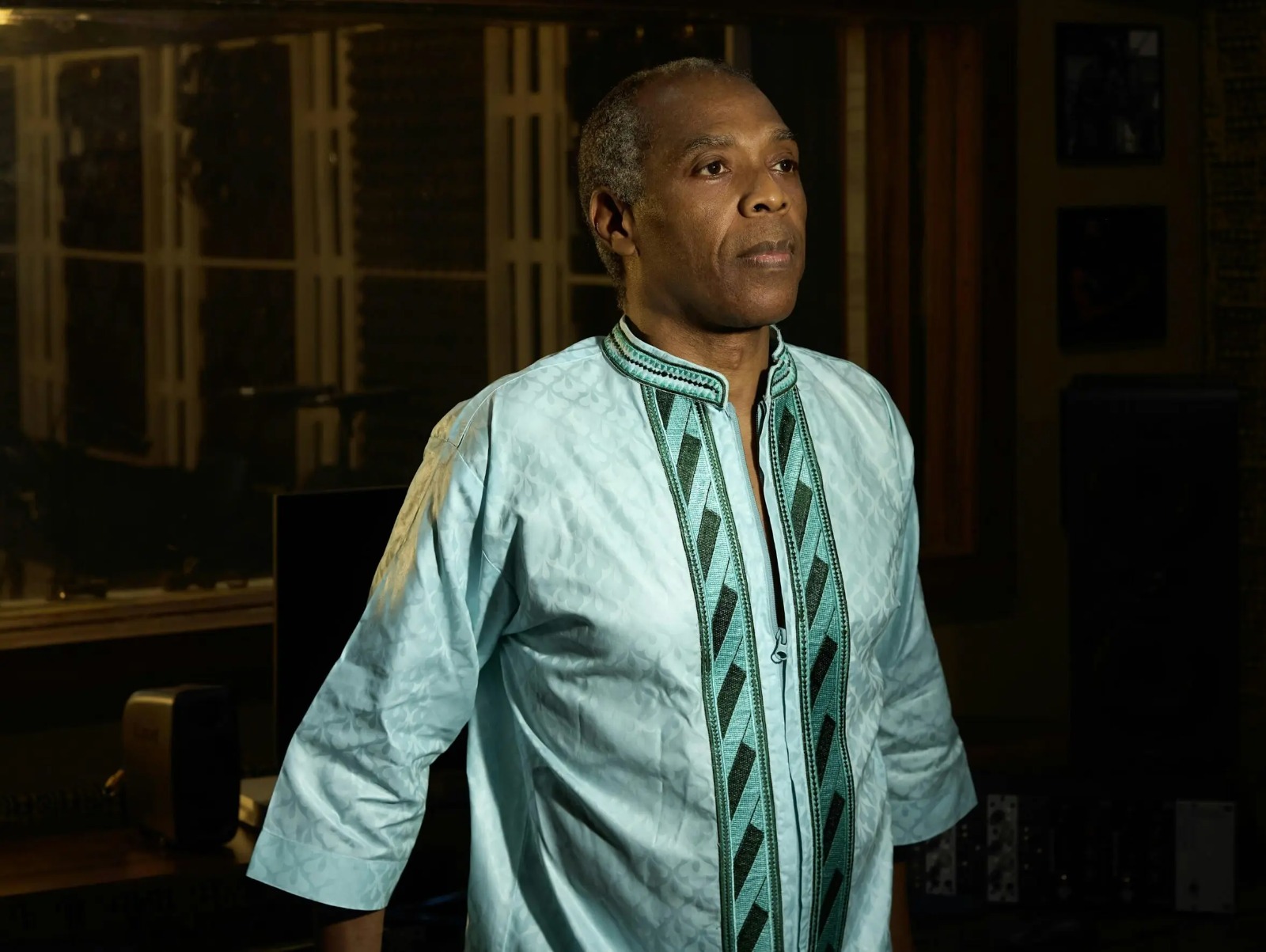
In an era where music catalogues are increasingly viewed as lucrative assets, commanding astronomical figures in high-profile sales, the Kuti family has made a profound statement. Femi Kuti, the eldest son of the iconic Afrobeat pioneer Fela Kuti, recently disclosed that the family has steadfastly refused multiple offers to sell his father's extensive and influential musical catalogue. This decision, driven primarily by a desire to safeguard Fela's unparalleled legacy, offers a compelling counter-narrative to the prevailing commercialization of artistic heritage, emphasizing cultural preservation over financial expediency.
Fela Anikulapo Kuti, a towering figure in 20th-century music, was more than just a musician; he was a political activist, a social critic, and a cultural revolutionary. His Afrobeat genre, a potent fusion of traditional Nigerian music, jazz, funk, and highlife, served as a powerful vehicle for his uncompromising critiques of colonialism, corruption, and oppression in Africa. To understand the significance of the Kuti family's decision, one must first grasp the depth and breadth of Fela's impact, not just as an artist, but as a global symbol of resistance and artistic integrity.
The Unwavering Guardians of a Revolutionary Sound
Femi Kuti's revelation underscores a generational commitment to Fela's ideals. Speaking in an interview, Femi credited his elder sister, Yeni Kuti, with being a pivotal force in the family's united front against the catalogue's sale. "My elder sister, Yeni, she's the one that has been very strong about not selling," Femi stated, highlighting the collective resolve. This isn't merely a business decision; it's a philosophical stance. The family believes that selling the catalogue would be akin to surrendering control over Fela's narrative, potentially diluting his potent messages or allowing them to be repurposed in ways that contradict his original intent. The sheer volume and political weight of Fela's work – encompassing over 50 albums recorded between 1969 and 1992 – represent a treasure trove of historical and cultural significance that transcends mere commercial value.
For the Kuti family, Fela's music is not just a collection of songs; it is a living archive of his struggles, his philosophies, and his vision for a liberated Africa. Each track, from the scathing critique of "Zombie" to the celebratory defiance of "Shuffering and Shmiling," carries an intrinsic value that cannot be quantified by market forces alone. The family's guardianship ensures that Fela's voice continues to resonate authentically, uncompromised by corporate interests that might prioritize profit margins over artistic integrity or historical accuracy.
The Shifting Landscape of Music Catalogue Acquisitions
Over the past decade, the music industry has witnessed an unprecedented surge in catalogue acquisitions. Legendary artists and their estates, from Bob Dylan and Bruce Springsteen to Stevie Nicks and Justin Bieber, have sold their publishing rights and master recordings for hundreds of millions, sometimes billions, of dollars. These sales are driven by several factors: the stability of royalty streams, the rise of streaming services, and the appeal of intellectual property as a low-risk, high-return investment for private equity firms and major labels. For many artists, these sales offer financial security and a clear exit strategy for their estates.
However, the Kuti family's decision stands in stark contrast to this trend. Their refusal to sell is not an indictment of others' choices but a reaffirmation of their unique position and responsibility. Fela's music is intrinsically linked to his political activism and his role as a pan-African icon. To separate the music from its socio-political context, or to allow external entities to control its future deployment, would be to fundamentally misunderstand and undermine Fela's entire artistic project. This perspective highlights a crucial debate: at what point does an artist's work become a public trust, transcending private ownership, especially when it carries such profound cultural and political weight?
Preserving Authenticity: A Legacy Beyond Royalties
The Kuti family's commitment to preserving Fela's legacy extends beyond mere ownership. It involves actively managing his archives, promoting his music through channels that align with his values, and ensuring that new generations understand the historical context and revolutionary spirit of Afrobeat. This includes supporting initiatives like the Felabration festival, an annual event celebrating Fela's life and music, and maintaining the Kalakuta Republic museum, Fela's former home, as a cultural landmark.
By retaining control, the family can dictate how Fela's music is licensed for films, advertisements, or samples, ensuring that any usage aligns with his anti-establishment ethos. This meticulous oversight prevents the potential for his music to be co-opted or sanitized for commercial purposes that would betray his original message. For instance, imagine a protest anthem like "International Thief Thief (I.T.T.)" being used to promote a multinational corporation – such a scenario would be anathema to Fela's spirit, and the family's control acts as a bulwark against such misinterpretations.
The Future of Fela's Message: A Global Resonance
Fela Kuti's music remains as relevant today as it was decades ago. His critiques of corruption, social injustice, and political oppression resonate globally, particularly in developing nations grappling with similar issues. The Kuti family's decision ensures that this potent message continues to be delivered authentically and powerfully. They are not just safeguarding a catalogue; they are protecting a philosophy, a movement, and a voice that continues to inspire millions.
This principled stand by the Kuti family serves as a powerful reminder that not all art can, or should, be reduced to a commodity. For some legacies, the true value lies not in the price tag, but in the enduring power of their message and the integrity with which it is preserved. As the world continues to grapple with complex socio-political challenges, Fela Kuti's music, under the careful stewardship of his family, will undoubtedly continue to serve as a beacon of resistance, a soundtrack for change, and a testament to the enduring power of artistic truth. Their choice is a profound declaration that some legacies are simply too important to sell.
Stay Informed
Get the world's most important stories delivered to your inbox.
No spam, unsubscribe anytime.
Comments
No comments yet. Be the first to share your thoughts!