From Distrust to Diplomacy: The Shifting Sands of US-Pakistan Relations Post-Imran Khan
The recent warming of ties between the United States and Pakistan, particularly following Imran Khan's removal, marks a significant geopolitical shift. Pakistan's newfound role as a mediator in the U.S.-Iran conflict highlights a dramatic pivot from past mutual suspicion. However, this fragile alliance, built on complex historical foundations and current strategic needs, faces inherent risks and uncertainties that could undermine its long-term stability. This article explores the intricacies of this evolving relationship and its potential future trajectory.
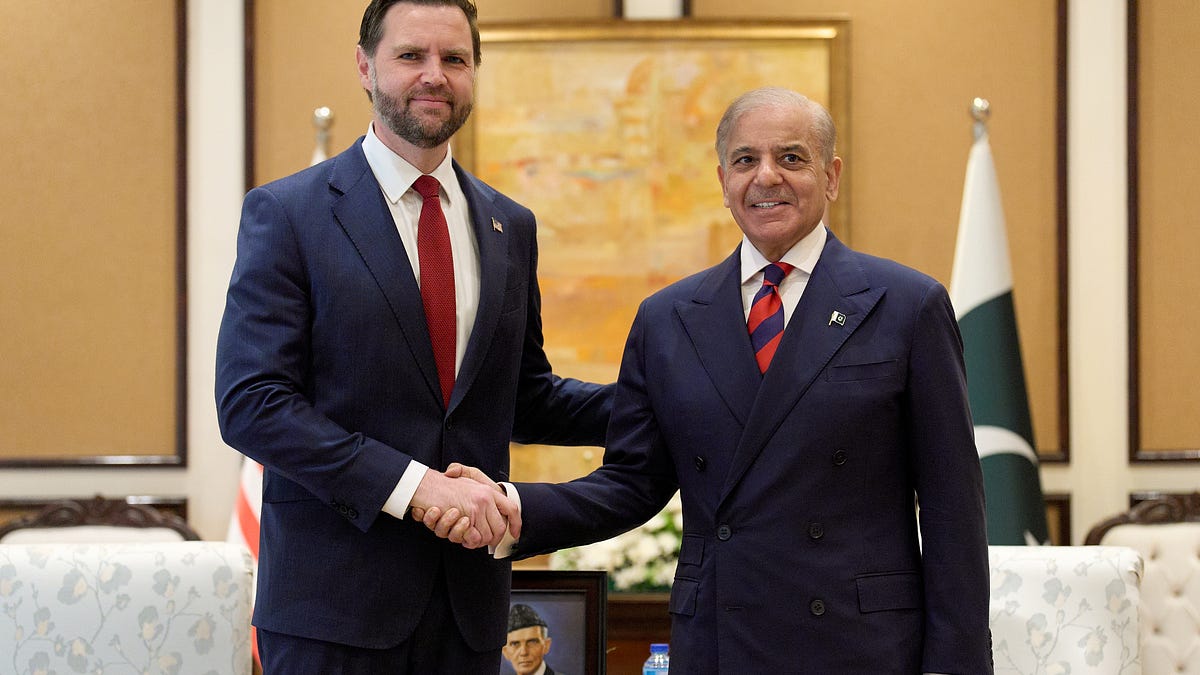
In the labyrinthine world of international diplomacy, few relationships have been as fraught with reversals and recalibrations as that between the United States and Pakistan. For decades, their interactions have swung wildly between strategic alignment and deep mistrust, often dictated by regional crises and shifting geopolitical priorities. Yet, a recent pronouncement by Pakistan’s Prime Minister Shehbaz Sharif has cast this dynamic in a startling new light: Pakistan, he declared to the Sunday Times, mediating in the U.S.-Iran conflict, represents “one of the shining moments in our history.” His exultant words – “We are in seventh heaven and on cloud nine and it’s intoxicating” – paint a picture of an alliance reborn, a far cry from the mutual suspicion that often characterized their past.
This newfound diplomatic fervor, however, is not a sudden epiphany but the culmination of a deliberate, if delicate, strategic realignment, particularly evident in the wake of former Prime Minister Imran Khan’s ouster. The narrative suggests a pivot from a period of strained relations under Khan, who often voiced anti-American sentiments, to a more pragmatic, engagement-focused approach under the current government. But beneath the surface of this diplomatic honeymoon lies a complex tapestry of historical grievances, strategic imperatives, and domestic vulnerabilities that threaten to unravel this budding partnership.
A History of Strategic Ambivalence and Mutual Mistrust
The U.S.-Pakistan relationship has always been transactional, shaped by immediate geopolitical needs rather than shared values. Born out of the Cold War, Pakistan became a crucial ally for the U.S. against Soviet expansion, receiving substantial military and economic aid. This strategic partnership continued, albeit with interruptions, through the Soviet-Afghan War, where Pakistan served as a frontline state. However, the relationship often soured during periods of U.S. disengagement or when Pakistan’s nuclear ambitions became a point of contention.
Post-9/11, Pakistan again became a vital, if reluctant, ally in the War on Terror. Billions in aid flowed, yet deep-seated mistrust persisted. The U.S. often viewed Pakistan as an unreliable partner, harboring elements hostile to American interests, while Pakistan felt its sacrifices were unappreciated and its sovereignty compromised. The unilateral U.S. raid to kill Osama bin Laden in Abbottabad in 2011 epitomized this mutual suspicion, severely damaging trust and leading to a nadir in relations. Imran Khan’s tenure further exacerbated these tensions, with his government often accusing the U.S. of orchestrating his removal, a claim vehemently denied by Washington.
The Post-Imran Khan Re-engagement: A Pragmatic Reset
With Imran Khan’s departure, a window of opportunity opened for a reset. The Shehbaz Sharif government, facing a severe economic crisis and needing international support, has actively sought to mend ties with the U.S. This shift is not merely cosmetic; it reflects a pragmatic understanding that Pakistan cannot afford to alienate a major global power and source of financial leverage. The U.S., in turn, recognizes Pakistan’s strategic importance, particularly in regional stability, counter-terrorism efforts, and as a potential counterweight to growing Chinese influence in South Asia. The recent mediation role in the U.S.-Iran conflict is a testament to this renewed engagement, positioning Pakistan as a constructive actor on the global stage and offering it a degree of diplomatic relevance it has long craved.
This re-engagement has manifested in several ways: * Economic Support: Pakistan has received crucial financial assistance and support from international institutions, often facilitated by U.S. influence, to avert a sovereign default. * Diplomatic Overtures: High-level visits and diplomatic exchanges have increased, signaling a willingness from both sides to engage constructively. * Regional Stability: Pakistan’s role in mediating regional disputes, such as between the U.S. and Iran, underscores its utility as a diplomatic conduit, leveraging its unique relationships in the Middle East.
The Shaky Foundations: Risks and Challenges Ahead
Despite the current euphoria, the foundation of this renewed partnership remains inherently shaky. Several factors could derail this fragile rapprochement:
* Domestic Instability in Pakistan: Pakistan is grappling with profound political and economic instability. The popularity of Imran Khan, despite his ouster, remains significant, and any perception that the current government is overly subservient to U.S. interests could ignite public backlash. The military’s pervasive influence in Pakistani politics also adds an unpredictable element. * Trust Deficit: Decades of mistrust cannot be erased overnight. Deep-seated suspicions within both establishments could resurface, especially if strategic interests diverge or if either side perceives a betrayal. * Regional Dynamics: The U.S. relationship with India, a traditional rival of Pakistan, continues to be a cornerstone of its South Asia policy. Any perceived tilt towards India could undermine Pakistan’s commitment to the U.S. alliance. Furthermore, Pakistan’s close ties with China, particularly through the China-Pakistan Economic Corridor (CPEC), present a complex balancing act. * U.S. Policy Volatility: U.S. foreign policy can be notoriously fickle, subject to changes in administration and domestic priorities. A shift in Washington’s focus could leave Pakistan feeling abandoned once again.
Implications and the Path Forward
For the U.S., a stable, cooperative Pakistan is essential for regional counter-terrorism efforts, managing Afghanistan’s future, and navigating the complex geopolitics of the Indo-Pacific. For Pakistan, a strong relationship with the U.S. offers economic lifelines, diplomatic leverage, and access to crucial military technology. The current embrace, therefore, is a pragmatic necessity for both, driven by mutual self-interest rather than a deep ideological alignment.
However, for this relationship to evolve beyond a transactional arrangement, both sides must invest in building genuine trust and understanding. This requires consistent diplomatic engagement, respect for sovereignty, and a willingness to address each other’s core concerns. Pakistan must demonstrate its commitment to democratic stability and economic reform, while the U.S. must offer sustained, predictable support that goes beyond immediate crisis management.
The “shining moment” of mediation in the U.S.-Iran conflict is indeed a significant achievement for Pakistan, signaling its renewed diplomatic relevance. Yet, the intoxicating feeling of being “on cloud nine” must not obscure the precarious reality. The U.S.-Pakistan relationship, like a phoenix, has risen from its ashes many times, but its future trajectory will depend on whether both nations can learn from their turbulent past and build a partnership founded on more than just fleeting strategic convenience. The path ahead is fraught with challenges, but the potential rewards of a stable, mutually beneficial alliance are too great to ignore, making this a critical juncture in their shared history.
Stay Informed
Get the world's most important stories delivered to your inbox.
No spam, unsubscribe anytime.
Comments
No comments yet. Be the first to share your thoughts!