From Lunar Orbit to Your Pocket: The MicroSD Card That Carried 5.6 Million Names to the Moon
Millions of names embarked on an unprecedented journey around the Moon aboard NASA's Artemis II mission, stored on a tiny microSD card. This article delves into the technological marvel behind this feat, exploring how a commercial-grade memory card became a vessel for humanity's lunar aspirations. Discover the implications of this blend of consumer tech and space exploration, and how you can own a piece of this historic hardware.
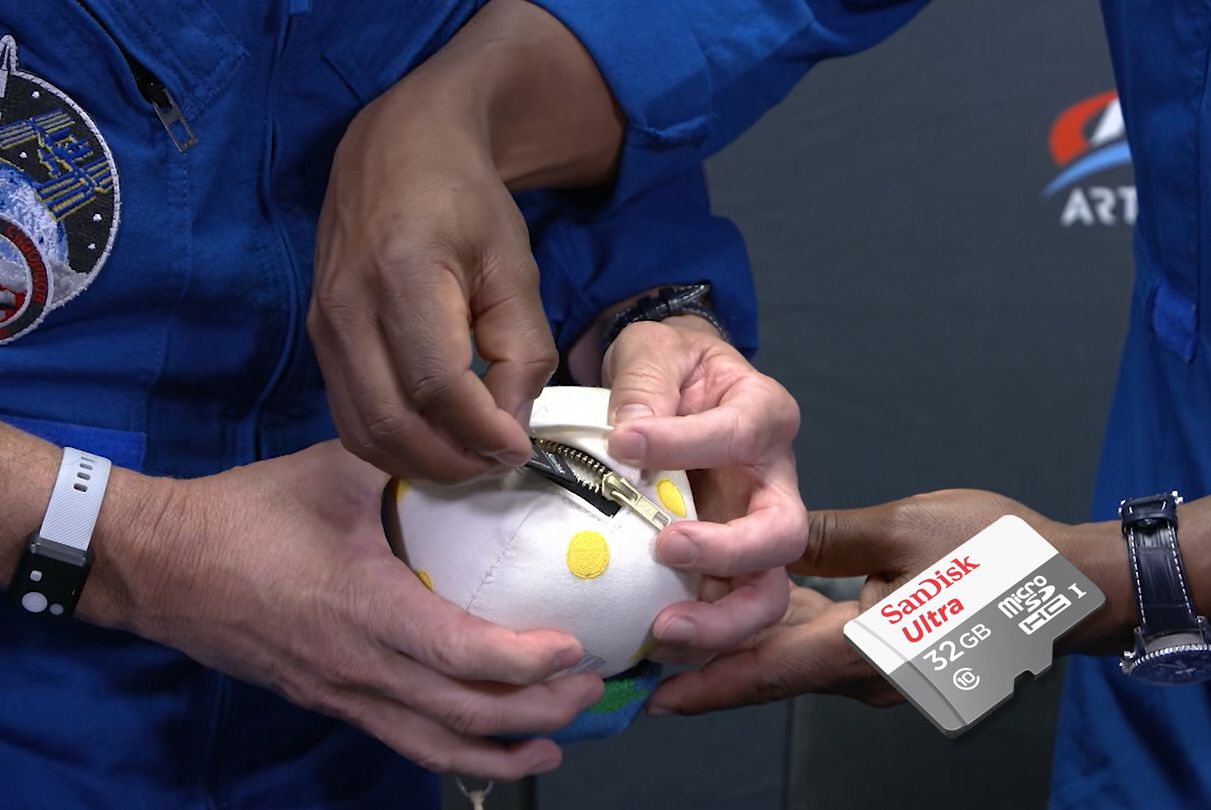
A Tiny Vessel for Grand Ambitions: The Artemis II MicroSD Card
In an era defined by accelerating technological convergence, a seemingly ordinary piece of consumer electronics has achieved an extraordinary feat: carrying the hopes and names of millions around the Moon. NASA's Artemis II mission, a pivotal step in humanity's return to lunar exploration, wasn't just about sending four astronauts farther than any human has been in over 50 years; it also transported a microSD card containing the names of over 5.6 million people. This isn't merely a symbolic gesture; it's a testament to the incredible resilience and miniaturization of modern technology, blurring the lines between everyday gadgets and cutting-edge space hardware. The very same type of memory card, placed inside the mission's mascot, Rise, is now commercially available, offering a tangible link to this historic voyage and sparking conversations about the future of space-grade consumer tech.
The Unsung Hero: Commercial Tech in the Cosmos
The idea of a standard microSD card enduring the harsh vacuum of space, radiation, and extreme temperature fluctuations might seem counterintuitive. Space missions traditionally rely on highly specialized, radiation-hardened components, meticulously tested and certified for their ability to withstand the extraterrestrial environment. These components are often incredibly expensive and years behind commercial technology in terms of performance and capacity. However, the Artemis II mission's use of a commercial-off-the-shelf (COTS) microSD card represents a growing trend in space exploration: leveraging readily available, cost-effective, and surprisingly robust consumer technology. This particular card, a SanDisk Extreme Pro microSDXC, is designed for demanding terrestrial applications like 4K video recording and high-speed photography, but its inherent durability proved sufficient for a journey to lunar orbit.
This strategic shift towards COTS components is driven by several factors. Firstly, the sheer pace of innovation in the consumer electronics sector far outstrips that of space-grade component development. Utilizing COTS allows missions to incorporate more advanced capabilities at a fraction of the cost and time. Secondly, modern commercial components are often built with surprising robustness. While not designed for space, their manufacturing processes and quality control can sometimes yield devices capable of surviving significant environmental stresses. NASA, along with private space companies like SpaceX, has been at the forefront of this paradigm shift, carefully selecting and testing COTS items that meet specific mission requirements without the exorbitant price tag of custom-built space hardware. The success of the microSD card on Artemis II validates this approach, demonstrating that innovation isn't always about bespoke solutions, but sometimes about ingenious application of existing tools.
A Shared Journey: Connecting Earth to the Moon
The inclusion of 5.6 million names on the microSD card served a dual purpose: it was a powerful public engagement tool and a symbolic gesture of humanity's collective aspiration. NASA's “Send Your Name to the Moon” program has been a staple of lunar and planetary missions for decades, allowing individuals worldwide to feel a personal connection to these ambitious endeavors. For Artemis II, this program took on renewed significance, marking the first crewed mission to the Moon in over half a century. Each name, digitally etched onto the tiny silicon wafer, represented a dream, a hope, or simply a curiosity about the cosmos. This initiative fosters a sense of global participation, transforming a scientific and engineering marvel into a shared human experience. It reminds us that while only a select few astronauts physically leave Earth, the spirit of exploration belongs to everyone. The card, nestled within Rise, the Snoopy-themed zero-g indicator, became a silent passenger carrying the weight of millions of dreams, a poignant reminder of the universal appeal of space exploration.
Implications for Future Space Exploration and Beyond
The successful deployment of a commercial microSD card in lunar orbit has profound implications for the future of space exploration. It opens doors for:
* Cost Reduction: By reducing the reliance on expensive, custom-built hardware, future missions can become more affordable, enabling more frequent launches and a wider array of scientific experiments. * Increased Data Capacity: Commercial memory solutions offer significantly higher capacities and faster data transfer rates than traditional space-hardened alternatives, crucial for high-resolution imaging, complex scientific data, and potentially even onboard AI processing. * Faster Development Cycles: Integrating COTS components can dramatically shorten the design, testing, and deployment phases of a mission, accelerating the pace of discovery. * Public Engagement: The ability to relate space hardware to everyday items makes space exploration more accessible and understandable to the general public, fostering greater interest and support.
This trend isn't limited to memory cards. We've seen commercial processors, cameras, and even off-the-shelf software being adapted for space use. However, it's not without its challenges. Rigorous testing is still paramount to ensure COTS components can withstand the unique stresses of launch and space. Radiation shielding, thermal management, and vibration resistance remain critical considerations. Yet, the benefits often outweigh the risks, especially for missions where the cost-efficiency and performance gains are substantial.
Owning a Piece of History: The Commercial Connection
The fact that the exact same type of microSD card that orbited the Moon is available for purchase offers a unique opportunity for enthusiasts and collectors. It's a tangible link to a monumental achievement, a small piece of technology that shared a journey with astronauts around another celestial body. This accessibility democratizes space memorabilia, moving beyond expensive artifacts to an item that is both affordable and widely available. For many, holding such a card might evoke a sense of wonder, a personal connection to the vastness of space, and a reminder of humanity's ingenuity. It transforms a high-tech space mission into something relatable, something that can be held in the palm of one's hand. This blend of cutting-edge space technology and everyday consumer products underscores a powerful message: the future of space exploration is not just for scientists and astronauts; it's for everyone, empowered by the very tools we use in our daily lives.
The Next Frontier: Democratizing Space Technology
The journey of the Artemis II microSD card is more than a footnote in space history; it's a harbinger of a new era. As technology continues to miniaturize and become more robust, the potential for integrating commercial solutions into space missions will only grow. This could lead to a future where space exploration is not just the domain of national agencies but also accessible to smaller research institutions, private companies, and even citizen scientists. Imagine CubeSats powered by advanced commercial processors, or lunar rovers utilizing off-the-shelf camera sensors. The democratization of space technology, exemplified by this tiny card, promises to accelerate discovery, inspire new generations, and solidify humanity's presence beyond Earth. The Moon, once a distant dream, is becoming increasingly within reach, one small, commercial memory card at a time. This blend of high-stakes exploration and everyday technology is a powerful narrative, signalling a future where the cosmos is not just observed, but actively participated in by an ever-growing community.
Stay Informed
Get the world's most important stories delivered to your inbox.
No spam, unsubscribe anytime.
Comments
No comments yet. Be the first to share your thoughts!