From Starfleet Dreams to Monastic Puzzles: The Zachtronics Saga Behind U.V.S. Nirmana
The acclaimed puzzle game developers Zachtronics, known for their intricate 'Zach-like' simulations, nearly embarked on a Star Trek engineering simulator. This fascinating untold story reveals how creative constraints and intellectual property challenges transformed a Starfleet vision into U.V.S. Nirmana, a philosophical puzzler now challenging minds worldwide. Explore the journey of Coincidence, the studio formed by former Zachtronics members, and the profound impact of their unique design philosophy on the gaming landscape.
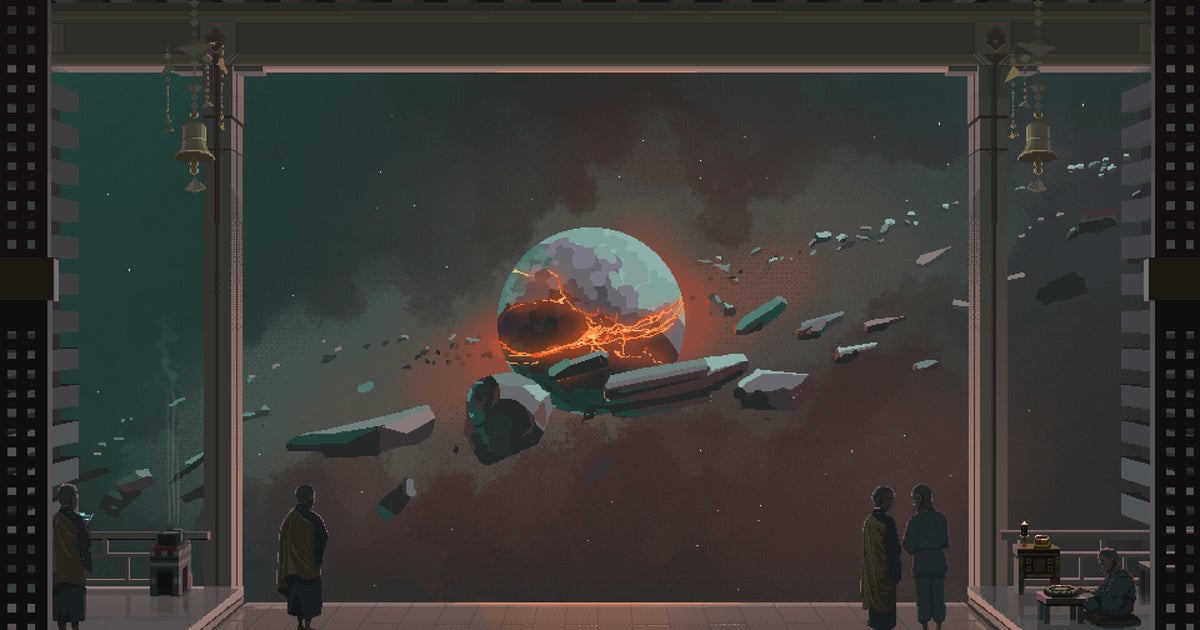
In the intricate world of puzzle games, few names command as much respect and fascination as Zachtronics. Their unique brand of 'Zach-like' puzzles, characterized by open-ended design, complex systems, and often a dash of existential dread, has cultivated a dedicated following. Yet, a recent revelation has shed light on a fascinating, almost-realized project that could have dramatically altered their trajectory: a Star Trek engineering simulator. This tantalizing glimpse into an alternate gaming history not only highlights the studio's ambitious vision but also underscores the creative alchemy that transformed a licensed dream into the philosophical puzzler, U.V.S. Nirmana.
The Genesis of an Idea: Starfleet Engineering
Imagine the bridge of a Starfleet vessel, not from the perspective of Captain Kirk or Jean-Luc Picard, but from the meticulous, often frantic, viewpoint of its chief engineer. This was the audacious premise Zachtronics, the creators of acclaimed titles like SpaceChem and Opus Magnum, once considered. The concept was simple yet profound: simulate the complex, interconnected systems of a Star Trek starship, challenging players to manage power distribution, repair critical components, and avert crises with the ingenuity and resourcefulness expected of a Starfleet engineer. The appeal was undeniable; the Star Trek universe, with its rich lore and technological marvels, offered a perfect sandbox for Zachtronics' signature systems-based puzzle design.
Sources close to the development, now part of the Coincidence studio, revealed that the team was "totally game to play ball" with the idea. The potential for intricate, multi-layered puzzles involving warp core breaches, phaser array overloads, and life support failures was immense. Players could have been tasked with optimizing energy flow, designing temporary fixes under pressure, and understanding the delicate balance required to keep a starship operational amidst cosmic dangers. This vision aligned perfectly with Zachtronics' established pedigree in creating games that demand logical thinking, spatial reasoning, and a deep understanding of interconnected mechanics.
The Unavoidable Hurdles: IP and Creative Freedom
Despite the enthusiasm, the path to creating an official Star Trek game is fraught with challenges, primarily concerning intellectual property (IP) licensing. Securing the rights to a franchise as iconic and valuable as Star Trek involves navigating complex negotiations, adhering to strict brand guidelines, and often ceding a significant degree of creative control to the IP holder. For a studio renowned for its highly original and often idiosyncratic design philosophy, these constraints could prove stifling. The Zachtronics team, known for their freedom to experiment and push boundaries, likely faced the prospect of having their innovative ideas diluted or rejected to fit corporate mandates.
This is a common dilemma in the gaming industry: the allure of a beloved franchise versus the desire for unbridled creative expression. While a Star Trek sim would have guaranteed immediate recognition and a vast potential audience, it also carried the risk of compromising the very essence of what makes a Zachtronics game unique. The decision to pivot away from the Star Trek concept was not merely a matter of practicality but a testament to the studio's commitment to artistic integrity and player experience. They understood that a truly groundbreaking game often requires the freedom to explore unconventional themes and mechanics without external limitations.
Rebirth as U.V.S. Nirmana: A Philosophical Odyssey
The spirit of the Star Trek engineering sim, however, did not die. Instead, it underwent a profound metamorphosis, emerging as U.V.S. Nirmana. Released by Coincidence, a studio formed by former Zachtronics members, Nirmana retains the core 'Zach-like' puzzle mechanics but wraps them in a completely original, philosophical narrative. The game places players in charge of a monastic spacecraft, a vessel dedicated to spiritual contemplation and the pursuit of enlightenment rather than interstellar conquest or exploration. This shift from a bustling Starfleet bridge to a serene, introspective environment is striking.
U.V.S. Nirmana challenges players with "medium-difficulty" puzzles that, as one reviewer noted, "fairly spaghettified my synapses." This speaks to the game's intricate design, requiring players to manage resources, optimize systems, and solve complex logistical problems within the confines of a unique, self-contained ecosystem. The narrative, though abstract, provides a rich thematic backdrop, inviting players to ponder concepts of existence, purpose, and the delicate balance between technology and spirituality. It's a testament to how creative constraints can sometimes lead to even more innovative and meaningful outcomes, pushing developers to craft entirely new worlds and narratives that resonate on a deeper level.
The Enduring Legacy of 'Zach-likes' and Coincidence
The story of the almost-Star Trek game and the birth of U.V.S. Nirmana is more than just an anecdote; it's a window into the creative process of one of the most influential puzzle game studios of our time. Zachtronics, even in its post-closure form through studios like Coincidence, continues to define a genre. Their games are not just about finding the right answer; they are about designing elegant solutions, optimizing complex systems, and often, embracing the beautiful chaos of emergent behavior.
Key characteristics of 'Zach-like' games include: * Open-ended solutions: Players are given a problem and a set of tools, with multiple valid ways to achieve the objective. * Visual programming: Often involves connecting components, routing signals, or manipulating physical objects on a grid. * Optimization challenges: Beyond just solving the puzzle, players are encouraged to optimize for speed, cost, or component count. * Rich, often melancholic narratives: The gameplay is frequently framed by compelling, thought-provoking stories.
Coincidence's U.V.S. Nirmana stands as a proud continuation of this legacy. It demonstrates that the spirit of Zachtronics lives on, not just in the mechanics but in the philosophy of game design itself. By choosing to forge their own path, even if it meant abandoning a high-profile license, the developers have once again delivered a game that is both intellectually stimulating and profoundly original. This decision ultimately benefits players, who get to experience a truly unique vision rather than a potentially compromised adaptation.
The Future of Independent Puzzle Design
The journey from a Star Trek engineering simulator concept to U.V.S. Nirmana offers valuable insights into the independent game development landscape. It highlights the importance of creative autonomy and the potential for greater innovation when developers are free from the commercial pressures and restrictions often associated with licensed properties. While the idea of a Zachtronics-designed Star Trek game remains a fascinating 'what if,' the reality of U.V.S. Nirmana is arguably more compelling.
This philosophical puzzler not only challenges players' logical faculties but also invites introspection, proving that complex systems can serve not just as brain teasers but as vehicles for deeper thought. As the gaming industry continues to evolve, the success of titles like Nirmana reinforces the enduring appeal of thoughtfully designed, original experiences. It's a powerful reminder that sometimes, the most extraordinary journeys begin when you boldly go where no one has gone before – even if that means charting a course entirely of your own making, far from the familiar stars of established franchises.
Stay Informed
Get the world's most important stories delivered to your inbox.
No spam, unsubscribe anytime.
Comments
No comments yet. Be the first to share your thoughts!