Google's Workspace Revolution: The Dawn of Persistent Conversational AI
Google I/O 2026 unveiled a groundbreaking transformation of Workspace, introducing autonomous, persistent conversational AI agents. This strategic pivot marks the end of traditional software navigation, embedding AI deeply into daily workflows. The shift promises unprecedented productivity but also raises critical questions about privacy, job displacement, and the very nature of human-computer interaction.
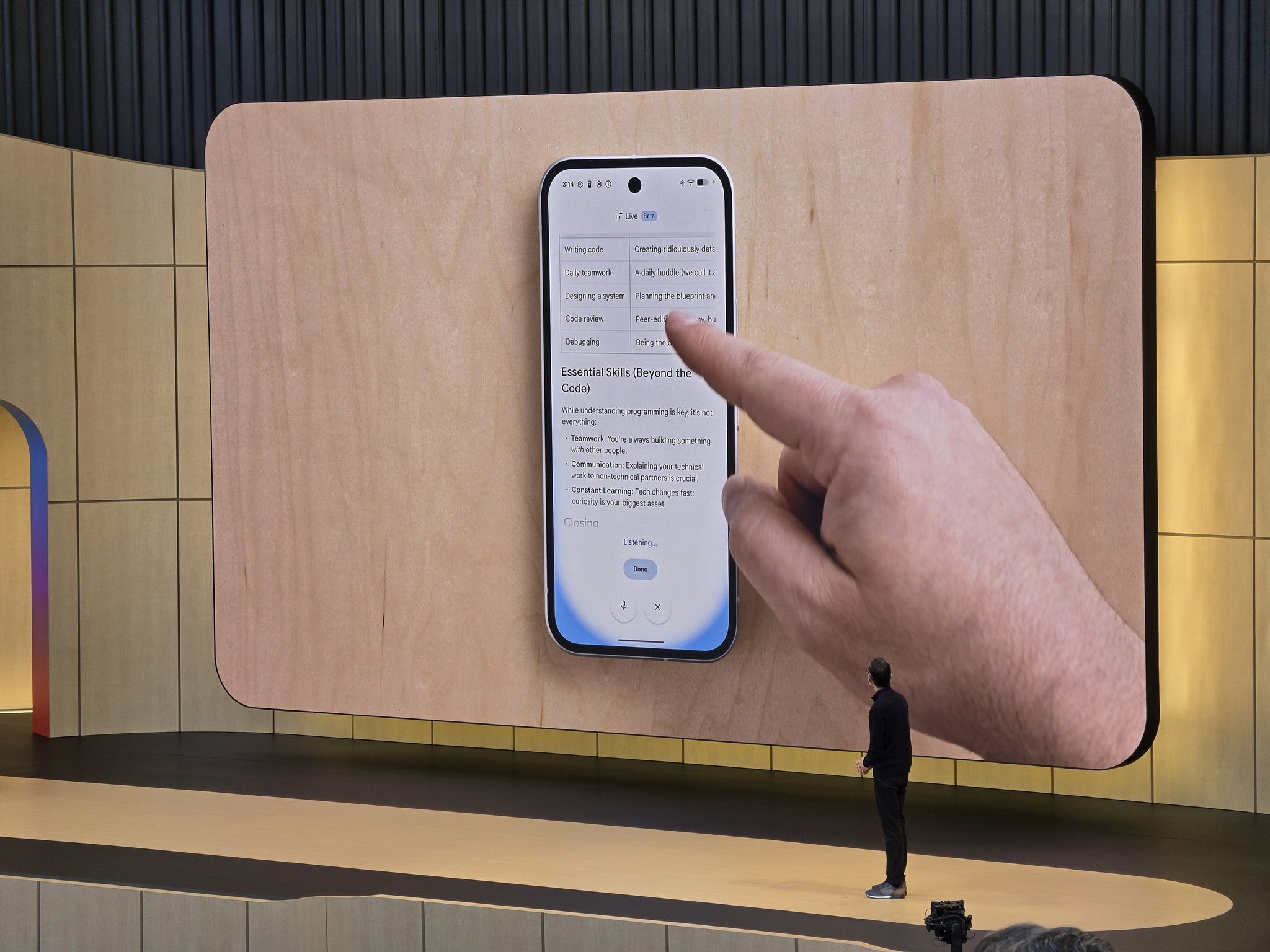
The year is 2026, and Google has just dropped a bombshell at its annual I/O developer conference that promises to redefine the very fabric of digital work. Forget clicking, typing, or navigating complex menus; the future, as envisioned by Google, is conversational, autonomous, and omnipresent. This isn't merely an update; it's a strategic pivot that ushers in the Dawn of Conversational Computing, fundamentally altering how professionals interact with their digital environments and each other.
For decades, software interfaces have largely remained static – a visual landscape of icons, windows, and dropdowns. Google's I/O 2026 presentation, however, signaled the end of traditional software navigation. In its place emerges a deeply integrated, voice-driven artificial intelligence ecosystem within Workspace, where AI agents don't just assist; they anticipate, execute, and even initiate tasks autonomously. This paradigm shift, from reactive tools to proactive partners, is poised to reshape productivity, creativity, and the very definition of a digital assistant.
The Rise of Autonomous AI Agents in Workspace
At the heart of Google's announcement is the introduction of persistent conversational AI agents. Unlike previous iterations of AI, which often required explicit prompts or were confined to specific applications, these new agents are designed to operate seamlessly across the entire Workspace suite. Imagine an AI that not only schedules your meetings but also drafts the agenda, pulls relevant documents from your Drive, summarizes previous discussions, and even suggests follow-up actions – all based on your spoken intent and ambient understanding of your workflow. This isn't a hypothetical scenario; it's the new reality Google is building.
These agents are described as 'persistent' because they maintain context across different applications and over extended periods. They learn your preferences, anticipate your needs, and can proactively offer assistance or complete tasks without explicit command. For instance, an agent might notice an upcoming deadline in your calendar, cross-reference it with your project management tool, and automatically generate a progress report draft in Google Docs, then alert you to its completion. This level of autonomy represents a significant leap from the task-specific bots we've seen before, moving towards a truly intelligent digital co-pilot.
The underlying technology leverages advanced Large Language Models (LLMs), reinforced by continuous learning from user interactions and vast datasets. Google emphasized the multimodal capabilities of these agents, meaning they can process and respond to voice, text, and even visual cues, integrating deeply with camera and microphone inputs for a more natural and intuitive interaction. This holistic approach aims to make technology feel less like a tool and more like an extension of one's own cognitive processes.
Implications for Productivity and the Future of Work
The immediate promise of this Workspace overhaul is a dramatic increase in productivity. By offloading routine, repetitive, and even complex tasks to AI agents, professionals can theoretically free up significant time for higher-level strategic thinking, creativity, and human-centric collaboration. Early demonstrations showcased scenarios where AI agents handled email triage, data analysis, presentation creation, and even rudimentary coding tasks, all through natural language commands.
Consider the average knowledge worker who spends hours each week on administrative overhead. Google's vision suggests a future where an AI agent manages scheduling conflicts, synthesizes information from disparate sources for reports, and even helps brainstorm ideas by pulling relevant research. This could lead to a significant reduction in digital fatigue and an increase in job satisfaction for tasks that are often seen as drudgery.
However, this leap also raises critical questions about the future of work. Will these highly capable AI agents displace certain job functions? While Google positions them as augmentation tools, the line between augmentation and automation can blur quickly. Roles focused on data entry, basic research, administrative support, and even certain aspects of content creation could see significant transformation or reduction. This necessitates a proactive approach to reskilling and upskilling the workforce to adapt to a new human-AI collaborative paradigm.
Navigating the Ethical and Security Landscape
The power of persistent, autonomous AI agents comes with a substantial set of ethical and security considerations. The depth of integration and the continuous learning nature of these agents mean they will have access to an unprecedented amount of sensitive personal and professional data. Google has stressed its commitment to privacy and security, outlining new encryption protocols and user controls for data access and retention. However, the sheer volume and sensitivity of the data involved will inevitably spark intense debates around data governance, surveillance, and algorithmic bias.
Concerns about algorithmic bias are particularly pertinent. If AI agents are learning from vast datasets, and those datasets reflect existing societal biases, the AI could inadvertently perpetuate or even amplify those biases in its decision-making and recommendations. Google stated that rigorous testing and human oversight are being implemented to mitigate these risks, but achieving truly unbiased AI remains a monumental challenge.
Furthermore, the concept of agency and control becomes more complex. If an AI agent can autonomously initiate actions, who is ultimately responsible for its outcomes? Clear frameworks for accountability, transparency in AI decision-making, and robust 'off-switches' or override mechanisms will be crucial for building user trust and preventing unintended consequences. The potential for 'hallucinations' or erroneous outputs from LLMs also means human verification will remain a vital component of any critical workflow.
The Road Ahead: A New Era of Human-Computer Interaction
Google's I/O 2026 announcement is more than just a product launch; it's a declaration of a new era in human-computer interaction. The shift from explicit commands to implicit understanding, from discrete applications to a fluid, conversational interface, represents a profound evolution. This vision of Workspace as an intelligent, proactive partner rather than a collection of tools promises to unlock new levels of efficiency and creativity.
However, the journey will not be without its challenges. The successful integration of these powerful AI agents will depend not only on technological prowess but also on careful consideration of the societal, ethical, and economic impacts. Businesses and individuals alike will need to adapt to this new paradigm, understanding how to effectively collaborate with AI, manage data privacy, and navigate the evolving landscape of work. As we stand at the precipice of this conversational computing revolution, one thing is clear: the way we work is about to change forever, and Google is leading the charge into this bold, AI-driven future.
Stay Informed
Get the world's most important stories delivered to your inbox.
No spam, unsubscribe anytime.
Comments
No comments yet. Be the first to share your thoughts!