Hantavirus Horror: Cruise Ship Evacuation Unravels in Canary Islands as Global Health Alarms Sound
A luxury cruise liner, once a symbol of leisure, became a vessel of fear after a deadly hantavirus outbreak forced a complex, international repatriation effort from Spain's Canary Islands. With three passengers already dead and dozens more infected, the unfolding crisis highlights the vulnerabilities of global travel and the challenges of containing rapidly spreading pathogens. Authorities are racing against time to trace contacts and prevent further transmission, as experts warn of the potential for wider public health implications.
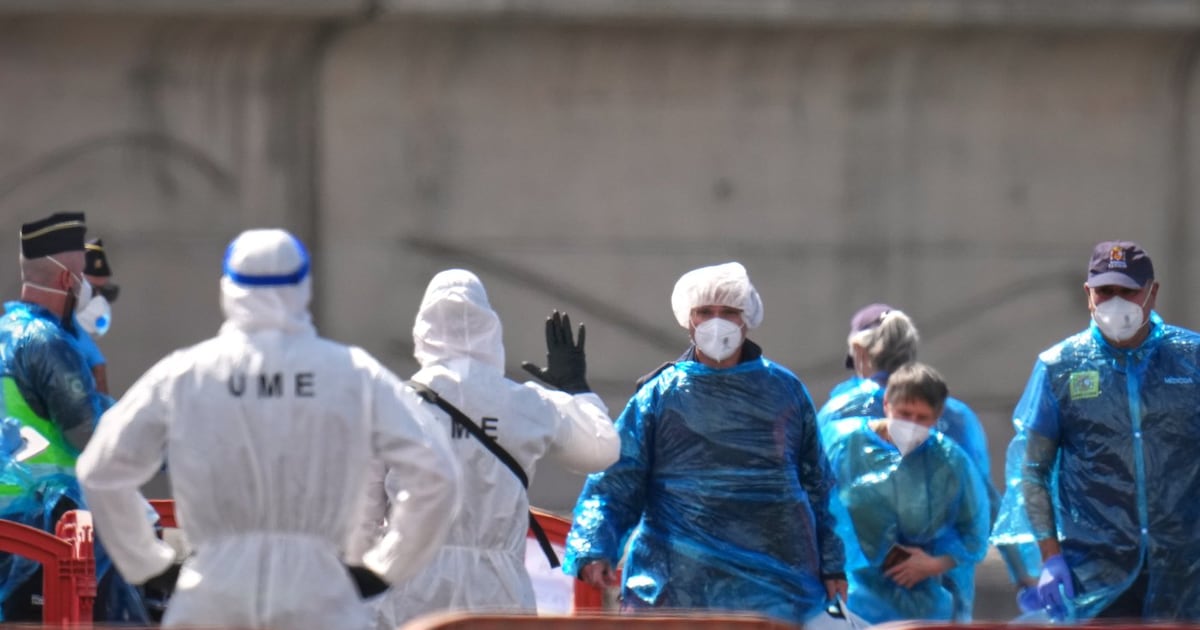
GRANADILLA DE ABONA, Spain – The idyllic shores of the Canary Islands, usually a haven for sun-seekers, became the epicenter of a frantic international health operation this past Sunday. Occupants of the 'Ocean Dreamer,' a luxury cruise ship struck by a deadly hantavirus outbreak, began their complex journey home, marking the culmination of a week-long ordeal that has sent ripples of alarm across global health agencies. What began as a dream vacation for thousands quickly devolved into a nightmare, underscoring the precarious balance between global connectivity and public health security.
Three passengers have tragically succumbed to the virus, their deaths casting a somber shadow over the repatriation efforts. Dozens more are confirmed infected, and hundreds are under observation, creating a logistical and medical challenge of unprecedented scale. The sight of masked medical personnel guiding disembarking passengers, some visibly distressed, painted a stark picture of the crisis. This incident serves as a potent reminder of how quickly a localized health threat can escalate into an international emergency, demanding swift and coordinated action from multiple nations.
The Genesis of a Global Scare
The 'Ocean Dreamer' had been on a two-week transatlantic voyage, departing from Miami and making several stops before its scheduled return. The first signs of trouble emerged midway through the journey when several passengers reported severe flu-like symptoms. Initially dismissed as common travel ailments, the situation rapidly deteriorated. Within days, the ship's infirmary was overwhelmed, and the first fatality was recorded. Subsequent testing, conducted with the assistance of the World Health Organization (WHO) and Spain's Ministry of Health, confirmed the presence of hantavirus, a rare but often fatal pathogen.
Hantavirus is typically transmitted to humans through contact with rodents or their urine, droppings, or saliva. It is not usually spread from person to person, which initially puzzled health officials given the confined environment of a cruise ship. Investigations are ongoing, but early theories suggest a possible contamination event at one of the ship's ports of call or even within the ship's ventilation systems if rodents had gained access. The incubation period can range from a few days to several weeks, making contact tracing a formidable task. This particular strain, identified as a highly virulent variant, has heightened concerns among epidemiologists.
A Logistical Labyrinth: The Repatriation Challenge
Organizing the safe return of thousands of passengers and crew from diverse nationalities, all potentially exposed to a deadly virus, is a monumental undertaking. The Spanish government, in conjunction with international health bodies and the cruise line, established a temporary quarantine zone and medical triage facility at the Granadilla de Abona port. Passengers underwent rigorous health screenings, including rapid diagnostic tests, before being cleared for travel. Those exhibiting symptoms or testing positive were immediately isolated and transferred to designated medical facilities on the islands or flown to specialized hospitals in mainland Spain.
The repatriation process involved chartered flights, strict bio-containment protocols, and coordination with the respective home countries of the passengers. Each nation had to prepare for the arrival of potentially infected citizens, setting up their own quarantine procedures and medical surveillance. The cost and complexity of this operation are staggering, highlighting the economic and social ramifications of such outbreaks. This incident will undoubtedly lead to a re-evaluation of international travel health protocols and emergency response mechanisms for large-scale maritime incidents.
Hantavirus: A Silent Threat with Deadly Consequences
Hantavirus Pulmonary Syndrome (HPS), the most severe form of hantavirus infection, is characterized by flu-like symptoms that rapidly progress to respiratory failure. Its fatality rate can be as high as 38%, making it one of the more dangerous zoonotic diseases. While relatively rare, outbreaks have occurred globally, often linked to environmental factors that lead to increased rodent populations. The 'Ocean Dreamer' incident is particularly alarming because it occurred in an environment not typically associated with hantavirus transmission, raising questions about novel exposure pathways or highly unusual circumstances.
According to data from the Centers for Disease Control and Prevention (CDC), there have been over 800 cases of HPS reported in the United States since 1993, predominantly in rural areas. Globally, different strains of hantavirus cause varying syndromes, from HPS to Hemorrhagic Fever with Renal Syndrome (HFRS). The current outbreak's specific strain and its mode of transmission on a cruise ship are subjects of intense scientific investigation. Understanding these nuances is crucial for developing effective prevention strategies and public health advisories, especially for the cruise industry which relies heavily on public trust and safety.
The Aftermath and Future Implications
As passengers slowly make their way home, the immediate crisis transitions into a long-term public health challenge. Authorities are meticulously tracing every contact, from fellow passengers to port workers and ground transportation staff, to prevent secondary transmissions. The psychological toll on those who endured the ordeal, as well as the families of the deceased, is immense. Support services are being made available, but the memory of fear and uncertainty will linger.
For the cruise industry, this incident represents a significant blow. While cruise lines have robust health and safety protocols, the 'Ocean Dreamer' outbreak exposes vulnerabilities to less common pathogens. Experts anticipate a thorough review of sanitation practices, pest control measures, and emergency medical response capabilities across the entire sector. The incident also serves as a stark reminder for international travelers to be vigilant about health risks and for governments to strengthen global health surveillance systems. The hantavirus outbreak on the 'Ocean Dreamer' is not merely a contained event; it is a global wake-up call, urging continuous preparedness and collaboration in an increasingly interconnected world. The lessons learned from Granadilla de Abona will undoubtedly shape future public health policies and travel advisories for years to come, emphasizing that global health security is a shared responsibility.
Stay Informed
Get the world's most important stories delivered to your inbox.
No spam, unsubscribe anytime.
Comments
No comments yet. Be the first to share your thoughts!