Hengli's Singapore Unit Faces Collapse After US Sanctions: A Geopolitical Ripple Effect
Hengli Petrochemical International's Singapore unit is dismissing staff and faces potential liquidation following US sanctions on its former parent company. This development highlights Singapore's crucial role as a trading hub for Chinese firms and the far-reaching impact of geopolitical tensions on global supply chains and corporate operations. The situation underscores the complex challenges faced by companies navigating international regulatory pressures.
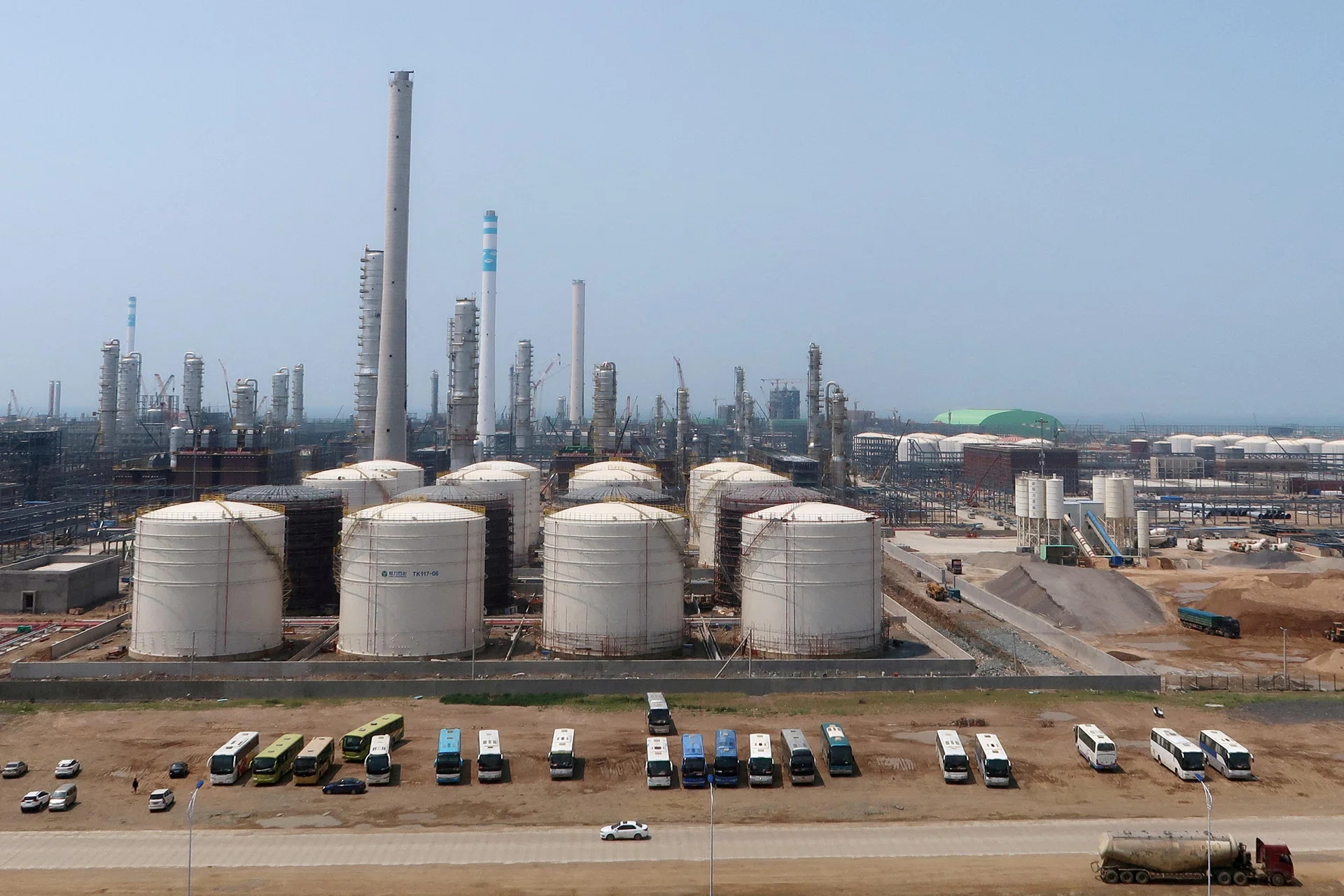
The intricate web of global commerce, often touted for its interconnectedness, frequently finds itself ensnared by the sharp edges of geopolitics. Such is the unfolding saga of Hengli Petrochemical International's Singapore operations, a unit now teetering on the brink of collapse. Weeks after its former parent company, Hengli Group, was ensnared by stringent US sanctions, the Singapore entity has begun dismissing staff, with sources indicating a high probability of its eventual winding down. This dramatic turn of events not only signifies a significant blow to the company but also casts a stark light on the vulnerabilities of international trade hubs like Singapore, which have become vital conduits for Chinese enterprises seeking access to global markets and resources.
Singapore has long cultivated an image as a neutral, efficient, and strategically located financial and trading hub. Its robust legal framework, advanced infrastructure, and skilled workforce have attracted countless multinational corporations, including a substantial number of Chinese firms looking to diversify their supply chains, access international financing, and manage their global commodity trading operations. For companies like Hengli, a petrochemical giant, Singapore served as a critical node for sourcing crude oil, metals, and other essential raw materials, facilitating their integration into the global economy. The current crisis at Hengli Petrochemical International's Singapore unit, therefore, resonates far beyond the company's immediate employees, signaling a broader challenge for the city-state's role in an increasingly fragmented world order.
The Sanctions' Swift and Devastating Impact
The genesis of Hengli Petrochemical International's current predicament lies squarely with the US sanctions imposed on its former parent, Hengli Group. While the specifics of the sanctions' nature (e.g., related to Xinjiang, military ties, or other national security concerns) are crucial for a full understanding, their immediate effect on the Singapore unit has been unequivocally severe. Sanctions, by design, aim to isolate targeted entities from the global financial system, making it exceedingly difficult for them to conduct transactions, access credit, or engage in international trade. For a trading arm like the Singapore unit, whose very existence relies on seamless cross-border financial flows and commodity transactions, such restrictions are akin to cutting off its oxygen supply.
Sources close to the matter reveal that some employees have already been let go, while others were offered roles within different Hengli entities, likely outside the direct purview of the sanctioned operations. This internal restructuring suggests an attempt by the broader Hengli Group to mitigate the fallout, but for the Singapore unit, the writing appears to be on the wall. The inability to secure financing, process payments, or engage with international suppliers and buyers effectively renders its core business model unviable. The risk of being wound down is not merely speculative; it is a direct and foreseeable consequence of being linked to a sanctioned entity, regardless of the Singapore unit's operational independence or its role as a separate legal entity.
Singapore's Strategic Role and Emerging Challenges
Singapore's appeal to Chinese companies stems from several factors. Beyond its geographical advantage, its reputation for political stability, rule of law, and a strong financial sector makes it an ideal base for international operations. Many Chinese firms leverage Singapore for: * Commodity Trading: Accessing global markets for oil, gas, metals, and agricultural products. * International Financing: Tapping into diverse funding sources and managing foreign exchange risks. * Supply Chain Management: Establishing regional logistics and distribution hubs. * Talent Acquisition: Recruiting a diverse, skilled, and multilingual workforce.
The case of Hengli underscores the precarious position these firms and their host nations find themselves in when geopolitical tensions escalate. Singapore, while maintaining its neutrality, cannot entirely insulate itself from the ripple effects of US-China strategic competition. The city-state has consistently emphasized the importance of upholding international law and complying with UN-mandated sanctions. However, unilateral sanctions, such as those imposed by the US, present a complex challenge, forcing companies and governments to navigate a labyrinth of extraterritorial legal implications. The potential winding down of Hengli's Singapore unit could serve as a cautionary tale, prompting other Chinese firms to reassess their operational structures and potentially diversify their international presence to mitigate similar risks.
Broader Implications for Global Trade and Corporate Strategy
The situation at Hengli Petrochemical International is not an isolated incident but rather a symptom of a larger trend towards de-risking and supply chain diversification in response to geopolitical uncertainties. Companies are increasingly scrutinizing their exposure to jurisdictions and entities that might become targets of international sanctions or trade restrictions. This leads to a more fragmented global economy, where efficiency sometimes takes a backseat to resilience and geopolitical compliance.
For the petrochemical industry, which relies heavily on global sourcing and complex logistics, the impact is particularly acute. Disruptions to major players like Hengli can send tremors through commodity markets, affecting prices and availability. Furthermore, the incident highlights the critical need for robust due diligence and compliance frameworks within multinational corporations. Even subsidiaries or units that appear to operate independently can be severely impacted by actions taken against their parent companies, especially when financial flows and corporate governance are intertwined.
A Future of Navigating Geopolitical Headwinds
As the world grapples with increasing geopolitical fragmentation, the challenges faced by Hengli Petrochemical International's Singapore unit are likely to become more common. Companies, particularly those with significant international operations or ties to strategically sensitive sectors, will need to adopt more agile and resilient strategies. This includes:
* Enhanced Risk Assessment: Continuously evaluating geopolitical risks and their potential impact on operations. * Legal and Compliance Fortification: Investing in robust legal teams and compliance protocols to navigate complex international regulations. * Operational Diversification: Exploring alternative sourcing channels, production locations, and financial partners to reduce reliance on single points of failure. * Strategic Communication: Engaging proactively with governments and stakeholders to articulate their position and mitigate adverse perceptions.
The potential demise of Hengli's Singapore unit serves as a stark reminder that in today's interconnected yet fractured world, economic decisions are inextricably linked to geopolitical realities. For Singapore, it underscores the ongoing challenge of balancing its role as a global trading hub with the need to adhere to international norms while navigating the complexities of great power competition. The path forward for international businesses will undoubtedly be characterized by a continuous effort to adapt, comply, and innovate in the face of ever-evolving geopolitical headwinds.
Stay Informed
Get the world's most important stories delivered to your inbox.
No spam, unsubscribe anytime.
Comments
No comments yet. Be the first to share your thoughts!