Indonesia's Blasphemy Law Under Scrutiny as Former VP Jusuf Kalla Faces Accusation
Former Indonesian Vice-President Jusuf Kalla has been reported to Jakarta police for alleged blasphemy, stemming from remarks made during a public lecture at Gadjah Mada University. A viral video of his comments has ignited public debate and drawn attention to Indonesia's controversial blasphemy laws. This incident underscores the delicate balance between freedom of expression and religious sensitivities in the world's largest Muslim-majority nation, raising questions about political motivations and the future of democratic discourse.
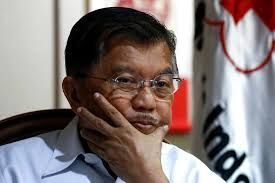
JAKARTA, Indonesia – The political and religious landscape of Indonesia has been jolted by news that former Vice-President Jusuf Kalla, a towering figure in the nation's political history, has been reported to the Jakarta Metropolitan Police for alleged blasphemy. The accusation stems from remarks he made during a public lecture at the prestigious Gadjah Mada University (UGM) in Jogjakarta back in March, which have since gone viral online. This development is not merely a legal proceeding; it's a potent reminder of the enduring power and contentious nature of Indonesia's blasphemy laws, often wielded in politically charged environments.
The incident has reignited a fierce debate about freedom of speech, religious tolerance, and the potential for these laws to be weaponized against public figures. Kalla, who served two terms as Vice-President under different presidents, is a seasoned politician known for his pragmatic approach and significant contributions to peace processes in regions like Aceh and Poso. His involvement in such a controversy sends ripples through the archipelago, forcing a national conversation on the limits of public discourse in a religiously diverse nation.
The Genesis of the Controversy: A Viral Video and Public Outcry
The core of the accusation against Jusuf Kalla lies in a viral video circulating across social media platforms. The footage captures excerpts of his speech at UGM, where he reportedly made comments that some interpret as insulting to Islam. While the exact phrasing and context of his remarks are now under intense scrutiny, the mere allegation of blasphemy in Indonesia is enough to trigger significant public and legal repercussions. The individual who filed the report, a businessman named Muhammad Hatta Taliwang, has stated that Kalla's comments were offensive and divisive, prompting him to seek legal action.
This is not an isolated incident in Indonesia. The country has a long and often turbulent history with blasphemy accusations. The most high-profile case in recent memory involved Basuki Tjahaja Purnama, better known as Ahok, the Christian former governor of Jakarta. In 2017, Ahok was controversially sentenced to two years in prison for blasphemy, a verdict that many human rights organizations condemned as politically motivated and a setback for religious freedom. His case highlighted how easily such accusations can be leveraged to mobilize conservative religious groups and influence political outcomes, particularly during election cycles.
Indonesia's Blasphemy Laws: A Legal and Social Minefield
Indonesia's blasphemy law, Article 156a of the Criminal Code, criminalizes anyone who "deliberately publicly expresses feelings or engages in acts that are essentially hostile, abuse, or defame a religion adhered to in Indonesia." While ostensibly aimed at maintaining religious harmony, critics argue that its broad and vague wording makes it susceptible to abuse. Human rights groups, both domestic and international, have consistently called for its repeal or significant amendment, citing its disproportionate impact on religious minorities and its chilling effect on free speech.
Since its inception, the law has been used to prosecute hundreds of individuals, often from minority faiths or those critical of religious establishments. The rise of social media has further complicated matters, as comments made in private or in specific contexts can quickly be taken out of context, amplified, and used as grounds for legal action. The Kalla case exemplifies this digital age challenge, where a university lecture, intended for an academic audience, can swiftly become a national controversy due to online dissemination.
Political Undercurrents and Implications for Indonesian Democracy
The timing and target of this accusation against Jusuf Kalla raise pertinent questions about underlying political motivations. Kalla remains an influential figure, despite no longer holding office, and his voice carries considerable weight in national discourse. Accusations of blasphemy against prominent figures often emerge during periods of political tension or ahead of significant elections, serving to discredit opponents or rally specific voter bases.
Analysts suggest that this incident could be an attempt to neutralize Kalla's influence or send a message to other moderate voices. Indonesia is gearing up for future elections, and the political landscape is always shifting. The use of religious sentiment as a political tool is a well-established tactic in the country, and the Kalla case fits into this pattern. It could also be a test of the current administration's stance on religious freedom and its willingness to protect public figures from what many perceive as politically motivated legal harassment.
The implications for Indonesian democracy are significant. When public figures, especially those with a history of statesmanship, face such charges, it can foster an environment of self-censorship and fear. This stifles open debate, which is crucial for a healthy democracy. The ability to discuss and even critique religious or social issues without fear of legal reprisal is a cornerstone of free societies. The Kalla case will be a litmus test for how Indonesia navigates the complex interplay of religion, law, and politics in the coming years.
A Nation at a Crossroads: Balancing Tradition and Modernity
Indonesia, with its motto of "Bhinneka Tunggal Ika" (Unity in Diversity), prides itself on its pluralistic society. However, the recurring controversies surrounding the blasphemy law highlight the ongoing struggle to reconcile traditional religious values with modern democratic principles of free expression. The international community will be watching closely as this case unfolds, not just for the fate of Jusuf Kalla, but for what it signifies about the future direction of religious freedom and human rights in the world's third-largest democracy.
The outcome of this legal process will undoubtedly shape future political discourse and potentially influence how blasphemy laws are applied or reformed. It is a critical moment for Indonesia to reaffirm its commitment to democratic values while navigating the deeply ingrained religious sensitivities of its diverse population. The challenge lies in finding a path that upholds justice, protects freedom of speech, and prevents the weaponization of religious laws for political gain, ensuring that the spirit of unity in diversity truly prevails.
Stay Informed
Get the world's most important stories delivered to your inbox.
No spam, unsubscribe anytime.
Comments
No comments yet. Be the first to share your thoughts!