Mauritius President Gokhool Arrives in Azerbaijan for WUF13: A Deep Dive into Sustainable Urban Futures
President Dharambeer Gokhool of Mauritius has arrived in Azerbaijan to participate in the 13th Session of the UN World Urban Forum (WUF13). His presence underscores the critical role of island nations in global urban development discussions, particularly concerning climate resilience and sustainable growth. This high-level participation highlights the urgent need for international collaboration to address pressing urban challenges worldwide.
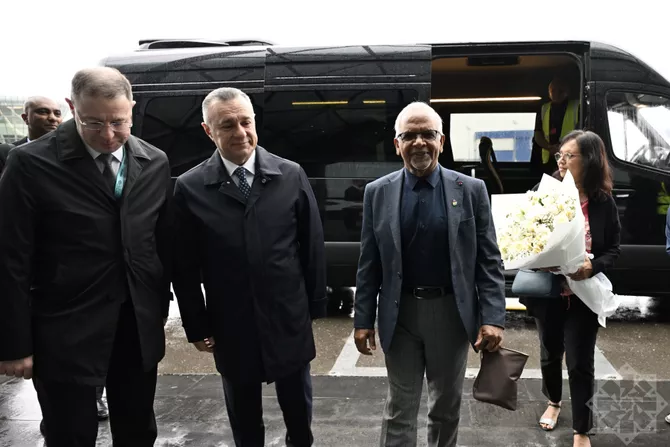
The global stage for urban development recently turned its gaze towards Baku, Azerbaijan, as President Dharambeer Gokhool of the Republic of Mauritius touched down on May 17th. His arrival marks a significant moment for the 13th Session of the UN World Urban Forum (WUF13), an event poised to shape the future of cities worldwide. While the initial news of his arrival might seem a mere diplomatic formality, it carries profound implications, particularly for small island developing states (SIDS) like Mauritius, which stand at the forefront of climate change impacts and rapid urbanization. The presence of a head of state from such a vulnerable yet innovative nation elevates the discourse, bringing unique perspectives on sustainable urban living, resilience, and equitable growth to the forefront of international policy discussions.
WUF13: A Crucible for Urban Innovation
The World Urban Forum, convened by UN-Habitat, is the world’s premier conference on urban issues. Held biennially, it serves as an open, inclusive platform for governments, civil society, academia, and the private sector to discuss and address the challenges and opportunities of urbanization. The 13th session in Baku, Azerbaijan, is particularly critical given the accelerating pace of urban growth globally and the compounding crises of climate change, pandemics, and economic instability. WUF13 aims to foster dialogue on sustainable urban development, focusing on innovative solutions for housing, infrastructure, governance, and environmental sustainability.
Azerbaijan, a nation undergoing significant transformation, provides a compelling backdrop for these discussions. Its capital, Baku, a city where ancient history meets modern ambition, embodies many of the challenges and opportunities that WUF13 seeks to address. From oil-rich past to a future-oriented vision of diversification and green development, Azerbaijan's journey offers valuable insights into managing rapid urban expansion and transitioning towards more sustainable models. The choice of Baku as host city underscores the global nature of urban challenges, transcending traditional geographical and economic divides.
Mauritius's Unique Urban Narrative: Resilience and Vulnerability
President Gokhool's participation is not merely symbolic; it is deeply rooted in Mauritius's own experiences and aspirations. As a small island developing state in the Indian Ocean, Mauritius faces a unique set of urban challenges:
* Climate Change Vulnerability: Rising sea levels, increased frequency and intensity of cyclones, and coastal erosion directly threaten its urban centers and vital infrastructure. Many of its cities and towns are located along the coast, making them highly susceptible to these impacts. * Rapid Urbanization: Despite its small landmass, Mauritius has experienced significant internal migration towards urban and peri-urban areas, driven by economic opportunities in sectors like tourism, finance, and manufacturing. This rapid growth strains existing infrastructure, housing, and public services. * Sustainable Development Goals (SDGs): Mauritius is a strong proponent of the UN's Sustainable Development Goals, particularly SDG 11 (Sustainable Cities and Communities). Its national development plans are increasingly integrating principles of green infrastructure, renewable energy, and smart city concepts. * Economic Diversification: The nation is actively diversifying its economy beyond traditional sectors, fostering innovation hubs and technology parks, which in turn influence urban planning and design.
President Gokhool is expected to highlight these specific challenges and share Mauritius's strategies for building resilient cities. This includes investments in climate-smart infrastructure, nature-based solutions for coastal protection, and policies promoting inclusive urban planning that caters to all segments of its diverse population. His voice will undoubtedly resonate with other SIDS and developing nations grappling with similar issues, offering a crucial perspective on practical, implementable solutions.
The Geopolitical Chessboard: Azerbaijan and International Cooperation
Azerbaijan's role as host for WUF13 is also noteworthy. The nation has been actively seeking to enhance its international profile and foster diplomatic ties. Hosting a high-profile UN event like WUF13 allows Azerbaijan to showcase its progress in urban development, its commitment to international cooperation, and its capacity to manage large-scale global gatherings. The welcome extended to President Gokhool at Heydar Aliyev International Airport by Azerbaijani officials underscores the importance Azerbaijan places on these diplomatic engagements.
Beyond the immediate event, such interactions between heads of state at multilateral forums often pave the way for bilateral discussions and agreements. While the primary focus is urban development, the meeting of leaders from geographically distant nations can spark collaborations in other areas, such as trade, investment, and cultural exchange. This diplomatic synergy is a hallmark of UN forums, where the formal agenda often intertwines with informal opportunities for relationship-building.
Forward-Looking Perspectives: Shaping the Urban Future
President Gokhool's participation at WUF13 is more than just an appearance; it represents a commitment to a future where cities are not just centers of economic activity but also hubs of sustainability, resilience, and inclusivity. The discussions at WUF13 will likely focus on several key areas:
* Digital Transformation: Leveraging technology for smart city solutions, efficient public services, and improved urban governance. * Green Urbanism: Integrating nature into urban design, promoting green spaces, sustainable transportation, and renewable energy sources. * Inclusive Cities: Ensuring that urban development benefits all residents, addressing issues of affordable housing, access to services, and social equity. * Climate Resilience: Developing strategies and infrastructure to protect cities from the impacts of climate change.
The outcomes of WUF13, influenced by voices like President Gokhool's, will contribute to the global urban agenda, informing national policies and international aid programs for years to come. For Mauritius, a nation acutely aware of its environmental vulnerabilities and the need for sustainable growth, active engagement in such forums is paramount. It allows them to advocate for tailored support, share best practices, and contribute to a collective vision for a more sustainable and equitable urbanized world. The journey of cities, from sprawling metropolises to compact island towns, is a shared human endeavor, and WUF13 serves as a vital compass guiding this collective path towards a better tomorrow.
Stay Informed
Get the world's most important stories delivered to your inbox.
No spam, unsubscribe anytime.
Comments
No comments yet. Be the first to share your thoughts!