Mystery Drone in Ionian Sea Sparks Geopolitical Intrigue and Naval Warfare Concerns
A mysterious unmanned naval drone, reportedly carrying explosives, was discovered by fishermen in a cave near Lefkada, Greece. The Greek military is now examining the device, raising questions about its origin and purpose, with speculation pointing towards the Russia-Ukraine conflict. This incident highlights the escalating use of autonomous naval technology and its potential to destabilize regional security in the Mediterranean.
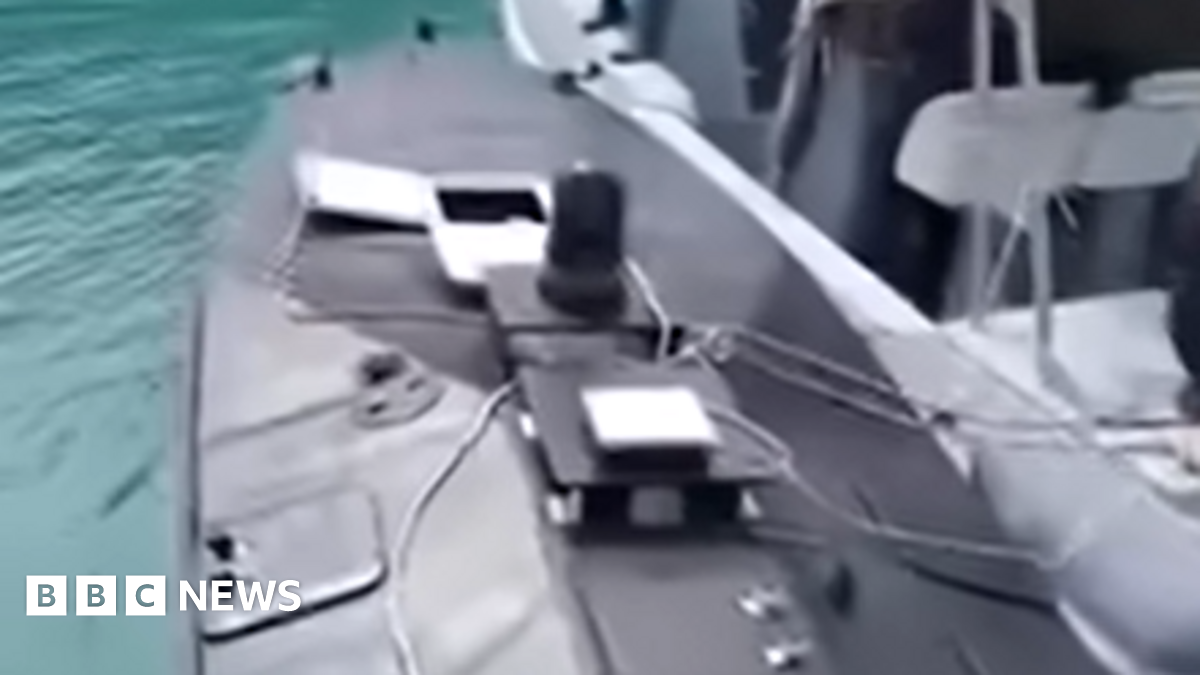
The tranquil azure waters of the Ionian Sea, typically a haven for tourists and local fishermen, have recently become the stage for a perplexing discovery that has sent ripples of concern across Europe. On a seemingly ordinary Thursday, local fishermen near the picturesque Greek island of Lefkada stumbled upon an object that defied conventional explanation: a mysterious unmanned naval drone, reportedly laden with explosives, nestled within a secluded cave. This innocuous find quickly escalated into a matter of national security, prompting the Greek military to launch a thorough investigation into its origins and implications. The incident not only underscores the evolving nature of modern warfare but also casts a long shadow of geopolitical intrigue over the Mediterranean, a region already grappling with complex strategic interests.
The Discovery and Immediate Response
The initial discovery unfolded with a sense of quiet alarm. Fishermen, navigating the familiar coastline of Lefkada, noticed an unusual vessel tucked away in a coastal cave. Its sleek, unconventional design and the presence of what appeared to be explosive charges immediately raised suspicions. Alerting the Greek Coast Guard, the drone was carefully secured and subsequently towed to a nearby port for closer examination. The Greek military, specifically the Hellenic Navy's Explosive Ordnance Disposal (EOD) unit, swiftly took charge. Their primary objective: to safely neutralize any potential threat posed by the device and to meticulously analyze its components. Early reports from Greek media, citing unnamed military sources, suggested the drone was not a conventional military asset but rather a sophisticated, potentially improvised, autonomous underwater or surface vehicle. The sheer audacity of its presence in Greek territorial waters, a NATO member state, has ignited a flurry of speculation regarding its provenance.
Speculations and Geopolitical Context
The immediate question on everyone's mind is: where did it come from? While official statements from the Greek Ministry of Defense have been guarded, focusing on the ongoing investigation, unofficial reports and expert analyses have quickly converged on a few prominent theories. The most prevalent hypothesis links the drone to the ongoing Russia-Ukraine war. Both sides in that conflict have increasingly deployed advanced drone technology, including naval drones, to target enemy assets and disrupt maritime operations. Ukraine, in particular, has gained notoriety for its innovative use of unmanned surface vessels (USVs) to strike Russian naval targets in the Black Sea, often with devastating effect. Could this drone be an errant Ukrainian device, perhaps lost during a mission and drifting far from its intended operational area? Or, conversely, could it be a Russian asset, deployed for reconnaissance or even sabotage, that malfunctioned or was abandoned? The Ionian Sea, while geographically distant from the immediate Black Sea conflict zone, is not entirely isolated from the broader geopolitical currents. Shipping lanes, energy pipelines, and strategic military installations dot the wider Mediterranean, making it a potential arena for proxy activities or intelligence gathering.
Another less discussed but equally plausible theory involves non-state actors or even private military contractors. The proliferation of drone technology, both aerial and naval, has made it accessible to a wider range of entities beyond traditional state militaries. However, the reported sophistication and explosive payload suggest a well-resourced operator. The presence of such a device in the Ionian Sea also raises concerns about maritime security in general. This region is vital for international trade and tourism, and any perceived threat to its stability could have significant economic and political repercussions. The incident serves as a stark reminder that the battlefields of modern conflict are no longer confined to traditional land or air spaces but are extending into the depths of the oceans, leveraging cutting-edge autonomous systems.
The Evolution of Naval Drone Warfare
The discovery in Greece is not an isolated incident but rather a symptom of a broader trend: the rapid advancement and deployment of unmanned naval systems (UNS). These include both Unmanned Surface Vehicles (USVs) and Unmanned Underwater Vehicles (UUVs). Historically, naval warfare has relied on manned vessels, but the advent of sophisticated AI, GPS, and communication technologies has revolutionized this domain. Naval drones offer several distinct advantages: they can operate in high-risk environments without endangering human lives, they are often smaller and harder to detect than conventional warships, and they can be produced at a fraction of the cost. Ukraine's successful use of USVs against the Russian Black Sea Fleet has demonstrated their potent offensive capabilities, forcing Russia to adapt its naval strategies and defensive postures. These drones can be used for a variety of missions, including:
* Reconnaissance and surveillance: Gathering intelligence on enemy movements, coastal defenses, and shipping patterns. * Mine countermeasures: Detecting and neutralizing naval mines, a dangerous task for manned vessels. * Anti-submarine warfare: Tracking and engaging enemy submarines. * Offensive operations: Delivering explosive payloads against surface vessels, port infrastructure, or coastal targets. * Logistics and resupply: Transporting goods and equipment to remote locations.
The Ionian Sea incident underscores that this technological arms race is not confined to the Black Sea. The Mediterranean, with its complex geopolitical landscape and numerous strategic choke points, is a prime candidate for the deployment of such systems by various state and non-state actors seeking to project power or gather intelligence covertly. The international community, and particularly NATO, will be closely watching the Greek investigation for clues that could shed light on the drone's origin and the broader implications for maritime security doctrine.
Implications for Regional Security and International Law
The presence of an explosive-laden drone in Greek waters raises profound questions about regional security and the existing frameworks of international law. Greece, as a frontline NATO member, shares a complex maritime border with Turkey and is a critical player in the Eastern Mediterranean. Any unauthorized military activity in its territorial waters, especially involving potentially hostile or unidentified autonomous weapons, is a serious breach of sovereignty. If the drone is indeed linked to the Russia-Ukraine conflict, it signifies a dangerous escalation, potentially extending the conflict's reach far beyond its immediate geographical boundaries. This could lead to:
* Increased tensions: Heightened vigilance and potential for miscalculation among naval forces in the Mediterranean. * Review of maritime defense strategies: NATO and individual member states may need to re-evaluate their capabilities to detect and counter autonomous naval threats. * Challenges to international law: The legal status of autonomous weapons, especially when operating without clear national attribution, remains a gray area. Who is responsible when such a device causes damage or loss of life? How are rules of engagement applied to unmanned systems?
The incident also highlights the need for greater international cooperation in establishing norms and regulations for the use of autonomous weapons systems. The lack of clear international consensus on these issues creates a vacuum that can be exploited by actors seeking to operate in the shadows. The Greek military's findings will undoubtedly contribute to this ongoing global debate, providing real-world data points on the challenges posed by the proliferation of naval drone technology. The investigation will not only focus on the drone's technical specifications but also on any identifying marks, serial numbers, or unique components that could trace its manufacturing origin or operator. The stakes are high, as the answers could reshape perceptions of maritime security in one of the world's most strategically important waterways.
Conclusion: A New Era of Naval Vigilance
The discovery of the mysterious naval drone in the Ionian Sea serves as a potent symbol of a new era in maritime security. The days when naval threats were exclusively associated with large, identifiable warships are rapidly receding. We are now entering a period where smaller, autonomous, and potentially explosive devices can traverse vast distances, operating with stealth and precision. The Greek military's ongoing investigation is therefore of paramount importance, not just for Greece but for the entire international community. Its findings will not only determine the immediate threat posed by this particular device but will also offer crucial insights into the evolving tactics and technologies of modern naval warfare. As the world watches, the Ionian Sea incident stands as a stark reminder that vigilance, technological adaptation, and robust international dialogue are more critical than ever to safeguard peace and stability in our increasingly interconnected and technologically advanced oceans. The future of naval defense will undoubtedly involve a complex interplay of human intelligence and autonomous systems, demanding constant innovation and strategic foresight.
Stay Informed
Get the world's most important stories delivered to your inbox.
No spam, unsubscribe anytime.
Comments
No comments yet. Be the first to share your thoughts!