Northern Ambitions: The Israeli Fringe Eyeing South Lebanon Amidst Conflict
As conflict between Israel and Hezbollah displaces over a million Lebanese, a radical fringe within Israel's settler movement is openly advocating for the annexation and settlement of southern Lebanon. This audacious vision, rooted in historical and religious narratives, is gaining traction among certain groups, raising alarms about potential regional destabilization. Experts warn that such aspirations could escalate an already volatile situation, transforming a border conflict into a far wider geopolitical crisis.
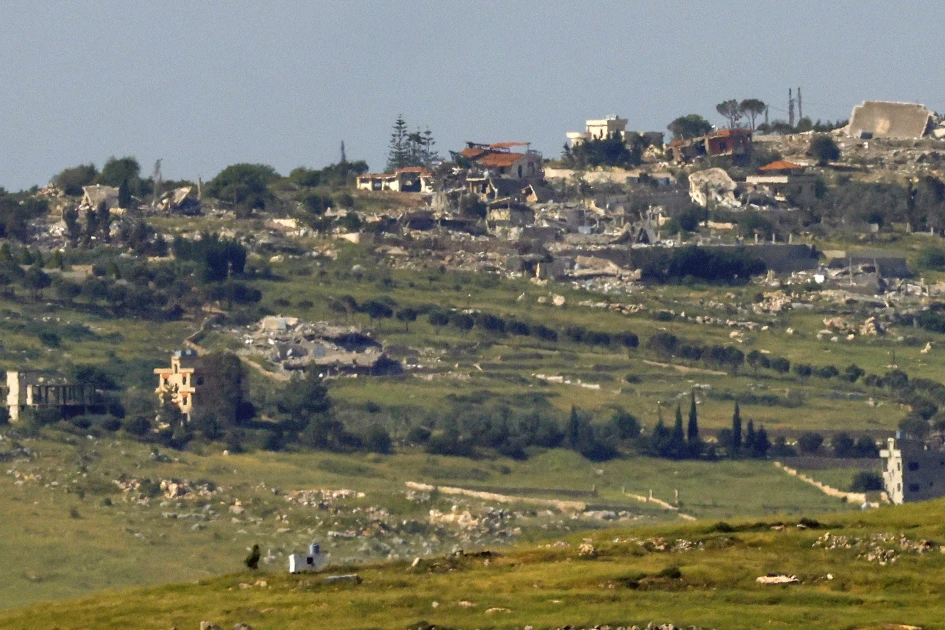
From her home in an Israeli settlement in the occupied West Bank, Anna Sloutskin yearns to expand her country's borders and one day move to southern Lebanon. And she is not alone. This audacious vision, once relegated to the fringes of Israeli society, is gaining alarming traction amidst the ongoing conflict between Israel and Hezbollah. As the fighting displaces more than a million Lebanese from their homes, a vocal segment of Israel's far-right settler movement is openly advocating for the annexation and settlement of the very lands from which these refugees have fled.
This phenomenon represents a dangerous escalation of rhetoric, transforming a localized border conflict into a potential flashpoint for broader regional upheaval. The aspirations of groups like Sloutskin’s are not merely speculative; they are rooted in a complex tapestry of historical grievances, religious interpretations, and contemporary geopolitical anxieties, threatening to redraw maps and ignite new cycles of violence in an already volatile Middle East.
The Genesis of a Northern Dream
The idea of Jewish settlement in southern Lebanon, often referred to by proponents as the “Land of the Pines” or “Upper Galilee,” is not entirely new, but its resurgence is particularly potent now. Historically, Zionist thinkers occasionally mused about incorporating parts of southern Lebanon into a future Jewish state, citing biblical connections to the ancient tribes of Naphtali and Asher, whose territories supposedly extended northwards. However, these were largely theoretical discussions, overshadowed by the more immediate and pressing Zionist project within Mandate Palestine.
The current wave of advocacy is different. It is fueled by the immediate context of the Gaza war and the subsequent escalation with Hezbollah. For many on the Israeli far-right, the mass displacement of Lebanese civilians from border towns presents a perceived “opportunity.” They argue that if these areas are emptied, they should not be returned to Hezbollah's control but rather secured and settled by Israelis. This narrative is often intertwined with a desire for a more secure northern border, believing that a physical Israeli presence would act as a permanent buffer against future attacks.
Organizations like the ‘Movement for the Settlement of the Land of Israel’ and newer, more radical groups are actively promoting this agenda. They hold conferences, publish maps, and engage in social media campaigns, framing their aspirations not as expansionism, but as a return to ancestral lands and a necessary security measure. The rhetoric often echoes the language used to justify settlements in the West Bank, invoking religious destiny and national security imperatives. For instance, Sloutskin, a prominent voice, articulates a belief that these lands were “promised to us,” a direct reference to biblical interpretations of Israel’s boundaries.
Echoes of the West Bank Model
The playbook for this northern ambition bears striking similarities to the settlement enterprise in the West Bank. Just as in the West Bank, where settlements began as small outposts and grew into established communities, proponents envision a similar trajectory for southern Lebanon. Initial calls might be for military control, followed by civilian presence, and eventually, permanent communities. The legal and international ramifications, much like in the West Bank, are largely disregarded by these groups, who prioritize their ideological goals above international law or diplomatic consensus.
This parallel is not lost on international observers. The international community overwhelmingly considers Israeli settlements in the West Bank illegal under international law, a position rooted in the Fourth Geneva Convention's prohibition on an occupying power transferring its own population into occupied territory. Extending this model to southern Lebanon, a sovereign nation, would constitute an even more egregious violation and a profound challenge to global norms. The modus operandi of these groups often involves creating facts on the ground, making any future withdrawal incredibly difficult, if not impossible.
Furthermore, the economic incentives and infrastructure development that often accompany settlement expansion in the West Bank are also part of the northern vision. Imagine new roads, agricultural projects, and even tourist ventures, all designed to solidify an Israeli presence. This would inevitably lead to further displacement and marginalization of the indigenous Lebanese population, exacerbating an already dire humanitarian crisis.
Geopolitical Ramifications and Regional Instability
The implications of such a movement gaining significant traction are catastrophic. Lebanon, already grappling with profound economic collapse and political instability, would be pushed further to the brink. The displacement of over a million people from its southern region is already a humanitarian catastrophe. Any attempt at Israeli settlement would be met with fierce resistance, not only from Hezbollah but from a broad spectrum of Lebanese society, potentially uniting disparate factions against a common perceived aggressor.
For Israel, pursuing such a course would mean an indefinite military occupation of sovereign Lebanese territory, entailing immense human and financial costs. It would also guarantee continuous, perhaps even intensified, conflict with Hezbollah, a formidable non-state actor with significant military capabilities and strong Iranian backing. The current conflict, though severe, is largely contained to border areas. A settlement drive would transform it into a full-scale invasion and occupation, drawing in regional and international players and potentially igniting a wider war involving Iran and its proxies across the Middle East.
International condemnation would be swift and severe, further isolating Israel on the global stage. Diplomatic efforts to de-escalate tensions and secure a lasting peace would be rendered impossible. The United States, Israel's staunchest ally, would face immense pressure to condemn and potentially sanction such actions, straining the bilateral relationship. The very fabric of international law and the principle of national sovereignty would be undermined, setting a dangerous precedent for future conflicts.
The Fringe or a Growing Movement?
The critical question is whether these voices represent a genuine fringe or a burgeoning movement with the potential to influence Israeli policy. While the Israeli government has not officially endorsed any plans for settlement in southern Lebanon, the political climate in Israel has shifted significantly to the right. The current coalition includes parties and figures who openly support maximalist territorial claims and view the West Bank settlement enterprise as a national priority. The rhetoric from figures like National Security Minister Itamar Ben-Gvir and Finance Minister Bezalel Smotrich often aligns with the expansionist sentiments expressed by the northern settlement proponents.
Public opinion in Israel, while primarily focused on security concerns, has shown a hardening stance towards its northern neighbor. The trauma of October 7th and the ongoing rocket fire from Hezbollah have created a fertile ground for radical solutions. While a majority of Israelis may not actively support settling Lebanon, a significant portion might not vehemently oppose it if framed as a necessary security measure. The normalization of once-fringe ideas is a dangerous trend observed in many political landscapes, and Israel is no exception.
Ultimately, the fate of southern Lebanon, and indeed the broader regional stability, hinges on the ability of political leaders to resist the siren call of expansionism and prioritize diplomatic solutions. The dream of settling southern Lebanon, while perhaps confined to a minority, carries the potential to unleash an unprecedented wave of conflict, turning a volatile border into a permanent battleground and further entrenching cycles of violence that have plagued the Middle East for generations. The international community, therefore, must remain vigilant, advocating for de-escalation and upholding principles of sovereignty and international law to prevent a dangerous fantasy from becoming a devastating reality.
Stay Informed
Get the world's most important stories delivered to your inbox.
No spam, unsubscribe anytime.
Comments
No comments yet. Be the first to share your thoughts!