Oil Prices Plunge, Markets Soar on Hopes of US-Iran Deal to End War Escalation
Global markets are experiencing a significant shift as reports suggest a potential breakthrough in US-Iran negotiations, aiming to de-escalate recent conflicts. Oil prices, particularly Brent crude, have fallen sharply below $100 a barrel, while stock markets worldwide are rallying. This anticipated diplomatic resolution could profoundly impact geopolitical stability, energy markets, and the global economic outlook, offering a glimmer of hope after days of escalating tensions.
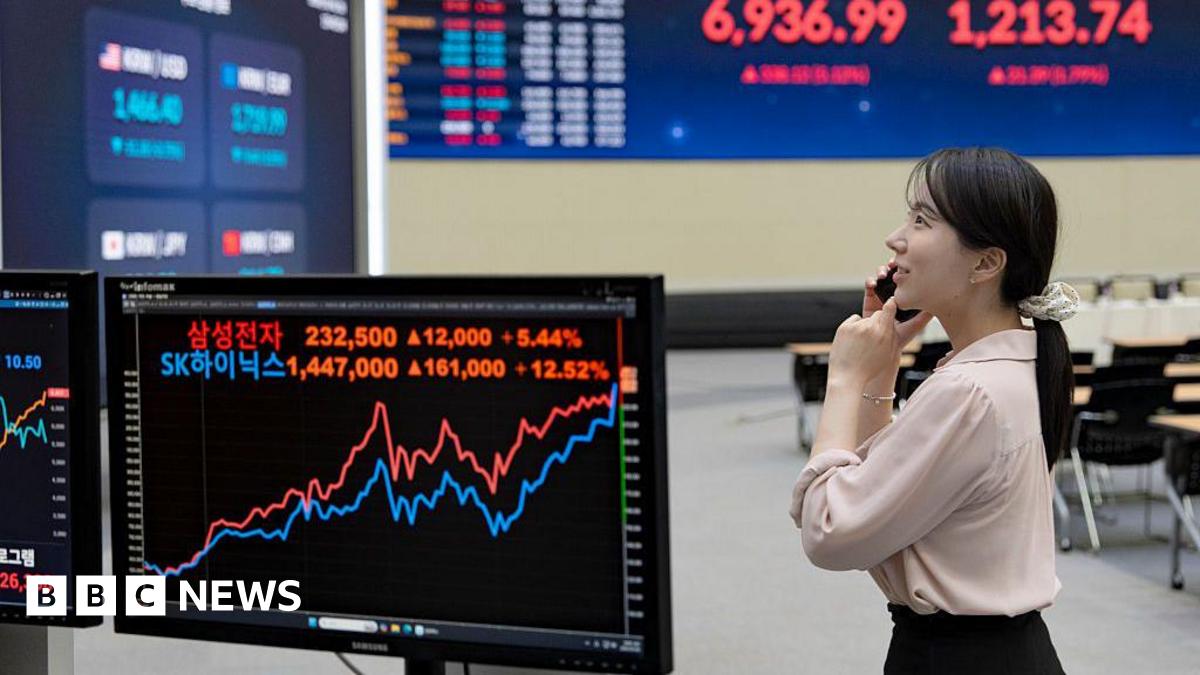
The world held its breath for days as tensions between the United States and Iran escalated, threatening to plunge the Middle East into a deeper, more volatile conflict. Now, a palpable sense of relief, tinged with cautious optimism, is sweeping across global financial markets. Reports indicating that the two long-standing adversaries are on the cusp of a deal to end the war have sent shockwaves through the economic landscape, causing oil prices to plummet and stock markets to surge worldwide. This dramatic shift underscores the profound interconnectedness of geopolitics and global finance, where the whispers of diplomacy can instantly reshape economic realities.
Brent crude futures, the international benchmark for oil prices, reacted almost immediately, falling sharply to below $100 (£73) a barrel. This significant drop from recent highs reflects the market's expectation of increased stability in the critical Strait of Hormuz, a vital chokepoint for global oil shipments, and potentially the return of Iranian oil to international markets. Simultaneously, major stock indices from New York to Tokyo, London to Frankfurt, have registered substantial gains, with investors betting on a de-escalation that could avert a major economic disruption and foster a more predictable global trade environment. The implications of such a deal extend far beyond immediate market reactions, promising to redraw the geopolitical map and redefine energy dynamics for years to come.
The Geopolitical Chessboard: A History of Tensions
The relationship between the United States and Iran has been fraught with tension for over four decades, dating back to the 1979 Islamic Revolution. This historical animosity has manifested in various forms, from proxy conflicts across the Middle East to economic sanctions and nuclear proliferation concerns. The recent escalation, which saw a series of tit-for-tat actions and heightened rhetoric, brought the two nations to the brink of direct confrontation. Key flashpoints have included: the US withdrawal from the Joint Comprehensive Plan of Action (JCPOA), commonly known as the Iran nuclear deal, in 2018; subsequent re-imposition of crippling sanctions on Iran; and various regional incidents involving shipping, drone attacks, and cyber warfare. Each escalation has sent ripples through global markets, particularly impacting oil prices due to the region's centrality to global energy supply.
The current reports of a potential deal suggest a significant diplomatic effort to pull back from the precipice. While details remain scarce, the mere prospect of a resolution has been enough to calm jittery investors. Analysts point to the immense pressure on both sides to avoid a full-blown conflict, which would have devastating consequences for the global economy, already grappling with post-pandemic recovery and inflationary pressures. The intricate dance of diplomacy, often conducted behind closed doors, appears to have found a crucial rhythm, offering a pathway towards de-escalation that many had feared was impossible.
Economic Repercussions: Oil, Inflation, and Investment
The immediate economic impact of a potential US-Iran deal is most evident in the energy sector. A sustained drop in oil prices would be a welcome relief for consumers and businesses worldwide, grappling with high fuel costs that contribute significantly to inflation. For importing nations, lower oil prices mean reduced import bills, potentially freeing up capital for other investments and stimulating economic growth. Conversely, oil-exporting nations, including key OPEC members, might see their revenues diminish, necessitating adjustments to their national budgets and economic strategies.
* Lower Inflationary Pressures: Reduced energy costs can help cool global inflation, providing central banks with more flexibility in monetary policy decisions. * Boost to Consumer Spending: Cheaper fuel leaves more disposable income for households, potentially boosting retail sales and economic activity. * Increased Corporate Profits: Industries reliant on transportation and energy, such as airlines, logistics, and manufacturing, would see their operational costs decrease, leading to improved profit margins. * Stabilized Supply Chains: A more stable Middle East reduces the risk of disruptions to crucial shipping lanes, benefiting global supply chains.
Beyond oil, the broader market rally reflects a renewed investor confidence. Reduced geopolitical risk makes emerging markets, particularly those in the Middle East, more attractive for foreign direct investment. Companies that had postponed expansion plans due to uncertainty might now proceed, leading to job creation and economic expansion. However, the market's reaction is also a testament to the fragility of global stability; the gains are largely predicated on the hope of a deal, and any setback in negotiations could quickly reverse these positive trends.
The Path Forward: Challenges and Opportunities
Even if a deal is struck, the path to lasting peace and stability between the US and Iran, and in the broader Middle East, remains fraught with challenges. The agreement would likely be a complex web of concessions and commitments, requiring robust verification mechanisms and sustained diplomatic engagement. Key issues that would need to be addressed include: Iran's nuclear program, its ballistic missile capabilities, and its regional influence through proxy groups. For the United States, managing alliances with regional partners like Saudi Arabia and Israel, who hold deep suspicions of Iran, will be crucial.
Furthermore, domestic political considerations in both Washington and Tehran could pose significant hurdles. Hardliners on both sides might view any compromise as a sign of weakness, potentially undermining the agreement's longevity. The international community, including European powers, China, and Russia, would likely play a vital role in mediating and guaranteeing the terms of any accord, offering a multilateral framework for its implementation.
A Glimmer of Hope for a Volatile World
The reports of a potential US-Iran deal represent a significant moment in contemporary international relations. While the immediate economic impacts are clear – a notable drop in oil prices and a surge in stock markets – the long-term implications are far more profound. It signals a potential shift from confrontation to dialogue, from escalation to de-escalation, in a region that has long been a flashpoint for global instability. For ordinary citizens worldwide, it offers the hope of lower energy costs and a more stable economic future, free from the specter of a major conflict.
However, the lessons of history teach us that diplomatic breakthroughs are often fragile. The success of this potential agreement will depend not just on its initial signing, but on the sustained commitment of both parties to its terms, and the unwavering support of the international community. As the world watches with bated breath, this moment serves as a powerful reminder that even in the darkest hours of geopolitical tension, the possibility of peace, and its profound economic dividends, can still emerge. The journey ahead will be complex, but for now, the markets have spoken: hope has a price, and today, it's driving oil down and stocks up.
Stay Informed
Get the world's most important stories delivered to your inbox.
No spam, unsubscribe anytime.
Comments
No comments yet. Be the first to share your thoughts!