Porsche 911 GT3 S/C: The Convertible 9000rpm Icon Challenging Tradition
The Porsche 911 GT3 S/C breaks decades of tradition, marrying a 9000 rpm naturally aspirated engine and a manual gearbox with an open-top layout. This audacious creation challenges the purist philosophy of the GT3, sparking debate among enthusiasts and experts. We delve into whether this convertible GT3 truly upholds the spirit of its legendary lineage or forges an entirely new path for driver-focused performance.
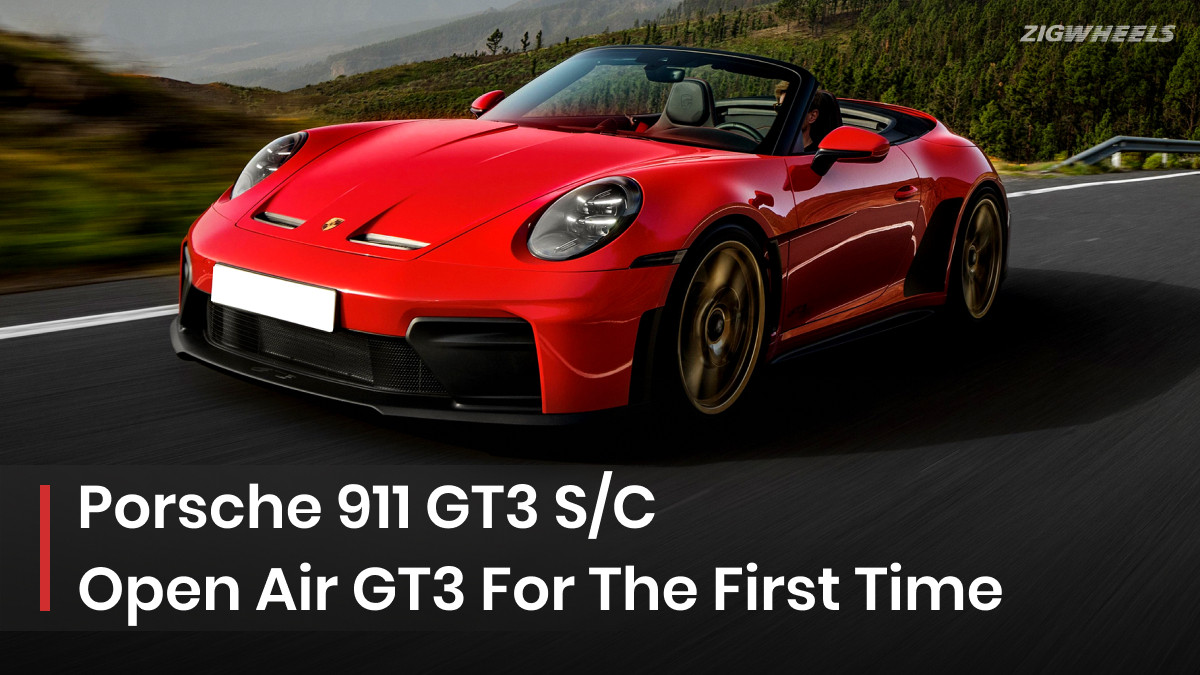
For decades, the Porsche 911 GT3 has been a sacred text in the automotive world, a gospel for driving purists. It’s a car defined not just by its performance metrics, but by a rigid, almost dogmatic adherence to a philosophy: lightweight, track-focused, naturally aspirated, manual-only, and unequivocally a coupe. It never sought mass appeal; its mission was singular: to deliver the most unadulterated driving experience possible. But what happens when a legend dares to rewrite its own rules? Enter the Porsche 911 GT3 S/C, an audacious creation that marries the hallowed 9000 rpm naturally aspirated engine and a manual-only gearbox with, of all things, an open-top layout. This isn't just a new model; it's a philosophical earthquake, challenging everything we thought we knew about the GT3. The question isn't merely if it's fast, but if it remains true to the GT3 philosophy.
The Unbreakable Creed: GT3's Core Philosophy
To understand the magnitude of the GT3 S/C, one must first grasp the bedrock principles that have defined the GT3 lineage since its inception in 1999. The original 996 GT3, born from homologation requirements for Porsche's motorsport endeavors, immediately set itself apart. It wasn't about luxury or daily usability; it was about raw, visceral performance. Key tenets included:
* Naturally Aspirated Engine: A high-revving, atmospheric flat-six engine, celebrated for its linear power delivery and intoxicating sound, free from the lag of turbochargers. * Manual Gearbox: A direct, engaging connection between driver and machine, offering ultimate control and involvement. * Lightweight Construction: Every ounce scrutinized, every component optimized for minimal mass, maximizing agility and responsiveness. * Fixed Roof (Coupe Body Style): Essential for structural rigidity, torsional stiffness, and weight reduction, considered non-negotiable for track performance. * Driver Focus: Minimal electronic aids, direct steering, and a chassis tuned for precision and feedback.
These elements combined to create a driving instrument, not just a car. Each subsequent generation – from the revered 997.1 and 997.2 to the 991.1 and 991.2, and now the 992 – has refined these principles, cementing the GT3's status as the benchmark for driver-centric sports cars. The very idea of a convertible GT3, especially one with such a high-revving engine, has historically been anathema to this purist ethos.
The Audacious Arrival: GT3 S/C's Technical Marvels
The GT3 S/C, while seemingly a contradiction, is a testament to Porsche's engineering prowess. At its heart lies the iconic 4.0-liter naturally aspirated flat-six engine, capable of screaming to a dizzying 9000 rpm. This is the same masterpiece found in the GT3 coupe, renowned for its immediate throttle response, incredible power band, and spine-tingling soundtrack. Paired exclusively with a six-speed manual gearbox, it promises an engagement level that few modern cars can match. The 'S/C' designation likely hints at 'Speedster Convertible' or a similar nomenclature, signifying its open-top nature.
However, integrating this powertrain into a convertible chassis presents immense challenges. Removing the roof inherently compromises structural rigidity, leading to increased chassis flex and often requiring significant reinforcement, which adds weight. Porsche engineers would have had to employ advanced materials and sophisticated design techniques to mitigate these effects. This could involve:
* Reinforced sills and A-pillars: To compensate for the lack of a fixed roof. * Additional cross-bracing: Strategically placed to enhance torsional stiffness. * Lightweight convertible roof mechanism: To minimize the weight penalty associated with the folding top.
Despite these efforts, a convertible will almost always carry a weight penalty and exhibit slightly less rigidity than its coupe counterpart. The true test for the GT3 S/C will be how well Porsche has managed to retain the GT3's characteristic precision and feedback, even with these inherent compromises. The fact that Porsche has even attempted this speaks volumes about their confidence in their engineering capabilities and perhaps, a willingness to explore new interpretations of their most revered models.
Challenging the Purist Paradigm: Is it Still a GT3?
This is where the debate truly ignites. For the staunch traditionalists, a convertible GT3 is an oxymoron, a dilution of the sacred formula. They argue that the added weight, reduced rigidity, and focus on open-air enjoyment detract from the GT3's core purpose: uncompromising track performance. A GT3, they contend, should be a scalpel, not a cruiser.
Yet, a counter-argument emerges. The essence of the GT3 is the unfiltered driving experience. For many, the ability to experience that 9000 rpm shriek with the wind in their hair, feeling the direct connection to the road without the acoustic dampening of a roof, could be seen as an enhancement of the experience, not a detraction. It offers a different kind of immersion, one that prioritizes sensory engagement over absolute lap times. While it might not be the fastest GT3 around a circuit, it could arguably be one of the most exhilarating on a winding road.
Consider the historical context: Porsche has produced open-top, performance-focused 911s before, such as the Speedster models. These have always occupied a niche, offering a unique blend of performance and open-air exhilaration. The GT3 S/C could be seen as the ultimate evolution of this concept, bringing the raw, motorsport-derived heart of the GT3 to an open-top platform. It's a car for those who value the journey as much as the destination, for whom the symphony of the flat-six at redline is best enjoyed uninsulated.
Implications and the Future of Performance Cars
The introduction of the GT3 S/C has significant implications, not just for Porsche, but for the broader performance car landscape. It signals a potential shift in how manufacturers interpret
Stay Informed
Get the world's most important stories delivered to your inbox.
No spam, unsubscribe anytime.
Comments
No comments yet. Be the first to share your thoughts!