Putin's 'End of War' Claim: A Geopolitical Analysis of the Russia-Ukraine Conflict
Russian President Vladimir Putin recently declared that the war in Ukraine is "heading to an end," a statement that has sent ripples across international diplomacy and media. This assertion, made during the 81st anniversary of the Soviet Union's victory, comes amidst ongoing fierce fighting and shifting geopolitical landscapes. PulseWorld delves into the implications of Putin's remarks, examining the historical context, current military realities, and the potential paths forward for a conflict that has reshaped global alliances.
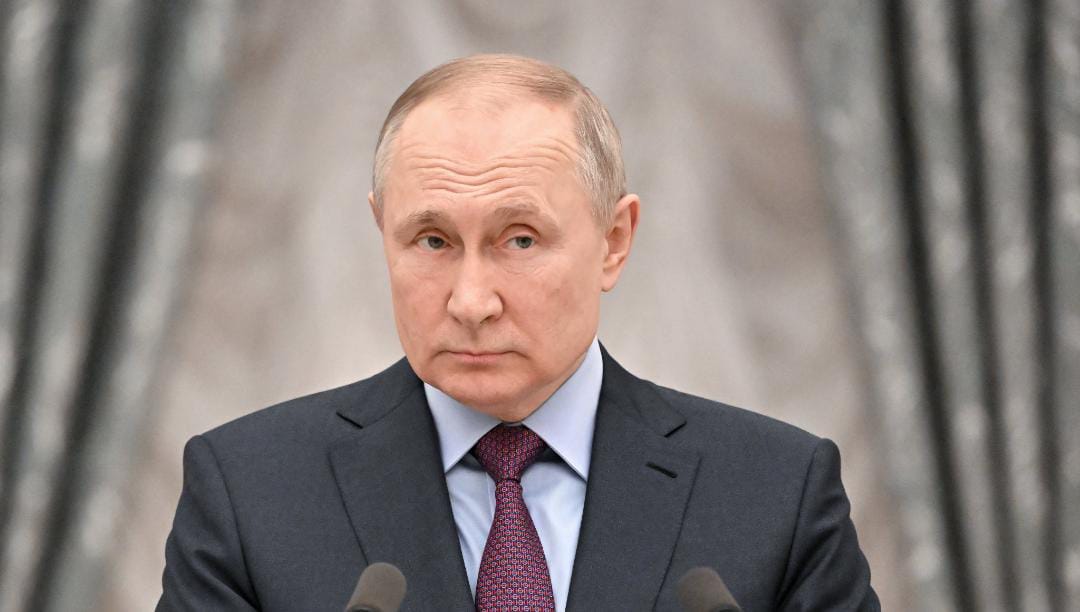
Russian President Vladimir Putin’s recent assertion that the war in Ukraine is “heading to an end” has ignited a fresh wave of speculation and analysis across the globe. Delivered during events commemorating the 81st anniversary of the Soviet Union’s victory, this statement, reported by AFP, stands in stark contrast to the relentless fighting and entrenched positions that define the current conflict. For a war that has claimed countless lives, displaced millions, and triggered profound economic and political instability worldwide, the notion of an imminent conclusion, particularly from the Kremlin, demands rigorous scrutiny and a deep dive into its potential meanings and implications.
The Kremlin's Narrative vs. Ground Realities
Putin's declaration, while seemingly offering a glimmer of hope for peace, is fraught with ambiguity. Is it a genuine signal of de-escalation, a strategic maneuver to influence international opinion, or a reflection of an internal narrative designed for domestic consumption? On the ground, the reality remains grim. Ukrainian forces continue to report daily bombardments, drone attacks, and intense skirmishes along the vast front lines. Cities like Avdiivka, Bakhmut, and Lyman have become symbols of brutal attrition warfare, far from suggesting a winding down of hostilities. Western intelligence agencies and military analysts largely concur that neither side has achieved a decisive breakthrough that would compel a definitive end to the conflict on terms favorable to the other. The assertion of an 'end' could be interpreted as Russia's confidence in its ability to achieve its objectives, albeit gradually, or perhaps a veiled call for negotiations on its own terms, leveraging perceived gains.
Historically, the Kremlin has often employed rhetoric that diverges significantly from observable facts, particularly in times of conflict. The initial invasion itself was framed as a "special military operation" aimed at "denazification" and "demilitarization," objectives whose fulfillment remains highly contentious. Therefore, Putin's latest pronouncement must be viewed through a lens of strategic communication, where words are as much weapons as missiles.
Geopolitical Chessboard: International Reactions and Diplomacy
The international community's response to Putin's statement has been cautious, if not skeptical. Western leaders, who have consistently condemned Russia's aggression and provided substantial military and financial aid to Ukraine, have largely reiterated their commitment to Kyiv's sovereignty and territorial integrity. Any 'end' to the war, from their perspective, must involve a complete Russian withdrawal and accountability for war crimes. The United Nations and other international bodies continue to call for a peaceful resolution, but the chasm between Russia's demands and Ukraine's non-negotiable terms for peace remains vast.
Behind the scenes, however, diplomatic channels, though often opaque, are likely buzzing. The prospect of any resolution, even one unfavorable to certain parties, carries immense weight. China, a key Russian ally, has repeatedly called for peace talks, though its proposals have been met with skepticism due to its perceived pro-Russian stance. India, another significant global player, has also advocated for dialogue. The BRICS+ expansion and the evolving global order suggest a complex web of interests where the Ukraine conflict is but one thread in a larger tapestry of geopolitical realignment. Putin's statement might be an attempt to gauge international appetite for negotiation, or to pressure Ukraine's allies into reconsidering their unwavering support.
The Economic Toll and Domestic Pressures
The war has exacted a devastating economic toll on all parties involved. Russia, despite its vast natural resources, has faced unprecedented Western sanctions that have reshaped its economy, forcing it to pivot towards Eastern markets. While the Russian economy has shown resilience, the long-term impact of isolation and reduced access to advanced technology remains a significant challenge. Domestically, the war has led to increased military spending, mobilization efforts, and a tightening of civil liberties. Putin's approval ratings, while high according to official polls, mask underlying anxieties about the future and the human cost of the conflict. A declaration of the war 'ending' could be aimed at reassuring a domestic audience weary of prolonged conflict and its associated sacrifices, signaling a return to normalcy or a successful completion of objectives.
For Ukraine, the economic devastation is catastrophic. Infrastructure has been decimated, industries crippled, and agricultural output severely hampered. The country is heavily reliant on international aid for its survival and reconstruction. The financial burden on its Western allies is also substantial, leading to debates about sustainability and the optimal strategies for supporting Kyiv. The economic pressures, both internal and external, undoubtedly play a role in the calculus of all belligerents and their supporters.
Future Scenarios: From Stalemate to Negotiation?
What could an 'end' to this war truly look like? Several scenarios are plausible, each with profound implications:
* Protracted Stalemate: The most likely immediate future involves continued low-intensity or localized high-intensity conflict, with neither side able to achieve a decisive victory. This 'frozen conflict' scenario would prolong instability and human suffering. * Negotiated Settlement: A diplomatic resolution, though currently elusive, remains the ultimate goal for many. However, the terms of such a settlement are highly contentious. Ukraine demands full territorial integrity, including Crimea, and reparations. Russia seeks recognition of its annexed territories and security guarantees. Bridging this gap would require significant concessions from both sides, possibly mediated by powerful third parties. * Military Collapse: While neither side appears on the brink of collapse, a significant shift in military fortunes, perhaps due to a major technological advantage or a critical logistical failure, could alter the trajectory of the war dramatically. However, the resilience shown by both armies makes this a less probable immediate outcome. * Internal Political Shifts: A change in leadership in either Russia or Ukraine, or among key Western allies, could profoundly impact the war's direction. Such shifts are unpredictable but could open new avenues for peace or further escalation.
Putin's statement, therefore, serves as a crucial inflection point, prompting a re-evaluation of strategies and objectives. It forces the international community to consider not just the continuation of the war, but also its potential conclusion, however distant or ambiguous that may seem. The path to peace remains fraught with peril, but acknowledging the possibility, even through the Kremlin's opaque rhetoric, is the first step towards understanding the complex dynamics that will ultimately shape the future of Ukraine and global security. The world watches, hoping that 'the end' truly signifies a cessation of hostilities, rather than merely a new phase of a relentless struggle.
Stay Informed
Get the world's most important stories delivered to your inbox.
No spam, unsubscribe anytime.
Comments
No comments yet. Be the first to share your thoughts!