Return of the Pitcairn Register: Unveiling the Legacy of Bounty Mutineers' Descendants and Enslaved Tahitian Women
A historic manuscript, the Pitcairn Register, detailing the lives of descendants from the infamous Bounty mutiny, has returned to the South Pacific. This sacred document, recording generations born from the mutineers and the Tahitian women they enslaved, sheds light on a complex legacy of survival, resilience, and cultural fusion. Its repatriation marks a pivotal moment for the Pitcairn and Norfolk Island communities, offering a tangible link to their unique and often tragic origins.
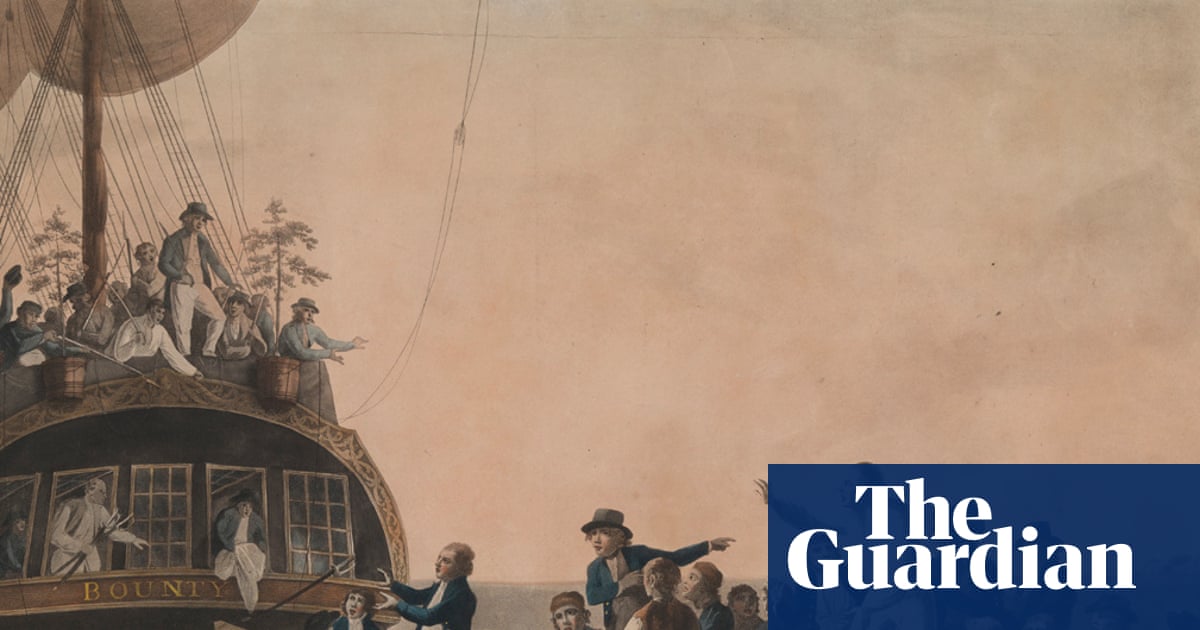
In the annals of maritime history, few tales captivate the imagination quite like the Mutiny on the Bounty. The dramatic overthrow of Captain William Bligh by his crew in 1789, and their subsequent flight to the remote Pitcairn Island, has been immortalized in literature and film. Yet, beyond the swashbuckling adventure lies a far more complex and often overlooked narrative: the lives of the women, primarily Tahitian, who were forcibly brought to the island, and the generations of descendants who forged a unique society from this tumultuous beginning. Now, a crucial piece of that history, the Pitcairn Register, a meticulously handwritten volume detailing the births, marriages, and deaths of these descendants, has made a poignant journey back to the South Pacific, returning to the very communities whose heritage it chronicles. This repatriation is not merely the transfer of an old book; it is the homecoming of a sacred artifact, a tangible link to an extraordinary past, and a testament to the enduring resilience of a people born from conflict and cultural collision.
A Chronicle of Survival and Identity
The Pitcairn Register is far more than a genealogical record; it is a living document that encapsulates the foundational story of the Pitcairn and Norfolk Island communities. It meticulously records the lives of those who descended from the nine mutineers, six Tahitian men, and twelve Tahitian women who landed on Pitcairn in 1790. The initial years on the island were marked by extreme violence, internal strife, and the tragic deaths of most of the men, leaving behind a small group of women and children. It was from this crucible of hardship that a new society emerged, led by the astute leadership of the Tahitian women, who played an instrumental role in shaping the language, culture, and survival of the nascent community. The Register, begun in the early 19th century, chronicles this evolution, offering insights into the demographic shifts, familial ties, and the very fabric of life on one of the world's most isolated inhabited islands.
For the descendants, particularly those on Norfolk Island, where the majority of Pitcairn Islanders relocated in 1856 due to overcrowding, the Register holds immense personal and cultural significance. It is a direct connection to their ancestors, a validation of their unique heritage, and a source of profound pride. As one descendant eloquently put it, “It’s sacred to us.” This sentiment underscores the emotional weight carried by the Register, which serves as a collective memory, preserving the names, dates, and relationships that define their identity. Its return to the region, after decades of being held in Australia, represents a powerful act of cultural restitution, acknowledging the deep spiritual and historical ties these communities have to their foundational documents.
The Unsung Heroines: Tahitian Women's Legacy
While the narrative of the Bounty mutiny often centers on the British sailors, the true architects of Pitcairn society were the Tahitian women. They were not willing participants in the mutineers' flight; they were, in fact, enslaved, treated as property, and subjected to immense hardship and violence. Yet, despite these brutal circumstances, they demonstrated extraordinary courage, resourcefulness, and leadership. When the mutineers and Tahitian men largely succumbed to infighting and disease, it was the women who ensured the survival of the community. They taught their children Tahitian, preserving a vital part of their cultural heritage, and instilled values of cooperation and resilience that became hallmarks of Pitcairn society.
Their stories, though often marginalized in historical accounts, are implicitly woven into the fabric of the Pitcairn Register. Each entry, each name, is a testament to their enduring legacy. The Register, by documenting their progeny, indirectly celebrates their strength and their pivotal role in shaping a new civilization. Understanding the context of their enslavement is crucial to appreciating the full depth of their contribution. It transforms the narrative from one of mere survival to one of profound cultural creation against overwhelming odds. The return of the Register allows for a more complete and nuanced understanding of their sacrifices and triumphs, ensuring their rightful place in the historical record is recognized and honored.
Repatriation and Reconciliation: A New Chapter
The journey of the Pitcairn Register back to the South Pacific is the culmination of years of advocacy and negotiation. For decades, the document was held by the State Library of New South Wales in Australia, a legacy of colonial administration. The campaign for its return was driven by the descendants themselves, who recognized the importance of having this ancestral record physically located within their cultural sphere. The successful repatriation symbolizes a broader trend towards decolonization of archives and the recognition of indigenous rights to cultural heritage. It signifies a shift from a custodial model, where historical documents are held by former colonial powers, to one of shared stewardship and self-determination.
This act of returning the Register is not just about a physical object; it is about reconciliation and acknowledging historical injustices. It empowers the Pitcairn and Norfolk Island communities to take ownership of their narrative, to interpret their history through their own lens, and to pass on this invaluable heritage to future generations directly. The Register will now be housed in a climate-controlled facility on Norfolk Island, ensuring its preservation while making it accessible to researchers and, more importantly, to the descendants themselves. This accessibility fosters a deeper connection to their past, strengthening community bonds and cultural identity.
Looking Forward: Preserving a Unique Heritage
The return of the Pitcairn Register opens a new chapter for the descendants of the Bounty mutineers and the Tahitian women. It provides an unparalleled opportunity to further research and understand their unique history, language (a fascinating blend of 18th-century English and Tahitian), and cultural practices. The document's presence in the region will undoubtedly spark renewed interest in genealogical studies, oral histories, and cultural preservation efforts. It serves as a powerful educational tool, allowing younger generations to connect with their ancestors in a tangible way and to appreciate the extraordinary journey their forebears undertook.
Furthermore, the Register's return highlights the ongoing importance of cultural heritage protection in a globalized world. It underscores the need for institutions to engage in dialogue with communities whose heritage they hold, working towards respectful and equitable solutions for the stewardship of historical artifacts. For the Pitcairn and Norfolk Islanders, the Register is a beacon, illuminating their past, grounding their present, and guiding their future. It is a reminder that even from the most turbulent beginnings, extraordinary stories of survival, adaptation, and cultural richness can emerge, standing as a testament to the indomitable human spirit. The sacred book has come home, and with it, a renewed sense of identity and purpose for an 'extraordinarily resilient' people.
Stay Informed
Get the world's most important stories delivered to your inbox.
No spam, unsubscribe anytime.
Comments
No comments yet. Be the first to share your thoughts!