Rubio's Revelation: Trump's Iran Strategy Aims to Reset Post-Conflict Chaos
Senator Marco Rubio has shed light on President Trump's surprising objective for the recent conflict with Iran: a return to the pre-escalation status quo. This revelation suggests that months of heightened tensions and military actions, initiated by a US-Israel bombing campaign, were not intended to achieve new strategic gains but rather to re-establish a previous, albeit fragile, equilibrium. The policy shift raises questions about the efficacy and long-term implications of such a high-stakes approach to Middle Eastern diplomacy.
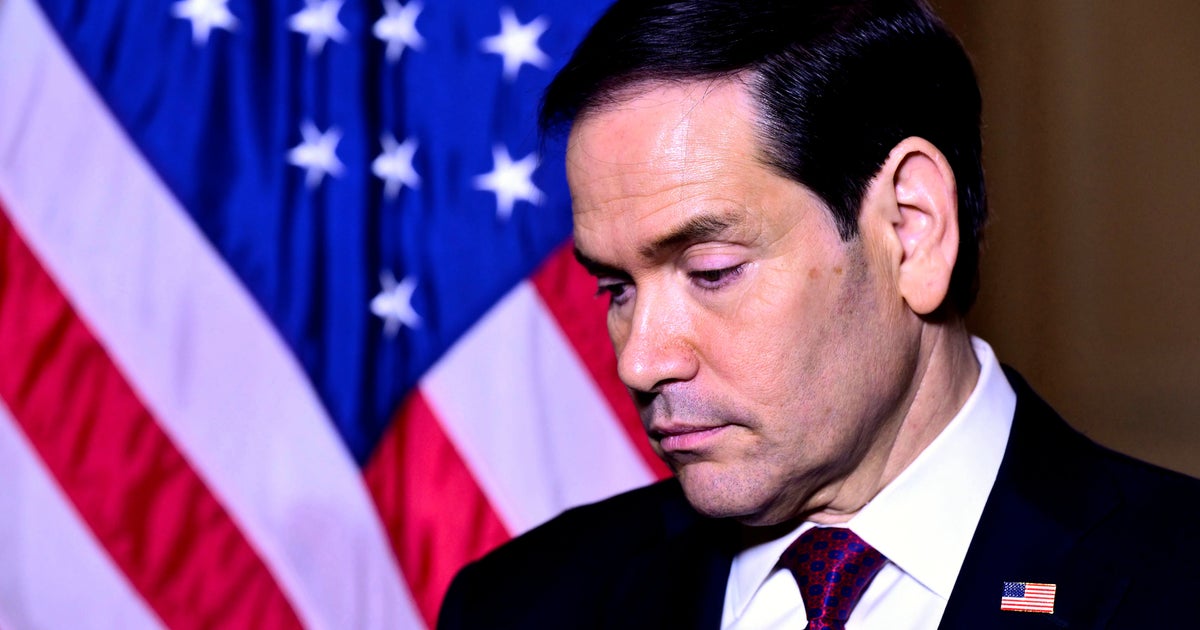
In a political landscape often defined by shifting alliances and unpredictable foreign policy, a recent revelation from Senator Marco Rubio has cast a surprising light on the Trump administration's strategy regarding Iran. According to Rubio, President Donald Trump's ultimate goal in the wake of months of intense conflict in the Middle East is to effectively undo the last three months of chaos, aiming to revert to the pre-escalation status quo. This disclosure, if accurate, reframes the entire narrative of the recent US-Iran confrontations, suggesting a highly unconventional and perhaps risky approach to international relations.
The period in question began with a significant escalation: a joint US-Israel bombing campaign against Iran at the end of February. This action followed what the administration perceived as a breakdown in international negotiations aimed at capping Iran's nuclear program and curbing its regional influence. The subsequent months saw a dangerous tit-for-tat, with missile strikes, cyberattacks, and proxy conflicts threatening to spiral into a full-blown regional war. The notion that the architect of such aggressive maneuvers now seeks merely to rewind the clock raises profound questions about the underlying objectives, the cost-benefit analysis, and the future stability of one of the world's most volatile regions.
The Unfolding of a Crisis: From Diplomacy to Deterrence
The roots of the recent escalation can be traced back to the Trump administration's withdrawal from the Joint Comprehensive Plan of Action (JCPOA), commonly known as the Iran nuclear deal, in 2018. This move, championed by critics of the deal who argued it was too lenient on Tehran, immediately ratcheted up tensions. The subsequent re-imposition of crippling sanctions on Iran aimed to force the regime back to the negotiating table for a 'better deal.' However, Iran's response was not immediate capitulation but a gradual scaling back of its commitments under the JCPOA, coupled with increased regional assertiveness through its proxies.
The international community, including European allies, largely condemned the US withdrawal, advocating for diplomatic solutions. However, the US administration, particularly under the influence of hawkish advisors, maintained a policy of "maximum pressure." This strategy reached a critical juncture in late February, when, in coordination with Israel, the US launched significant military strikes. These strikes were reportedly a response to intelligence indicating advanced Iranian missile deployments and alleged plans for attacks on US assets or allies. The decision to employ military force marked a dramatic shift from economic pressure to direct military engagement, fundamentally altering the dynamics of the conflict.
The 'Status Quo Ante' Strategy: A Risky Reset Button?
Rubio's statement implies a strategic objective that diverges significantly from traditional foreign policy aims. Typically, military engagements are undertaken to achieve specific, forward-looking goals: regime change, territorial gains, disarmament, or the establishment of new security frameworks. To engage in months of conflict, risking regional conflagration and international condemnation, only to aim for a return to the previous state of affairs, suggests a highly unconventional and potentially controversial rationale.
One interpretation is that the administration's actions were a form of "punitive deterrence." By demonstrating a willingness to use overwhelming force, the US might have aimed to shock Iran into a more compliant posture, hoping to re-establish a deterrent credible enough to prevent future provocations without necessarily seeking to overthrow the regime or dismantle its entire nuclear infrastructure. The status quo in this context would not be an identical replication of the past, but a return to a state where US deterrence is unequivocally acknowledged by Tehran, and Iran's regional ambitions are significantly curtailed.
However, this strategy carries immense risks. The Middle East is a complex tapestry of geopolitical interests, historical grievances, and sectarian divides. Unilaterally pressing a "reset button" through military force can have unintended consequences, potentially empowering hardliners within Iran, alienating allies, and creating new vectors of instability. The human and economic costs of such a strategy are also substantial, raising ethical questions about the proportionality of means to ends.
Implications for Regional Stability and International Diplomacy
The revelation of Trump's objective has significant implications for regional stability. If the goal was merely to restore a previous equilibrium, it suggests that the administration might view the recent conflict as a successful, albeit brutal, negotiation tactic. However, the perception of success is highly subjective. From Iran's perspective, the US actions might be seen as an unprovoked assault, hardening their resolve rather than softening it. Regional actors, including Saudi Arabia, Turkey, and other Gulf states, would also be reassessing their positions, potentially leading to new alliances or further polarization.
For international diplomacy, this approach could set a dangerous precedent. It implies that major powers might resort to military conflict as a means to "correct" perceived deviations from a desired status quo, rather than through sustained diplomatic engagement, multilateral negotiations, or economic incentives. This could further erode trust in international institutions and norms, making future crises even harder to manage. The European Union, Russia, and China, all of whom have vested interests in the stability of the Middle East, would likely view such a strategy with deep skepticism, if not outright alarm.
* Economic Impact: The conflict and subsequent attempts to revert to a status quo have had tangible economic consequences, particularly on oil markets and global trade routes. Shipping in the Strait of Hormuz, a vital chokepoint, faced disruptions, leading to fluctuating energy prices and increased insurance premiums for maritime transport. * Humanitarian Cost: While direct casualties from the US-Israel bombing campaign and Iranian retaliations might have been contained, the broader instability exacerbated existing humanitarian crises in countries like Yemen and Iraq, where proxy conflicts intensified. * Domestic Politics: The foreign policy maneuvers also play into domestic political narratives in the US, particularly in an election year. The administration might frame a return to the status quo as a victory, demonstrating strength and decisiveness, while critics could point to the unnecessary escalation and the lack of a clear, forward-looking strategy.
Looking Ahead: A Fragile Peace or a Prelude to Further Conflict?
As the dust settles from the recent escalations, the question remains: can a return to the pre-conflict status quo truly be achieved, and if so, at what long-term cost? The Middle East is not a static environment where a "reset button" can simply be pressed. Each act of aggression, each diplomatic maneuver, leaves indelible marks on the geopolitical landscape.
Moving forward, the international community will be watching closely to see if the US administration pivots back to more traditional diplomatic channels or if the "punitive deterrence" model becomes a recurring feature of its foreign policy. The path to genuine, lasting stability in the Middle East requires more than just reverting to a previous state; it demands sustained, multilateral engagement, a commitment to de-escalation, and a clear vision for a future that addresses the legitimate security concerns of all regional actors. Without such an approach, any "status quo" achieved through force will likely remain a fragile peace, susceptible to the next wave of conflict.
Stay Informed
Get the world's most important stories delivered to your inbox.
No spam, unsubscribe anytime.
Comments
No comments yet. Be the first to share your thoughts!