Shadow Seas: How Iranian Oil Skirts Sanctions Near Malaysian Waters
Malaysia's maritime agency has shed light on a complex web of ship-to-ship transfers involving Iranian-linked tankers, exploiting 'jurisdictional gaps' near its waters to bypass international sanctions. This clandestine activity highlights the persistent challenges in enforcing global embargoes and raises questions about maritime security and the effectiveness of international oversight. The practice, while not directly involving Malaysian vessels, impacts regional stability and global energy markets.
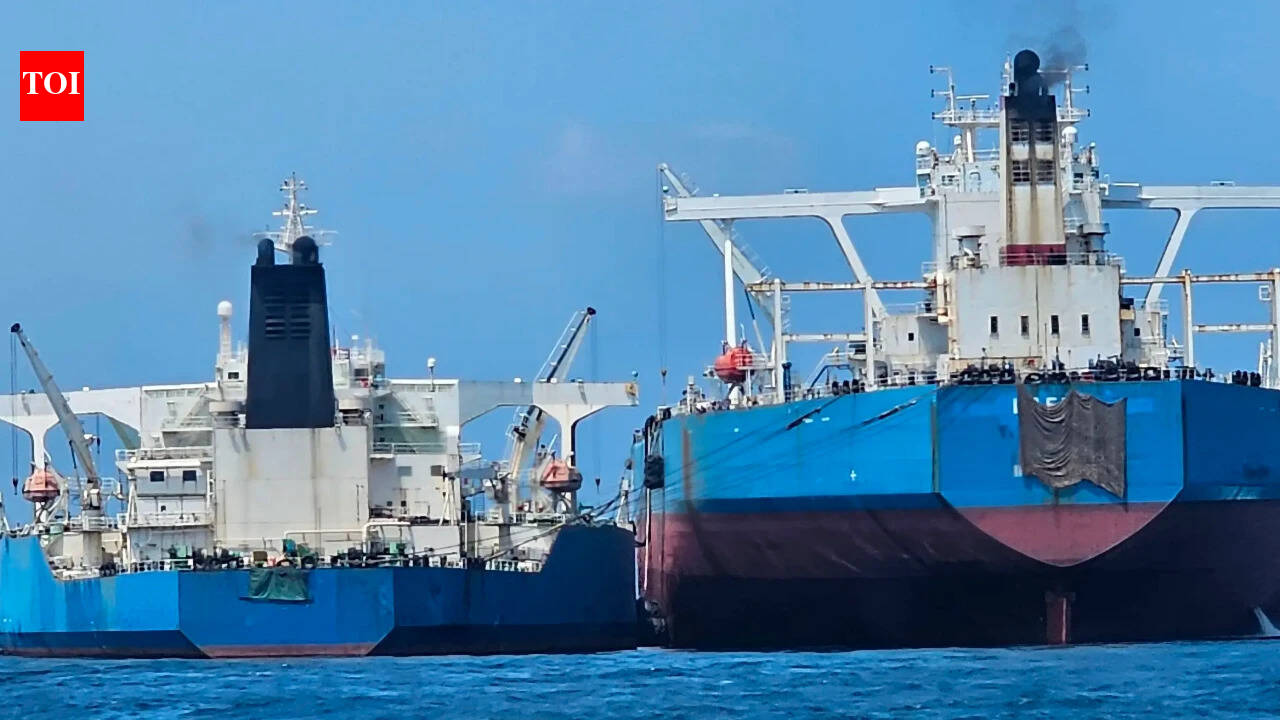
In the murky, often unpoliced expanses of international waters, a sophisticated cat-and-mouse game is playing out, with significant implications for global energy markets and geopolitical stability. At its heart are Iranian-linked tankers, accused by Malaysia's maritime agency of exploiting "jurisdictional gaps" to conduct illicit ship-to-ship transfers of sanctioned oil. This practice, occurring near Malaysian territorial waters, underscores the persistent challenges faced by international bodies in enforcing sanctions and maintaining maritime security.
The revelation from Kuala Lumpur, while rejecting allegations of official complicity, confirms a long-suspected modus operandi used to circumvent stringent international embargoes on Iranian oil. These sanctions, primarily imposed by the United States, aim to curb Tehran's nuclear program and its regional influence. However, the ingenuity of those seeking to bypass them, coupled with the inherent complexities of maritime law, has created a fertile ground for clandestine operations that continue to fuel Iran's economy.
The Anatomy of a Loophole: Ship-to-Ship Transfers
Ship-to-ship (STS) transfers are a legitimate and common practice in the maritime industry, used for various purposes, including optimizing cargo loads or transferring goods to smaller vessels for onward delivery. However, when applied to sanctioned commodities like Iranian oil, they become a critical tool for obfuscation. The process typically involves two vessels mooring alongside each other in open seas, often with their Automatic Identification System (AIS) transponders – crucial for tracking – either switched off, manipulated, or operating under false flags. This 'going dark' tactic makes it incredibly difficult for authorities to monitor the origin and destination of the cargo.
Malaysia's maritime agency, MMEA (Malaysian Maritime Enforcement Agency), has explicitly stated that these transfers are occurring in international waters bordering its exclusive economic zone (EEZ). This distinction is crucial. While Malaysia has the right to exploit resources in its EEZ, its jurisdiction over foreign vessels conducting non-resource-related activities is limited. This creates a jurisdictional grey area where international law is less clear-cut, allowing sanctioned entities to operate with a degree of impunity. The MMEA's position is that while they are aware of the activities, their direct intervention capabilities are constrained by international maritime law, particularly when the vessels are not in Malaysian territorial waters and are not Malaysian-flagged.
Historical Context and Escalating Sanctions
Sanctions against Iran, particularly concerning its oil exports, have a long and complex history, intensifying significantly after the United States withdrew from the Joint Comprehensive Plan of Action (JCPOA), commonly known as the Iran nuclear deal, in 2018. The Trump administration then reimposed and expanded a comprehensive set of sanctions, aiming for "zero" Iranian oil exports. These measures targeted not only Iran's oil sector but also its banking, shipping, and other critical industries, making it exceptionally difficult for Iran to sell its crude legitimately on the global market.
In response, Iran and its network of facilitators developed sophisticated methods to evade these restrictions. These include:
* Flag hopping: Frequently changing the flag of convenience for tankers. * Dark voyages: Disabling AIS transponders to avoid detection. * Complex ownership structures: Using shell companies to obscure the true beneficial owners of vessels. * Ship-to-ship transfers: The primary method highlighted by Malaysia, allowing oil to be re-manifested and sold as originating from a different source or country.
These evasion tactics have allowed Iran to continue exporting significant volumes of oil, albeit at discounted prices, providing a vital lifeline to its economy. Estimates vary, but some reports suggest Iran's oil exports have rebounded significantly from their post-2018 lows, demonstrating the effectiveness of these circumvention strategies.
Geopolitical Implications and Regional Stability
The ongoing illicit oil trade has profound geopolitical implications. For the United States and its allies, it undermines the effectiveness of their sanctions regime, signaling a weakness in their ability to exert economic pressure. For Iran, it represents a successful counter-strategy, allowing it to maintain revenue streams despite international isolation. For countries like Malaysia, it presents a delicate diplomatic challenge. While not directly involved, the proximity of these activities to its waters draws unwanted attention and could potentially lead to secondary sanctions if perceived as complicit.
Moreover, the presence of such clandestine operations raises concerns about maritime security. Unregulated ship-to-ship transfers, especially involving large oil tankers, carry inherent risks of environmental pollution due to potential spills. They also create an environment conducive to other illicit activities, such as smuggling or even piracy, as the areas become known for lax oversight. The integrity of global shipping lanes and the rule of law at sea are subtly eroded by these persistent breaches.
The Way Forward: Enhancing Oversight and Cooperation
The Malaysian government's public acknowledgment of the issue, while asserting its non-complicity, is a crucial step. It highlights the need for enhanced international cooperation and technological advancements to effectively monitor and deter such activities. Solutions could include:
* Improved satellite surveillance: More sophisticated satellite imagery and analytics can detect dark vessels and unusual maritime patterns. * Data sharing and intelligence cooperation: Greater collaboration between maritime agencies, intelligence services, and international organizations like the IMO (International Maritime Organization) and Interpol. * Strengthening international maritime law: Clarifying jurisdictional ambiguities in international waters and developing mechanisms for coordinated enforcement. * Targeting facilitators: Focusing not just on the vessels but also on the insurance companies, shipping agents, and financial institutions that enable these transactions.
The challenge is immense, given the vastness of the oceans and the economic incentives driving these illicit operations. However, the integrity of the international sanctions regime and the stability of global energy markets depend on a concerted effort to close these maritime loopholes. As the world grapples with complex geopolitical dynamics, the shadow trade in oil near Malaysia serves as a stark reminder that the battle for compliance is often fought on the high seas, far from the public eye, yet with far-reaching consequences for us all.
Ultimately, the issue is not just about oil; it's about the efficacy of international law, the commitment of nations to uphold global norms, and the delicate balance between national sovereignty and collective security. The spotlight on Malaysia's waters is a call to action for the international community to address these persistent challenges head-on.
Stay Informed
Get the world's most important stories delivered to your inbox.
No spam, unsubscribe anytime.
Comments
No comments yet. Be the first to share your thoughts!