Singapore's $10.4 Million Illicit Vape Market: A Looming Crisis for Public Health and Revenue
A recent study by the EU-ASEAN Business Council and Euromonitor International reveals Singapore's illicit vape market generated an alarming $10.4 million in revenue between 2024 and 2025. This burgeoning black market not only poses significant public health risks due to unregulated products but also deprives the government of substantial tax revenue. Experts warn that without robust enforcement and clear policy adjustments, the problem is set to escalate, undermining Singapore's strict tobacco control measures.
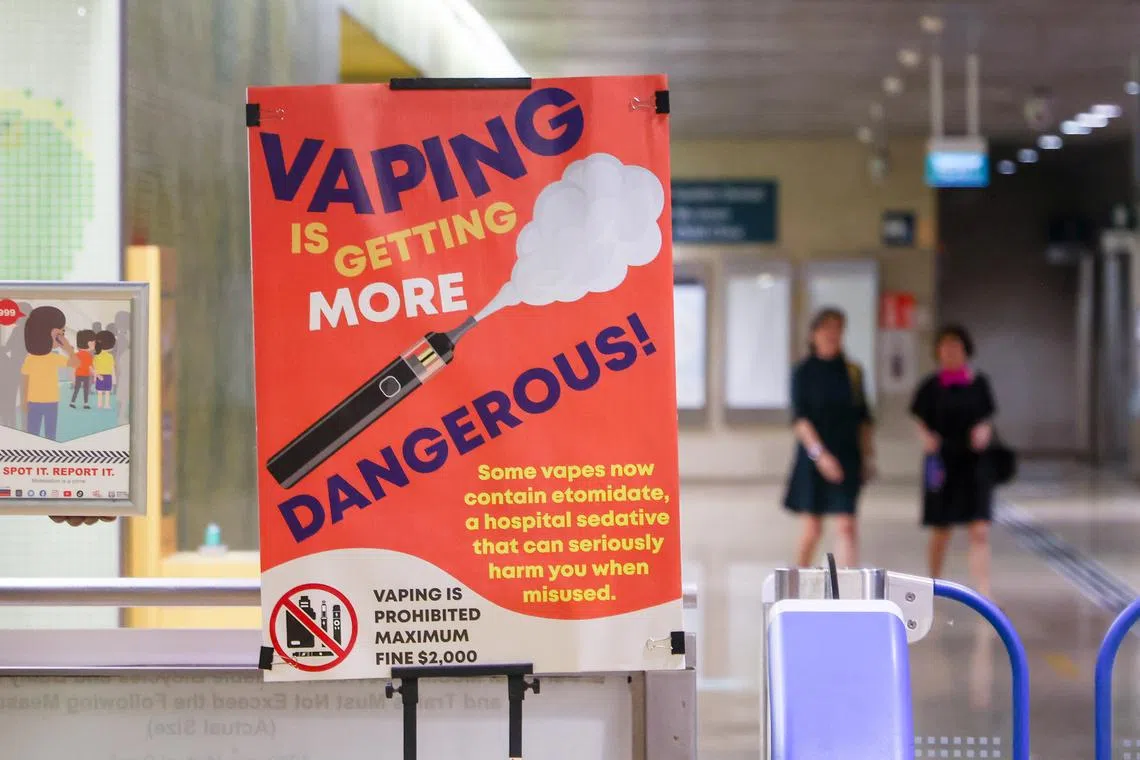
Singapore, a nation renowned for its stringent regulations and meticulous urban planning, is grappling with a burgeoning shadow economy that threatens both public health and state coffers: the illicit vape market. A recent study, a collaborative effort between the EU-ASEAN Business Council (EU-ABC) and market research firm Euromonitor International, has cast a stark light on the scale of this problem, revealing that the illegal trade in vaping products generated an estimated $10.4 million in revenue between 2024 and 2025. This figure, while perhaps modest in the grand scheme of global illicit trade, represents a significant leakage of potential tax revenue and underscores a growing challenge to the city-state's public health policies.
The findings, published on May 18, have sent ripples through policy circles and public health advocacy groups. The report highlights that the revenue generated by this black market is not merely a financial loss; it signifies a widespread availability of unregulated products that bypass quality controls and age restrictions, directly jeopardizing the health of Singaporeans, particularly its youth. The study's implications extend beyond mere economics, touching upon the effectiveness of prohibition, the dynamics of consumer demand, and the sophisticated networks that fuel this underground trade.
The Unseen Costs: Public Health and Economic Drain
The prohibition of vaping products in Singapore, enacted with the intention of safeguarding public health, has inadvertently created a fertile ground for an illicit market. Unlike regulated products, which are subject to rigorous testing and ingredient disclosure, illicit vapes often contain unknown or harmful substances. Users are exposed to unregulated nicotine levels, contaminants, and potentially toxic flavorings, posing severe risks to respiratory health, cardiovascular systems, and brain development in adolescents. The long-term health consequences of these unregulated products are still largely unknown, but the immediate dangers are clear.
Economically, the $10.4 million in illicit revenue represents a direct loss to the government's treasury. If these products were legalized and taxed, they could contribute significantly to public funds, which could then be reinvested into healthcare, education, or other public services. Furthermore, the existence of a thriving black market often correlates with other forms of organized crime, potentially funding more nefarious activities. The enforcement costs associated with combating this trade – including surveillance, raids, and prosecutions – also place a considerable burden on law enforcement agencies, diverting resources from other critical areas.
A Global Trend Reflected Locally
Singapore's struggle with illicit vaping is not an isolated incident but rather a microcosm of a larger global phenomenon. Many countries that have implemented strict bans or heavy regulations on vaping have seen a corresponding rise in black markets. The demand for vaping products, often driven by a desire for nicotine alternatives or recreational use, persists regardless of legal status. This persistent demand, coupled with the relatively easy concealment and transport of vaping devices and liquids, makes them attractive commodities for illicit traders.
Historical precedents abound. The prohibition era in the United States, intended to curb alcohol consumption, instead fueled a massive black market, organized crime, and the proliferation of unregulated, often dangerous, alcoholic beverages. Similarly, the global war on drugs has demonstrated the difficulty, if not futility, of eradicating demand through prohibition alone. While the health implications of vaping are distinct from those of alcohol or illicit drugs, the market dynamics share striking similarities. Consumers, particularly younger demographics, are often drawn to the novelty and perceived 'coolness' of forbidden products, further complicating enforcement efforts.
Enforcement Challenges and Policy Dilemmas
The Singaporean authorities, primarily the Health Sciences Authority (HSA), have been proactive in their efforts to combat the illicit vape trade. Regular raids, seizures of products, and arrests of sellers and importers are common. However, the sheer volume and adaptability of the black market pose significant challenges. Online platforms, social media, and encrypted messaging apps serve as convenient marketplaces, making detection and interdiction increasingly difficult. Smugglers employ sophisticated methods to bypass customs, often integrating vape products into legitimate cargo or using intricate cross-border networks.
This situation presents a complex policy dilemma. On one hand, maintaining the ban aligns with Singapore's conservative approach to public health and its commitment to a tobacco-free generation. On the other hand, the thriving black market undermines these very goals by exposing users to unregulated products and potentially acting as a gateway to other illicit activities. Some experts argue that a regulated market, with strict age limits, product standards, and taxation, could bring the trade out of the shadows, allow for better public health monitoring, and generate revenue. However, this approach carries its own risks, including the potential normalization of vaping and increased uptake among non-smokers.
Expert Analysis and Forward-Looking Perspectives
Dr. Lim Wei Yee, a public health expert specializing in addiction, notes, "The $10.4 million figure is a wake-up call. Prohibition, while well-intentioned, has created a vacuum filled by opportunistic illicit traders. We need to critically assess whether the current approach is achieving its desired public health outcomes or merely pushing the problem underground where it's harder to monitor and control." She suggests a multi-pronged strategy involving enhanced enforcement, public education campaigns highlighting the dangers of illicit products, and a re-evaluation of policy options, potentially exploring harm reduction strategies within a strictly controlled framework.
The EU-ABC and Euromonitor International report itself advocates for a comprehensive approach, emphasizing the need for greater collaboration between law enforcement agencies, customs, and international partners to disrupt supply chains. It also calls for increased public awareness campaigns to educate consumers about the risks associated with illicit products and to encourage reporting of illegal activities. The study also implicitly suggests that Singapore might benefit from examining the experiences of countries that have opted for regulated vape markets, learning from their successes and failures.
Looking ahead, Singapore faces a critical juncture. The illicit vape market is not just a nuisance; it is a significant public health threat and an economic drain. Addressing this challenge will require more than just intensified enforcement. It will demand a nuanced and adaptive policy framework that considers the complex interplay of public health, consumer behavior, economic realities, and the persistent nature of illicit trade. The $10.4 million figure is a stark reminder that even in highly regulated environments, the shadow economy finds ways to flourish, demanding constant vigilance and innovative solutions to protect both citizens and the integrity of the state.
Stay Informed
Get the world's most important stories delivered to your inbox.
No spam, unsubscribe anytime.
Comments
No comments yet. Be the first to share your thoughts!