Switzerland to Unseal Secret Files on Josef Mengele, 'Angel of Death'
Decades after World War II, Switzerland's Federal Intelligence Service has announced its intention to open long-sealed files concerning Josef Mengele, the infamous Nazi 'Angel of Death'. This move reignites historical scrutiny into how Mengele, responsible for horrific experiments at Auschwitz, managed to evade justice for so long. The decision promises to shed new light on the shadowy network that aided his escape and potential connections to neutral Switzerland, challenging long-held narratives about his post-war movements.
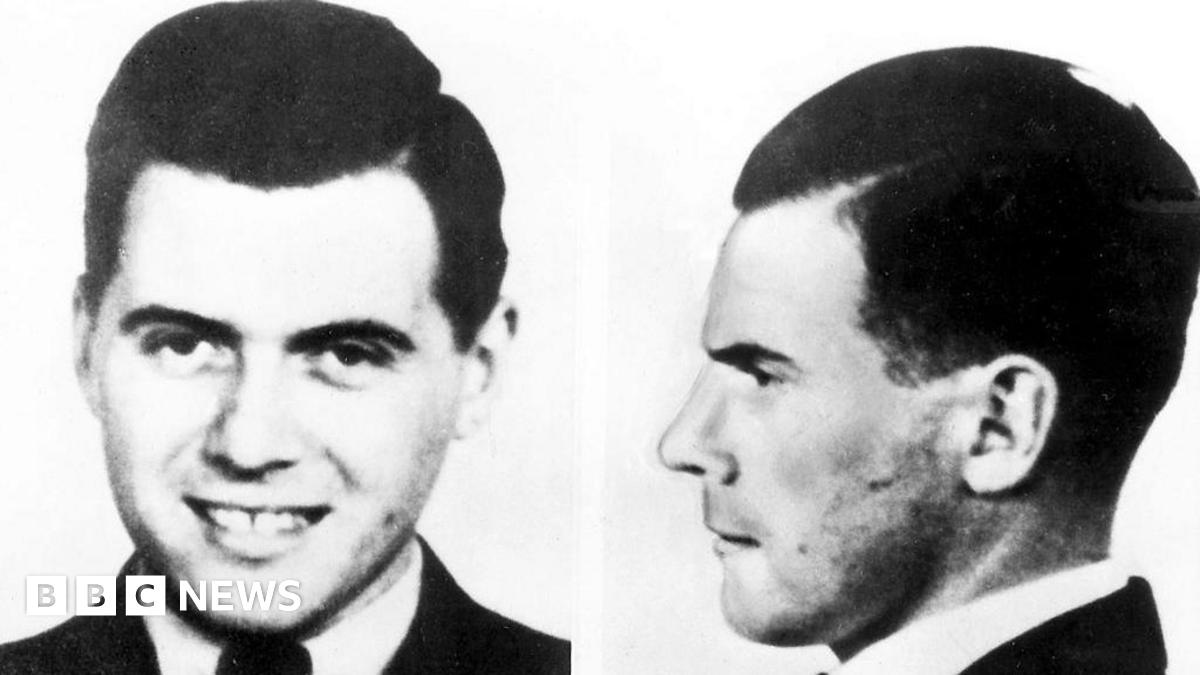
The specter of Josef Mengele, the infamous 'Angel of Death' of Auschwitz, continues to haunt the annals of history, a chilling reminder of the Holocaust's atrocities. Decades after World War II concluded and the full horrors of the Nazi regime were exposed, the question of how Mengele and other high-ranking war criminals evaded justice has remained a persistent, painful enigma. Now, a new chapter in this dark saga is set to unfold as the Swiss Federal Intelligence Service (FIS) has declared its intention to finally open long-sealed files pertaining to Mengele, promising to shed new light on his post-war movements and potential connections to the neutral nation.
This announcement, though currently without a specific timeline for disclosure, has sent ripples through historical and journalistic communities. For years, whispers and rumors have circulated that Mengele, who fled Europe after the war, may have spent time in Switzerland. The opening of these classified documents could either confirm these suspicions, offering crucial insights into the networks that facilitated his escape, or definitively debunk them, redirecting focus to other avenues of inquiry. Regardless of their specific revelations, these files are poised to contribute significantly to our understanding of a period defined by both profound evil and a complex, often morally ambiguous, international landscape.
The Shadow of Auschwitz: Mengele's Reign of Terror
Josef Mengele's name is synonymous with unimaginable cruelty. As a physician at the Auschwitz concentration camp, he earned the moniker 'Angel of Death' for his barbaric medical experiments on prisoners, particularly twins, Roma people, and those with physical deformities. His research, driven by a twisted ideology of racial purity, involved vivisection, grotesque surgical procedures without anesthesia, and the systematic murder of thousands. Survivors' testimonies paint a harrowing picture of a man who could be charming and cultured one moment, and a cold, calculating killer the next. His experiments aimed to prove the superiority of the Aryan race and to find ways to increase the birth rate of 'pure' Germans, leaving an indelible stain on medical ethics and human history.
After the war, Mengele initially managed to avoid capture, blending in with returning German soldiers. He spent several years in hiding in Germany before embarking on a journey that would take him across continents. Aided by a network of former Nazi sympathizers, including the infamous ODESSA (Organisation der ehemaligen SS-Angehörigen), and allegedly facilitated by the 'ratlines' – escape routes often through Italy and Spain to South America – Mengele eventually settled in Argentina in 1949. He lived openly under his own name for a time, a testament to the chaotic post-war environment and the initial lack of concerted international effort to hunt down all war criminals.
Switzerland's Neutrality and Post-War Role
Switzerland's position during World War II was one of declared neutrality, a stance that has been the subject of extensive historical debate. While it provided refuge for some, particularly Jewish refugees in the early years of the war, its policies also led to the turning away of many others, often with tragic consequences. Post-war, Switzerland became a hub for international finance and intelligence, a crossroads where various factions, including former Nazis, often sought safe haven or passage. The country's banking secrecy laws and its central European location made it an attractive, albeit controversial, potential waypoint for those seeking to disappear.
Rumors of Mengele's presence in Switzerland are not new. Historians and investigative journalists have long speculated about the extent to which neutral countries, including Switzerland, might have inadvertently or even knowingly played a role in the escape of Nazi war criminals. The opening of these files could provide concrete evidence, or lack thereof, regarding these long-standing conjectures. It could reveal the nature of any intelligence gathered on Mengele, the extent of his movements, and whether he received any form of assistance or protection within Swiss borders. The implications for Switzerland's historical narrative and its commitment to transparency are significant.
The Quest for Truth: Why Now?
The timing of this announcement, without a firm date for disclosure, raises questions. Why has the FIS chosen now to reveal its intention to open these files? It could be part of a broader trend towards greater transparency regarding wartime and post-war activities, as nations grapple with their historical legacies. In recent decades, other countries have declassified documents related to Nazi war criminals, contributing to a more complete, albeit often uncomfortable, historical record. The pressure from historians, Jewish organizations, and the public for full accountability for Holocaust crimes remains strong.
Furthermore, the nature of intelligence files means they often contain sensitive information, not just about the target individual but also about sources, methods, and international relations. The delay in opening them could be attributed to the need to protect ongoing operations, national security interests, or the privacy of individuals who may still be alive or whose descendants could be affected. The FIS's cautious approach suggests a meticulous process of review and redaction, ensuring that while historical truth is sought, current sensitivities are also managed.
Implications and Forward Look
The potential revelations from the Swiss files could be multifaceted. They might: * Confirm or deny Mengele's presence: Providing definitive answers to long-held rumors. * Expose new networks: Unveiling previously unknown individuals or organizations that aided Nazi fugitives. * Inform intelligence history: Offering insights into how intelligence agencies tracked (or failed to track) war criminals in the post-war era. * Re-evaluate Switzerland's role: Potentially leading to a deeper understanding of the country's complex neutrality and its engagement with post-war justice.
While Josef Mengele ultimately died in Brazil in 1979, having evaded justice for his heinous crimes, the pursuit of historical truth remains vital. The opening of these Swiss files is not about bringing Mengele to justice posthumously, but about understanding the mechanisms that allowed such a monstrous figure to escape for so long. It is about filling the gaps in our historical knowledge, ensuring that the lessons of the Holocaust are never forgotten, and reinforcing the commitment to accountability for crimes against humanity. As the world awaits the unsealing of these documents, the hope is that they will bring clarity to one of the darkest chapters of the 20th century, offering a more complete picture of the 'Angel of Death's' long, unpunished flight.
Stay Informed
Get the world's most important stories delivered to your inbox.
No spam, unsubscribe anytime.
Comments
No comments yet. Be the first to share your thoughts!