The Charging Revolution: How a Single USB-C Hub Powers a Hundred Devices
The era of tangled cables and multiple power bricks is rapidly drawing to a close. A groundbreaking USB-C charger has emerged, capable of simultaneously powering up to 100 devices, signaling a monumental shift in how we manage our electronics. This innovation promises to streamline power delivery for everything from personal gadgets to professional workstations and even entire smart homes. Discover the technology behind this leap and its profound implications for consumers and industries alike.
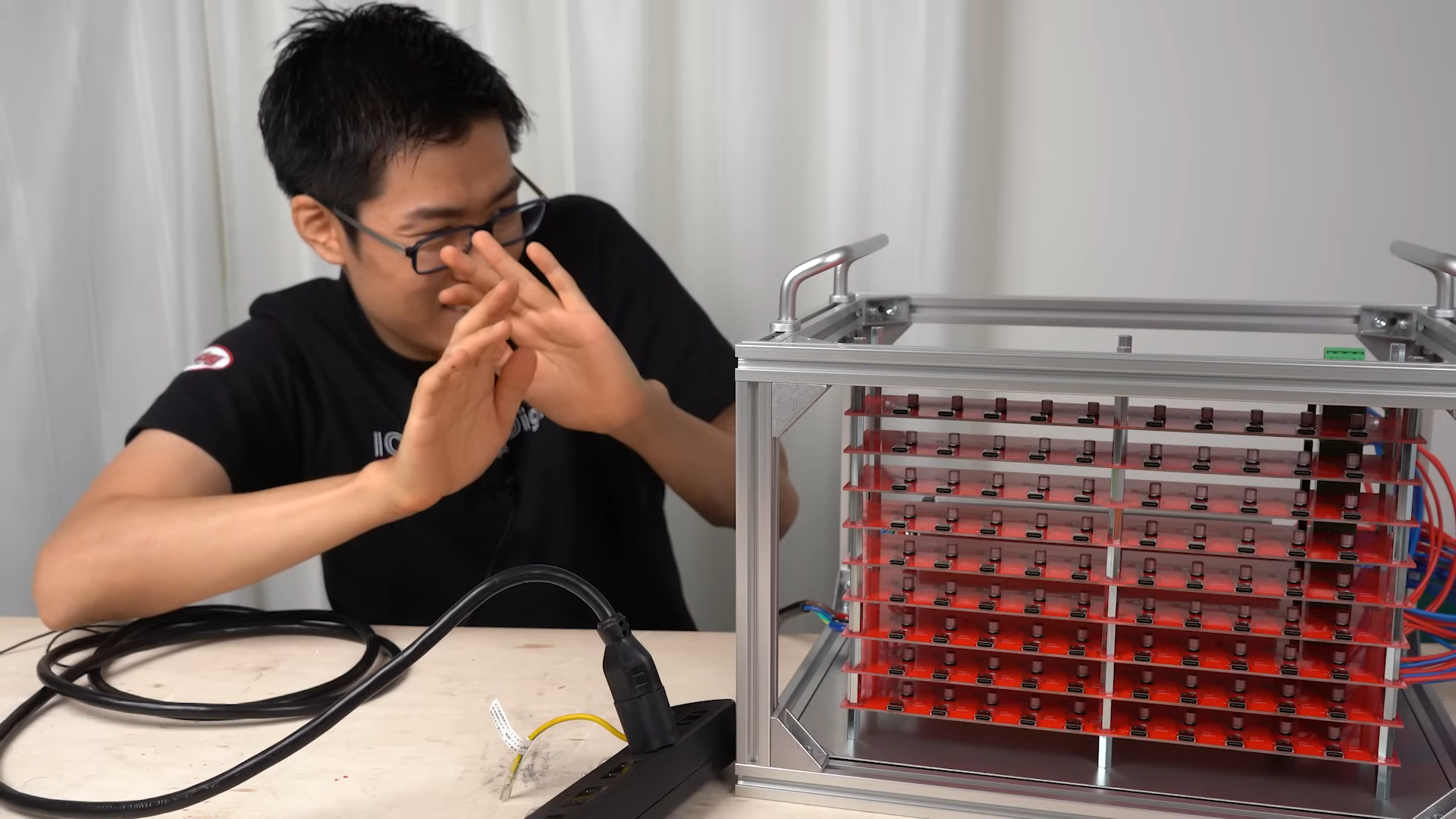
In an increasingly interconnected world, our reliance on electronic devices has grown exponentially. From smartphones and laptops to smart home gadgets and professional equipment, each device demands power, often leading to a chaotic tangle of cables and a proliferation of individual charging bricks. For years, the quest for a universal, efficient, and high-capacity charging solution has been a technological holy grail. Now, that quest appears to have culminated in a remarkable breakthrough: a single USB-C charger capable of simultaneously juicing up an astonishing 100 devices.
This isn't merely an incremental upgrade; it represents a fundamental paradigm shift in power management. Gone are the days of negotiating for an available outlet or carrying a backpack full of proprietary chargers. This innovation, leveraging the robust capabilities of USB-C and advanced power delivery protocols, promises to simplify our digital lives, reduce electronic waste, and fundamentally alter infrastructure planning for homes, offices, and public spaces.
The Evolution of Charging: From Single Bricks to Power Hubs
To truly appreciate the significance of this 100-device charger, it's crucial to understand the historical trajectory of device charging. For decades, the standard was a dedicated charger for each electronic item. Think back to the early 2000s: a Nokia phone had one charger, a Sony Ericsson another, a digital camera yet another, and a laptop its own bulky power brick. This fragmentation was not only inconvenient but also a significant contributor to electronic waste, as chargers often became obsolete with device upgrades.
The first major leap came with the standardization of micro-USB, offering a common port for many mobile devices, though Apple famously stuck to its Lightning connector. Then came the advent of multi-port chargers. Initially, these were simple USB-A hubs designed for travel, allowing users to charge two or three phones simultaneously from a single wall outlet. These early iterations, while convenient, often suffered from limited power output, meaning that charging multiple power-hungry devices simultaneously would be slow or even impossible.
The real game-changer arrived with USB-C and USB Power Delivery (USB-PD). USB-C, with its reversible connector and higher power throughput capabilities, laid the groundwork. USB-PD, a specification built on top of USB-C, allowed for dynamic power negotiation between devices and chargers, enabling a single port to deliver anywhere from a few watts for a smartphone to 100W or more for a high-performance laptop. This paved the way for multi-port USB-C chargers that could handle a laptop, a tablet, and a phone all at once, albeit typically limited to 4-5 ports and a total output of 100-200W.
This new 100-device charger, however, pushes these boundaries into an entirely new realm. It's not just about more ports; it's about a sophisticated power distribution system capable of intelligently allocating immense power across a vast array of devices, from low-power sensors to multiple high-wattage laptops, all while maintaining optimal charging speeds and safety.
Engineering Marvel: How Does It Work?
The ability to power 100 devices from a single unit is a testament to advanced electrical engineering and intelligent power management. At its core, such a device relies on several key technologies:
* Gallium Nitride (GaN) Technology: Traditional silicon-based chargers are bulky and inefficient at high power outputs. GaN technology allows for much smaller, more efficient, and cooler-running power components. This is crucial for packing immense power delivery capabilities into a manageable form factor. * Advanced Power Delivery (USB-PD) Controllers: These intelligent chips are the brains of the operation. They communicate with each connected device to determine its power requirements and then negotiate the optimal voltage and current. This prevents overcharging, undercharging, and ensures efficient power allocation, dynamically adjusting as devices are plugged in or removed. * Multi-Port Architecture with Load Balancing: Unlike simple splitters, these chargers feature complex internal circuitry that can distribute a massive total power budget (potentially thousands of watts) across numerous ports. Sophisticated algorithms ensure that power is balanced, prioritizing devices that need it most or distributing it evenly based on predefined rules. For instance, if a laptop requires 60W and a phone 18W, the system allocates precisely that, rather than simply dividing total power equally. * Robust Cooling Systems: Delivering such high power generates heat. Effective thermal management, often involving advanced heat sinks and sometimes even active cooling, is essential to prevent overheating and ensure longevity and safety.
The sheer number of ports implies a highly modular internal design, possibly using multiple internal power delivery modules, each managing a subset of ports, all coordinated by a central controller. This intricate dance of hardware and software is what allows for such unprecedented scalability.
Implications Across Industries and Lifestyles
The impact of a 100-device USB-C charger extends far beyond personal convenience. Its implications are transformative for various sectors:
* Smart Homes and IoT: As homes become increasingly saturated with smart devices – sensors, cameras, smart speakers, lighting, and appliances – managing their power becomes a challenge. A central charging hub could simplify installation and maintenance, reducing the need for countless wall warts and dedicated power supplies. * Education: Classrooms and labs often feature dozens of tablets, laptops, and specialized educational tools. A single charging station could drastically streamline device management, making it easier to prepare devices for student use and reducing infrastructure costs. * Retail and Hospitality: Imagine hotels offering a single charging point in each room for all guest devices, or retail stores powering their entire display of electronics from one source. This enhances customer experience and simplifies store operations. * Enterprise and IT: For businesses, especially those with large fleets of mobile devices or extensive testing labs, centralized charging offers immense benefits in terms of space saving, cable management, and operational efficiency. IT departments could manage device charging for an entire floor from a single unit. * Event Management and Pop-up Installations: Temporary setups, conferences, and outdoor events often struggle with power distribution. A high-capacity USB-C hub provides a flexible and powerful solution for charging multiple devices on the fly. * Sustainability: By consolidating power delivery and reducing the need for individual chargers, this technology has the potential to significantly decrease electronic waste and the consumption of raw materials associated with charger manufacturing.
The Road Ahead: Challenges and Opportunities
While the concept of a 100-device charger is revolutionary, its widespread adoption will depend on several factors. Cost is a primary consideration; such advanced technology is likely to be expensive initially. Durability and long-term reliability for such a complex system will also be paramount. Furthermore, the physical form factor and cable management for 100 devices still present a logistical challenge, even with a single power source.
However, the opportunities far outweigh the challenges. As USB-C becomes truly ubiquitous – powering everything from high-end monitors and external GPUs to medical devices and industrial equipment – the demand for such high-capacity, intelligent charging solutions will only grow. We might see modular systems where users can add more ports as needed, or even integrated solutions built into furniture or architectural elements.
This innovation is a testament to the relentless pursuit of efficiency and convenience in technology. It signals a future where power is no longer a bottleneck but a seamlessly integrated utility, as readily available and unobtrusive as Wi-Fi. The tangled mess of yesterday's charging solutions is giving way to a streamlined, powerful, and intelligent future, where one plug truly can rule them all.
Stay Informed
Get the world's most important stories delivered to your inbox.
No spam, unsubscribe anytime.
Comments
No comments yet. Be the first to share your thoughts!