The Digital Graveyard: Resurrecting Obsolete Hardware in the Browser Era
The frustrating cycle of replacing perfectly functional hardware due to operating system incompatibility is a common modern woe. This article explores the growing problem of planned obsolescence driven by software, particularly for older peripherals like scanners. We delve into innovative solutions, from community-driven driver development to the promise of browser-based virtualization, offering a glimmer of hope for extending the lifespan of our beloved tech and challenging the throwaway culture.
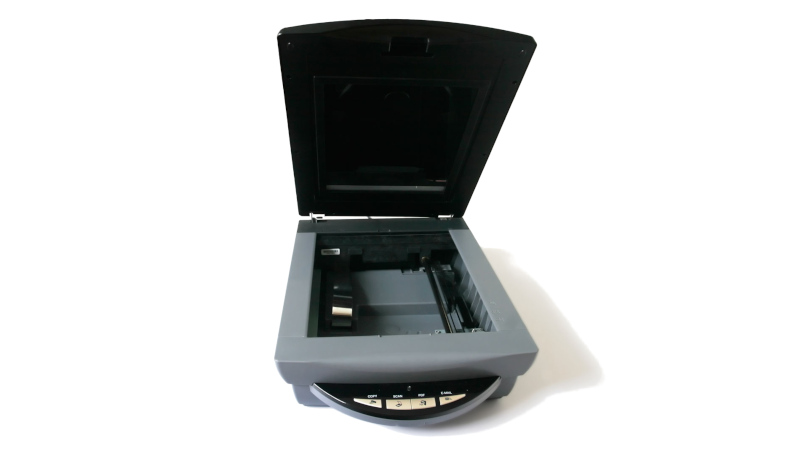
The Silent Epidemic of Digital Obsolescence
It’s a familiar and often infuriating scenario: a perfectly functional piece of hardware – perhaps a trusty scanner, a specialized printer, or a legacy scientific instrument – suddenly becomes a high-tech paperweight. Not because it’s broken, but because a new operating system update has rendered its drivers obsolete, effectively severing its connection to the digital world. This phenomenon, often dubbed planned obsolescence by design or, more accurately, by software neglect, is a silent epidemic plaguing consumers and industries alike. It forces premature replacements, fuels electronic waste, and represents a significant economic burden. For decades, the tech industry has thrived on this upgrade cycle, but a growing movement is challenging this status quo, seeking innovative ways to breathe new life into seemingly defunct devices, particularly through the power of the web browser.
Historically, the relationship between hardware and software has been a delicate dance. Early computing favored tightly integrated systems where hardware and software were often developed in tandem. As operating systems evolved into more generalized platforms, the responsibility for hardware support shifted largely to manufacturers, who provided specific device drivers. These drivers act as translators, allowing the OS to communicate with the hardware. The problem arises when manufacturers cease to update these drivers for newer OS versions, or when an OS undergoes architectural changes that break compatibility with older driver models. Windows users, in particular, have long grappled with this, given the platform's vast hardware ecosystem and frequent updates. But the issue is universal, affecting macOS, Linux, and even embedded systems.
The implications extend far beyond mere inconvenience. For individuals, it means unnecessary expenditure and the environmental cost of discarding functional items. For businesses, especially those reliant on specialized or expensive legacy equipment, the cost of replacement can be prohibitive, impacting productivity and innovation. Imagine a small photography studio forced to replace a high-end film scanner simply because its 15-year-old drivers don't run on Windows 11. Or a medical lab with a bespoke diagnostic device that suddenly loses support. The environmental toll is equally stark: the ever-increasing mountain of e-waste, laden with toxic materials, poses a grave threat to our planet. The imperative to find solutions is thus not just economic or practical, but ecological.
The Driver Dilemma: A History of Incompatibility
The roots of this problem run deep, intertwined with the evolution of computing itself. In the early days of personal computing, hardware was often simpler, and drivers were less complex. As operating systems like MS-DOS gave way to graphical interfaces and multitasking environments like Windows 3.1, 95, and NT, the complexity of driver development soared. Manufacturers were tasked with creating drivers that could interface with increasingly sophisticated OS kernels, manage memory, and handle interrupts efficiently. This was a significant engineering challenge, and not all manufacturers were equally committed to long-term support.
The rise of the internet and rapid software development cycles further exacerbated the issue. Operating systems began to update more frequently, introducing new APIs, security protocols, and hardware abstraction layers. While these advancements brought improved performance and security, they often came at the cost of backward compatibility. Microsoft's Windows, with its dominant market share, became a prime example. Each major iteration, from XP to Vista, 7, 8, 10, and now 11, has brought with it a fresh wave of driver compatibility challenges. While some manufacturers diligently updated their drivers, many smaller or older companies lacked the resources or incentive to do so, especially for products that were no longer actively sold.
Linux, often lauded for its open-source nature, offers a slightly different picture. While its open architecture can sometimes lead to community-driven driver development, it also means that manufacturers have less direct incentive to provide official drivers, relying instead on the community or generic drivers. Apple's macOS, with its tightly controlled hardware and software ecosystem, generally offers better long-term support for its own peripherals, but third-party hardware can still face similar obsolescence issues when Apple makes significant architectural shifts, such as the transition from PowerPC to Intel, and more recently, to Apple Silicon.
The core of the dilemma lies in the economics of the tech industry. Developing and maintaining drivers is expensive. For a product line that has reached its end-of-life, the return on investment for updating drivers for new operating systems diminishes rapidly. This economic reality clashes directly with consumer desire for longevity and sustainability, creating a friction point that innovation is now attempting to address.
Community, Open Source, and the Quest for Longevity
In the face of manufacturer indifference, communities have often stepped up. The open-source movement has been a beacon of hope for many users of older hardware. Projects like SANE (Scanner Access Now Easy) for Linux and macOS, or various community-developed drivers for specific hardware, exemplify this spirit. These initiatives involve dedicated volunteers reverse-engineering proprietary protocols, writing new drivers from scratch, or patching existing ones to work with modern systems. This collaborative effort has saved countless devices from the landfill, demonstrating the power of collective intelligence.
However, community efforts, while invaluable, are often limited by the complexity of the hardware, the availability of technical documentation, and the sheer number of devices requiring support. Not every piece of obscure hardware can attract a dedicated community of developers. Furthermore, the legal landscape surrounding reverse engineering can be murky, posing risks to volunteers. Despite these challenges, the open-source ethos continues to push the boundaries of what's possible, proving that software can indeed be a tool for preservation, not just obsolescence.
Beyond direct driver development, other strategies have emerged. Virtualization software, such as VMware or VirtualBox, allows users to run older operating systems within a modern one. This creates a sandboxed environment where legacy drivers can still function. While effective, it adds a layer of complexity and resource overhead, making it less ideal for everyday use or for users with limited technical expertise. It's a workaround, rather than a fundamental solution, but it has kept many critical systems operational.
The Browser as a Universal Adapter: A Glimmer of Hope
The most exciting and potentially transformative development in addressing hardware obsolescence comes from an unexpected quarter: the web browser. Modern browsers, powered by increasingly sophisticated web technologies, are evolving into powerful application platforms. The key innovation here is the emergence of WebUSB and WebSerial APIs. These standards allow web applications to directly communicate with USB and serial devices connected to the user's computer, all within the secure confines of the browser.
Imagine this: instead of installing a bulky, OS-specific driver package, you simply navigate to a website. This website, leveraging WebUSB, could then detect your old scanner, communicate with it, and even provide a user interface for scanning documents directly from your browser. The heavy lifting of device communication, once handled by an OS driver, is now abstracted by the browser and the web application. This approach offers several profound advantages:
* OS Agnostic: Since the browser acts as the intermediary, the underlying operating system becomes less relevant. A web application supporting an old scanner would theoretically work on Windows, macOS, Linux, and even ChromeOS, as long as a compatible browser is running. * No Installation Required: Users avoid the hassle of finding, downloading, and installing drivers. The functionality is available instantly through a web link. * Centralized Maintenance: Device support can be maintained and updated by the web application developer, rather than relying on individual manufacturers or OS vendors. * Reduced E-waste: By prolonging the life of peripherals, this technology directly combats the problem of electronic waste.
While still in its nascent stages, the potential of browser-based device interaction is immense. Projects are already emerging that demonstrate this capability, from controlling microcontrollers to interfacing with specialized lab equipment. The vision is clear: to turn the browser into a universal adapter, capable of bridging the gap between legacy hardware and modern software environments. This approach aligns perfectly with the principles of sustainable technology and the circular economy, where products are designed for longevity and reuse, minimizing environmental impact.
The Road Ahead: Challenges and Opportunities
Despite its promise, the path to widespread browser-based hardware resurrection is not without its challenges. Security is paramount; allowing web pages direct access to hardware requires robust security models to prevent malicious attacks. Browser vendors are keenly aware of this and have implemented strict permission models, requiring explicit user consent before any device interaction. Performance can also be a concern, especially for high-bandwidth devices, though continuous improvements in web technologies are steadily closing this gap.
Another hurdle is the sheer diversity of legacy hardware. Developing web applications for every obscure device will require significant effort and collaboration. This is where the open-source community can once again play a crucial role, contributing code and expertise to build a comprehensive library of browser-based device interfaces. Furthermore, manufacturers themselves could embrace this paradigm, releasing web-based interfaces for their older products, thereby enhancing their brand image and contributing to sustainability efforts.
Looking forward, the trend towards edge computing and cloud-native applications further strengthens the case for browser-based hardware interaction. As more processing shifts away from local machines, the browser becomes an even more central hub for all digital activities. Integrating hardware control into this ecosystem feels like a natural progression. This isn't just about saving old scanners; it's about fundamentally rethinking how we interact with technology, moving towards a more flexible, sustainable, and less wasteful future.
The implications for consumers, businesses, and the environment are profound. By embracing technologies like WebUSB and WebSerial, we can challenge the relentless cycle of forced upgrades, empower users to make more sustainable choices, and reduce the digital graveyard of perfectly functional but unsupported devices. The browser, once a window to the internet, is fast becoming a gateway to a more sustainable technological future, offering a powerful tool to bring back that aged scanner, and countless other devices, from the brink of obsolescence. The era of the universal browser-driven peripheral might just be upon us, ushering in a new chapter of digital longevity.
Stay Informed
Get the world's most important stories delivered to your inbox.
No spam, unsubscribe anytime.
Comments
No comments yet. Be the first to share your thoughts!