The 'No Sugar' Surcharge: Unpacking the Bitter Truth Behind Healthier Drink Pricing
A 30-cent surcharge for 'no sugar' drinks at a local eatery has sparked a global debate on pricing strategies for healthier options. This article delves into the economic rationale, consumer perceptions, and ethical implications of such fees, questioning whether businesses are penalizing health-conscious choices or simply covering costs. We explore the broader impact on public health initiatives and the future of food pricing.
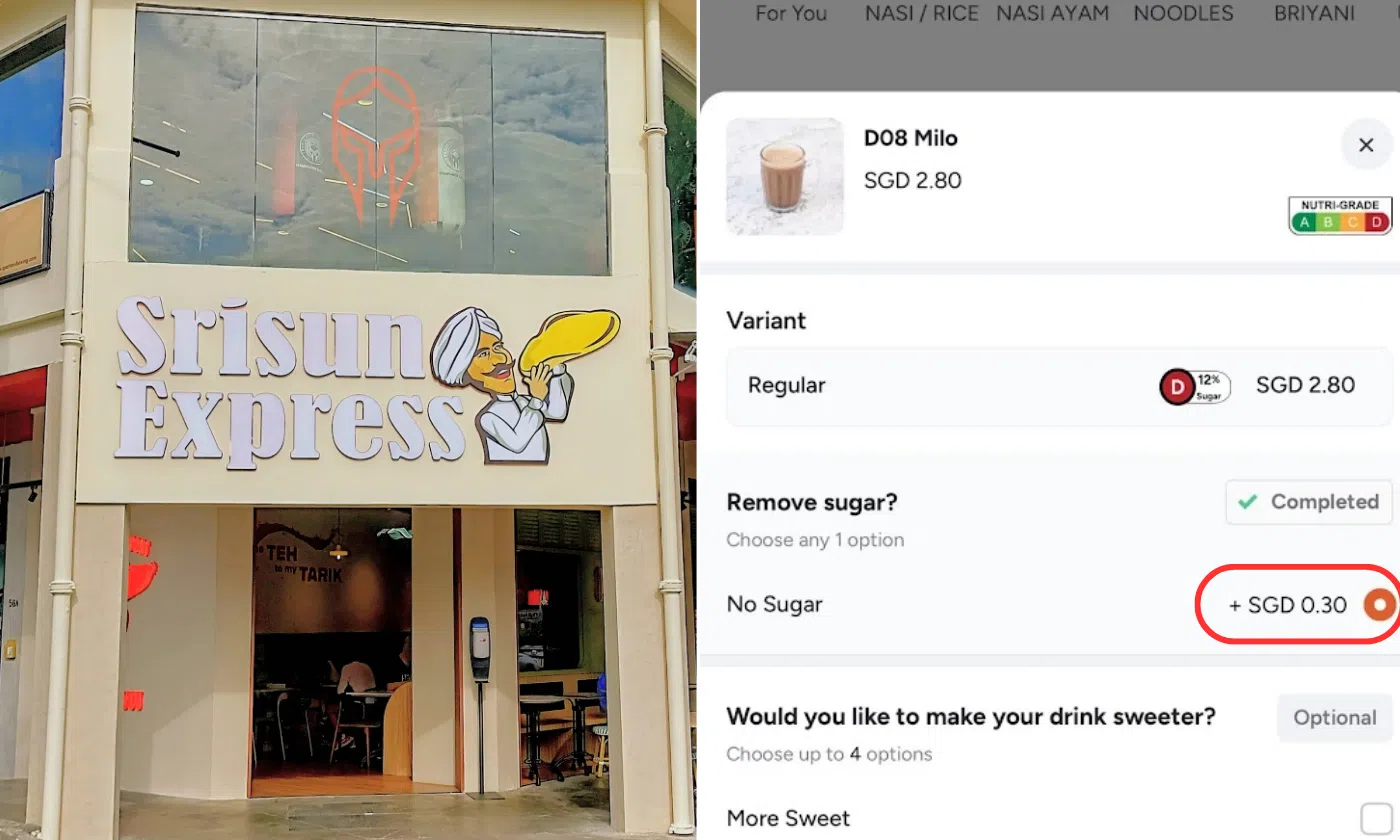
In an era increasingly focused on health and wellness, a seemingly small 30-cent surcharge at a local eatery, Srisun Express, for ordering drinks with “no sugar” has ignited a surprisingly fervent global discussion. What might appear as a minor pricing adjustment has quickly become a flashpoint, raising fundamental questions about how businesses value and price healthier alternatives, and whether consumers are being unfairly penalized for making health-conscious choices. This incident, brought to light by a viral screenshot of the eatery’s digital menu, where a regular Milo costs $2.80 but its 'no sugar' counterpart incurs an additional charge, forces us to examine the complex interplay of operational costs, consumer demand, and public health policy.
The Economic Underpinnings: More Than Just Sugar
At first glance, charging more for a 'no sugar' option seems counterintuitive. Sugar is often seen as a cheap commodity, so removing it or replacing it with artificial sweeteners might be perceived as a cost-saving measure. However, the reality for food and beverage establishments is far more nuanced. The 30-cent surcharge could stem from several legitimate business considerations. Firstly, ingredient costs for sugar-free alternatives can sometimes be higher. Artificial sweeteners, while often used in smaller quantities, might have a higher unit cost than bulk sugar. Specialized sugar-free syrups or ingredients for 'diet' versions of popular drinks can also be more expensive to source.
Secondly, inventory management plays a significant role. Offering both regular and 'no sugar' versions means managing two separate stock keeping units (SKUs) for what is essentially the same product category. This dual inventory requires more storage space, more careful tracking to prevent spoilage or expiry, and potentially higher ordering costs due to smaller, specialized batches. For a busy eatery, this logistical complexity translates directly into operational overheads.
Thirdly, preparation time and effort might be a factor. While seemingly minor, if a 'no sugar' drink requires a different mixing process, separate utensils to avoid cross-contamination with sugary ingredients, or simply more attention from staff, these small increments of labor add up. In a high-volume environment, even a few extra seconds per order can impact efficiency and staffing requirements. These hidden costs, often invisible to the consumer, are what businesses claim to be recouping through such surcharges.
Consumer Backlash and Perception: The 'Health Tax' Debate
The immediate public reaction to the Srisun Express surcharge was largely negative, characterized by accusations of a 'health tax' or penalizing customers for choosing healthier options. This sentiment is understandable. In an age where governments and health organizations actively promote reduced sugar intake to combat rising rates of diabetes, obesity, and heart disease, a surcharge on sugar-free options feels like a step backward. Consumers often perceive 'healthier' choices as a right, or at least not something that should incur an additional financial burden.
This perception is critical because it impacts brand loyalty and public relations. While a business might have a valid economic reason for the surcharge, the optics can be damaging. It can alienate a segment of the customer base that is actively trying to make healthier choices, potentially driving them to competitors who offer sugar-free options at parity pricing or without an explicit surcharge. The incident highlights a broader tension between business profitability and public health advocacy. Are businesses obligated to absorb the costs of healthier options, or should consumers bear the full brunt of specialized ingredients and processes?
Furthermore, the lack of transparency surrounding such surcharges can exacerbate consumer frustration. If the reasons for the extra charge are not clearly communicated, customers are left to speculate, often assuming the worst – that the business is simply trying to profit from health trends. A clear explanation, perhaps on the menu or through a public statement, could help mitigate negative reactions, though it might not entirely eliminate the underlying dissatisfaction.
Broader Implications for Public Health and Policy
The Srisun Express incident is not an isolated case but rather a microcosm of a larger societal debate about the cost of health. Many countries have implemented sugar taxes on sugary beverages to discourage consumption and fund health initiatives. Ironically, if businesses then pass on higher costs for sugar-free alternatives, it could undermine the very goals of these public health policies. The aim is to shift consumers towards healthier choices, but if those choices come with a premium, the incentive is diminished.
This raises questions about the role of government and industry in promoting public health. Should governments subsidize healthier ingredients or offer tax breaks to businesses that offer affordable healthy options? Should industry standards be developed to ensure that healthier alternatives are not disproportionately priced? The incident also touches upon food accessibility and equity. If healthier options consistently carry a premium, they become less accessible to lower-income populations, exacerbating health disparities.
Moreover, the concept of a 'no sugar' surcharge could set a problematic precedent. What if other eateries begin to charge extra for 'gluten-free,' 'dairy-free,' or 'organic' options, beyond what is justified by ingredient costs? While some specialty items inherently cost more, a blanket surcharge for simply removing an ingredient (like sugar) could be seen as exploitative if not transparently justified. The debate underscores the need for a balanced approach that considers both the economic realities of businesses and the public health imperative to make healthier choices affordable and accessible.
The Path Forward: Transparency, Innovation, and Dialogue
Moving forward, businesses facing similar dilemmas could adopt several strategies. Enhanced transparency is paramount. Clearly articulating the reasons behind any surcharge – whether it's higher ingredient costs, specialized preparation, or inventory management – can help build trust with consumers. This could involve small explanations on menus or a dedicated FAQ section on their website.
Innovation in sourcing and supply chains could also reduce costs for healthier ingredients, allowing businesses to offer sugar-free options at more competitive prices. As demand for healthier alternatives grows, economies of scale might eventually bring down the cost of artificial sweeteners or specialized ingredients. Furthermore, dialogue with consumers and health advocates can help businesses understand public perception and adjust their strategies accordingly. Perhaps a slight increase in the base price of all drinks, rather than a targeted surcharge on 'no sugar' options, could be a more palatable solution for consumers, even if the overall revenue impact is similar.
Ultimately, the 30-cent 'no sugar' surcharge at Srisun Express is more than just a pricing decision; it's a symptom of a larger societal challenge. As we strive for healthier lifestyles, the cost of making those choices should not become a barrier. Businesses, consumers, and policymakers must engage in a constructive dialogue to ensure that economic viability and public health goals can coexist, fostering an environment where healthier options are not just available, but also affordable and equitably priced. The future of food and beverage pricing will undoubtedly be shaped by how these complex issues are navigated, balancing profit with purpose and perception.
Stay Informed
Get the world's most important stories delivered to your inbox.
No spam, unsubscribe anytime.
Comments
No comments yet. Be the first to share your thoughts!