UAE Condemns Iran's 'Hostile' Behavior Amid Escalating Regional Tensions
The United Arab Emirates has issued a strong condemnation of recent Iranian remarks, labeling them as "unacceptable" and "hostile." This diplomatic rebuke highlights growing regional friction, with the UAE rejecting any attempts to undermine its sovereignty and national security. The incident underscores the delicate geopolitical balance in the Persian Gulf and raises concerns about potential destabilization, prompting calls for de-escalation and international mediation.
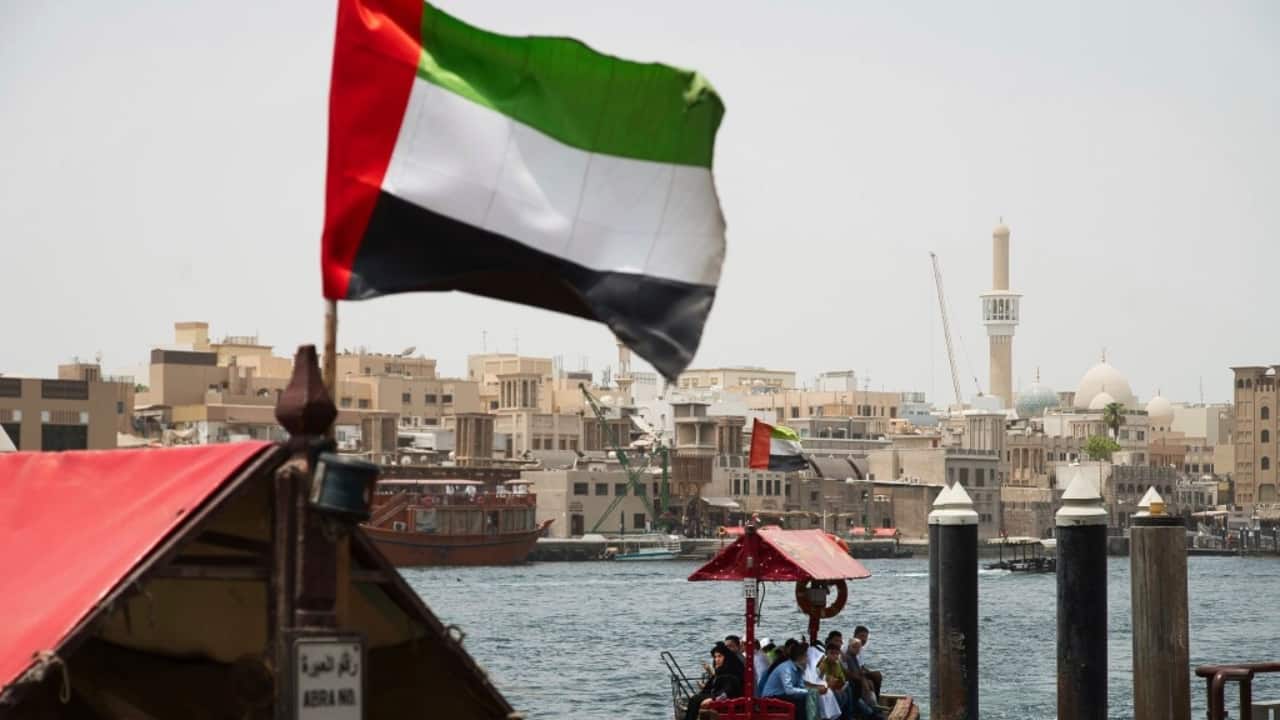
In a decisive and unequivocal statement, the United Arab Emirates has publicly denounced recent pronouncements from Iran, characterizing them as “unacceptable” and “hostile.” This sharp diplomatic rebuke marks a significant escalation in rhetoric between the two regional powers, underscoring the persistent and often volatile geopolitical fault lines that traverse the Persian Gulf. The UAE's Ministry of Foreign Affairs articulated its firm rejection of any attempts to undermine its sovereignty and national security, signaling a zero-tolerance stance against perceived provocations from Tehran.
This latest development is not an isolated incident but rather the latest chapter in a long-standing narrative of mistrust and strategic competition. The Gulf region, a vital artery for global energy supplies, has frequently been a crucible for proxy conflicts and diplomatic standoffs, with Iran and its Arab neighbors often finding themselves on opposing sides of complex regional dynamics. The UAE's condemnation serves as a stark reminder of the fragile peace that often prevails, susceptible to disruption by perceived threats or miscalculations.
Historical Context of UAE-Iran Relations
The relationship between the UAE and Iran has historically been characterized by a complex blend of economic interdependence and geopolitical rivalry. While trade ties have often flourished, particularly through Dubai's role as a regional hub, political relations have been fraught with tension. A primary source of contention remains the dispute over three islands in the Persian Gulf – Abu Musa, Greater Tunb, and Lesser Tunb – which have been under Iranian control since 1971, a claim consistently rejected by the UAE. This territorial dispute serves as a constant irritant, symbolizing deeper issues of sovereignty and regional influence.
Beyond territorial claims, Iran's nuclear program, its ballistic missile development, and its support for various non-state actors across the Middle East – from Hezbollah in Lebanon to Houthi rebels in Yemen – have been major sources of concern for the UAE and its Gulf Cooperation Council (GCC) allies. These activities are often viewed by Riyadh and Abu Dhabi as direct threats to their security and regional stability, leading to a strategic alignment with Western powers, particularly the United States, to counterbalance Iranian influence. The UAE has, at times, sought to maintain channels of communication with Tehran, recognizing the importance of de-escalation, but such efforts are often overshadowed by fundamental disagreements on regional security architecture.
The Nature of Iran's 'Hostile' Remarks
While the specific content of Iran's recent remarks that triggered the UAE's condemnation was not fully detailed in initial reports, the use of terms like "hostile" and "unacceptable" by the Emirati government suggests a perceived direct challenge to its national interests or territorial integrity. Historically, Iranian rhetoric has often included: * Accusations of Gulf states collaborating with Western powers against Iran. * Warnings against foreign military presence in the region. * Statements asserting Iran's dominant role in regional security. * Implicit or explicit threats regarding the Strait of Hormuz, a critical shipping lane.
Such statements, particularly when perceived as questioning a nation's sovereignty or implying aggressive intent, are taken very seriously by the UAE. The Gulf states have consistently advocated for a regional security framework that respects the sovereignty of all nations and promotes peaceful coexistence, a vision often clashing with Iran's more assertive regional posture. The condemnation from Abu Dhabi indicates that the latest Iranian comments crossed a red line, necessitating a strong public rebuke to deter further perceived transgressions and to reaffirm the UAE's commitment to its own security.
Implications for Regional Stability and International Diplomacy
The UAE's strong condemnation carries significant implications for regional stability. The Persian Gulf is already a highly militarized zone, with numerous international naval presences and a history of flashpoints. An escalation in rhetoric, if not carefully managed, could inadvertently lead to miscalculation or unintended confrontation. For international observers, this incident highlights the ongoing challenge of fostering dialogue and de-escalation in a region characterized by deep-seated mistrust.
Economically, any heightened tensions in the Gulf can send ripples through global energy markets, given the region's crucial role in oil and gas production and transit. Investors and policymakers worldwide watch these developments closely, as stability in the Gulf is inextricably linked to global economic security. The international community, particularly major powers with strategic interests in the region, will likely reiterate calls for restraint and diplomatic engagement. The United States, a key security partner for the UAE, will undoubtedly monitor the situation closely, potentially offering mediation or reinforcing its security commitments to its allies.
This incident also puts a spotlight on the broader efforts to normalize relations in the Middle East. While some Gulf states have recently engaged in diplomatic overtures with Iran, seeking to reduce tensions, this latest condemnation from the UAE suggests that fundamental disagreements persist and that the path to a comprehensive regional détente remains fraught with obstacles. The UAE's firm stance could also be interpreted as a message to its allies that it will not compromise on core national security principles, even as broader regional dialogues are pursued.
The Path Forward: De-escalation and Dialogue
Moving forward, the primary imperative for all parties will be to prevent further escalation. While the UAE has made its position unequivocally clear, the challenge now lies in finding avenues for de-escalation and constructive dialogue. This could involve: * Back-channel diplomacy: Quiet negotiations through intermediaries to clarify intentions and reduce misunderstandings. * International mediation: Engagement by neutral third parties or international organizations to facilitate communication. * Confidence-building measures: Small, reciprocal steps designed to reduce mistrust, such as information sharing or joint maritime safety initiatives. * Public statements emphasizing peaceful resolution: A shift in public rhetoric from condemnation to a focus on shared security interests and stability.
The UAE's condemnation, while firm, is also a call for clarity and respect for international norms. It underscores the principle that while nations may have differing geopolitical interests, direct threats or attempts to undermine sovereignty are unacceptable. The stability of the Persian Gulf region is too critical to global security and economic prosperity to allow unchecked rhetoric to spiral into conflict. The coming weeks will reveal whether this strong message from Abu Dhabi will lead to a re-evaluation of Iranian posture or further entrench the existing tensions, making the role of diplomacy more crucial than ever.
Stay Informed
Get the world's most important stories delivered to your inbox.
No spam, unsubscribe anytime.
Comments
No comments yet. Be the first to share your thoughts!