United Airlines' Bold Transatlantic Move: The 737 MAX Returns to UK Skies
United Airlines has reignited transatlantic travel between Glasgow and Newark, marking a significant milestone with its first-ever Boeing 737 MAX route to the UK. This strategic move not only restores a popular seasonal service but also showcases the airline's confidence in the MAX's capabilities for long-haul, narrow-body operations. The daily flight offers Scottish travelers enhanced connectivity to the US, signaling a new era for efficient and sustainable international air travel.
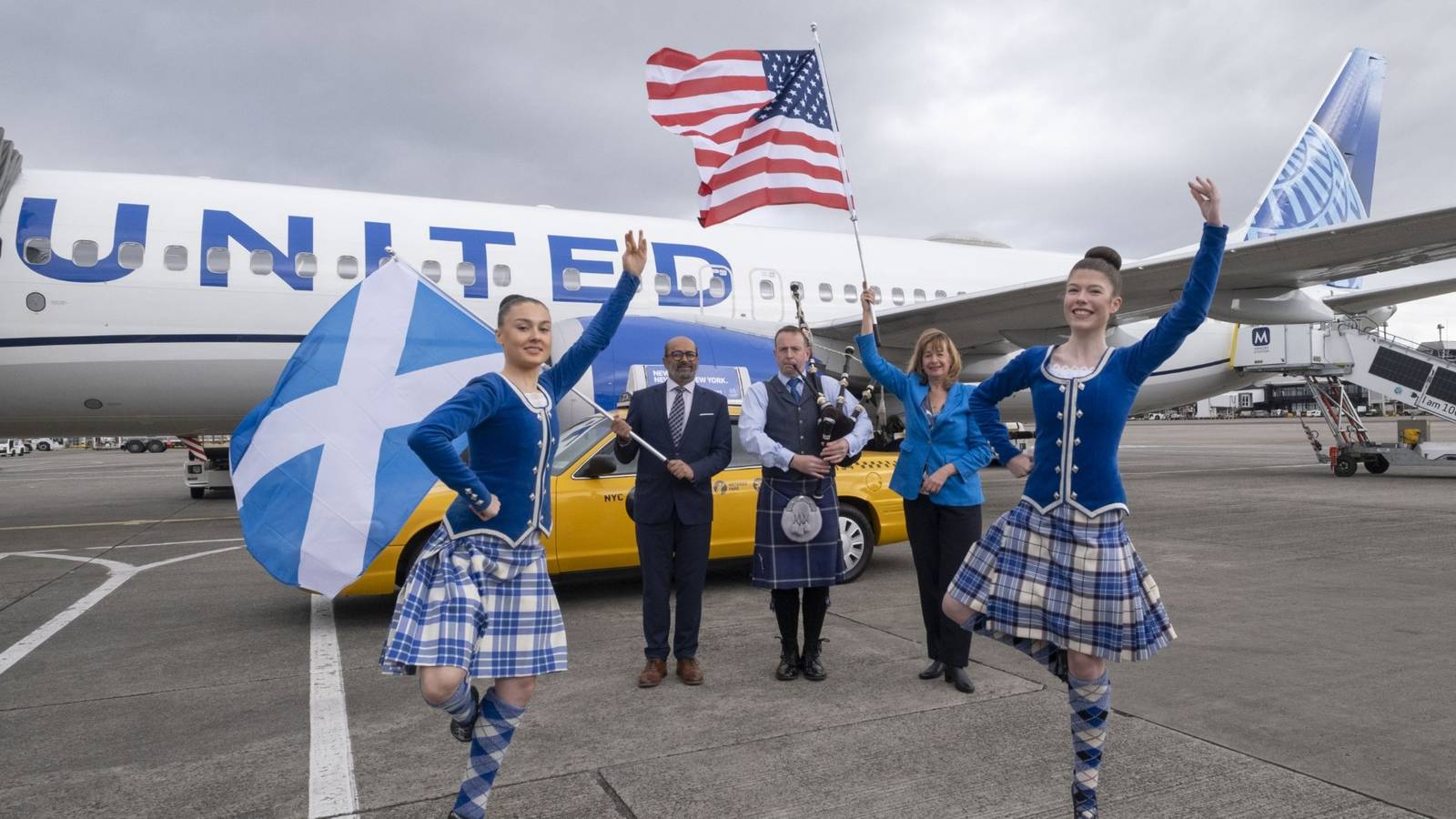
In a significant move poised to reshape transatlantic air travel, United Airlines has officially inaugurated its first-ever nonstop Boeing 737 MAX route to the United Kingdom. This groundbreaking service, connecting Glasgow Airport (GLA) with Newark Liberty International Airport (EWR), not only restores a vital link last operated in 2019 but also marks a bold statement by United regarding the capabilities and future of narrow-body aircraft on long-haul routes. The daily seasonal service, which commenced on May 8, utilizes the advanced Boeing 737 MAX 8, signaling a new chapter for both the airline and the aviation industry at large.
A Strategic Reconnection: Glasgow to Newark Revived
The resumption of the Glasgow-Newark route is more than just another flight; it's a strategic reconnection for United Airlines. Prior to its suspension, this route was a popular gateway for Scottish travelers heading to the US and for American tourists exploring Scotland's rich heritage. The decision to reinstate this specific service underscores its commercial viability and the enduring demand for direct access between these two regions. By deploying the 737 MAX 8, United is leveraging a modern, fuel-efficient aircraft that offers a compelling economic proposition for such routes. This move is particularly noteworthy as it expands United's already robust transatlantic network, which includes other key UK gateways like London Heathrow, Manchester, and Edinburgh. The choice of Glasgow as the inaugural UK destination for the MAX highlights the city's growing importance as an international hub and a gateway to Scotland's vibrant tourism sector and burgeoning business landscape.
The service operates daily, providing consistent and convenient options for both leisure and business travelers. The timing of its launch, coinciding with the peak summer travel season, is meticulously planned to capitalize on the surge in demand for international travel. Passengers on this route can expect a modern travel experience, benefiting from the MAX's improved cabin comfort, including larger overhead bins, updated interiors, and quieter engines, contributing to a more pleasant journey across the Atlantic. This investment in direct connectivity is crucial for boosting economic ties, facilitating cultural exchange, and supporting the recovery of the travel industry post-pandemic.
The Boeing 737 MAX: A Transatlantic Game Changer?
The deployment of the Boeing 737 MAX on a transatlantic route to the UK is a significant development, challenging traditional notions of long-haul aircraft. Historically, transatlantic flights were almost exclusively the domain of wide-body jets like the Boeing 747, 767, 777, or Airbus A330 and A350. However, advancements in aircraft technology, particularly in fuel efficiency and range, have made narrow-body aircraft like the 737 MAX and Airbus A321XLR increasingly viable for longer distances. The 737 MAX 8, with its enhanced range and fuel efficiency, allows airlines to open up new, thinner routes that might not sustain a larger wide-body aircraft, or to offer more frequent service on existing routes with greater flexibility.
United Airlines is not alone in exploring this strategy. Other carriers have also begun deploying narrow-bodies on transatlantic routes, demonstrating a broader industry trend towards optimizing fleet utilization and matching aircraft capacity more precisely to demand. The MAX's operational economics are particularly attractive: its lower operating costs per seat mile can translate into more competitive fares for passengers and improved profitability for airlines. This shift represents a paradigm change in how airlines approach route planning, enabling them to bypass traditional hub-and-spoke models in favor of more direct point-to-point connections, which are often preferred by travelers. The return of the MAX to service globally, following its grounding and subsequent safety enhancements, has instilled renewed confidence in its reliability and performance, paving the way for such ambitious deployments.
Enhancing Connectivity and Economic Impact
For Scotland, the re-establishment of the Glasgow-Newark route, especially with a modern aircraft like the 737 MAX, carries substantial economic implications. Direct air links are vital arteries for trade, tourism, and investment. The flight provides a direct conduit for American tourists to explore Scotland's iconic landscapes, historic cities, and cultural festivals, contributing significantly to the local economy through hospitality, retail, and attractions. Conversely, it offers Scottish businesses and individuals unparalleled access to the vast economic opportunities presented by the New York metropolitan area, a global financial and business hub.
Glasgow Airport has long been a critical international gateway for Scotland, and this new service reinforces its position. The airport's managing director expressed enthusiasm for the return of United, highlighting the importance of direct US connectivity for the region's economy. The route's reintroduction is expected to: * Boost tourism: Attracting more visitors from the lucrative US market. * Facilitate business travel: Strengthening transatlantic corporate links. * Create employment: Directly and indirectly supporting jobs in aviation, tourism, and related sectors. * Enhance global connectivity: Offering Scottish travelers easier access to United's extensive network across the Americas.
This strategic partnership between United Airlines and Glasgow Airport is a testament to the shared vision of fostering greater international connectivity and unlocking new economic potential for both regions. The success of this route could also pave the way for United to consider further expansion of its narrow-body transatlantic operations to other secondary cities in the UK and Europe.
A Forward-Looking Perspective for Transatlantic Travel
The launch of United's 737 MAX service to Glasgow is more than just a single route; it's a bellwether for the future of transatlantic air travel. It signifies a growing trend towards greater flexibility, efficiency, and directness in international routes. As aircraft technology continues to advance, we can anticipate more airlines leveraging narrow-body jets for longer distances, potentially opening up a myriad of new city pairs that were previously unviable. This could lead to a more fragmented yet highly connected global air network, benefiting travelers with more choices and potentially more competitive pricing.
Moreover, the emphasis on fuel-efficient aircraft like the 737 MAX aligns with the aviation industry's broader commitment to sustainability. While challenges remain, the deployment of newer generation aircraft with reduced carbon footprints is a step in the right direction. United Airlines' confidence in the 737 MAX for such a prominent transatlantic route underscores its belief in the aircraft's safety, performance, and economic advantages. This move is a clear indication that the airline is not only recovering from past disruptions but is actively innovating and expanding its network with an eye towards future growth and passenger demands. As the summer travel season unfolds, the Glasgow-Newark route will serve as a crucial test case, potentially influencing future strategic decisions for United and other carriers in the evolving landscape of international air travel.
Stay Informed
Get the world's most important stories delivered to your inbox.
No spam, unsubscribe anytime.
Comments
No comments yet. Be the first to share your thoughts!