US Accuses China of Hoarding Oil Amidst Middle East Conflict, Echoing Pandemic-Era Actions
The US Treasury Chief, Bessent, has publicly accused China of being an "unreliable partner" by allegedly hoarding oil during the ongoing Middle East conflict. This accusation draws parallels to China's controversial stockpiling of medical supplies during the early stages of the COVID-19 pandemic, raising serious questions about Beijing's global responsibilities and its strategic resource management. The dispute threatens to further strain US-China relations, even as President Trump's potential visit to Beijing looms.
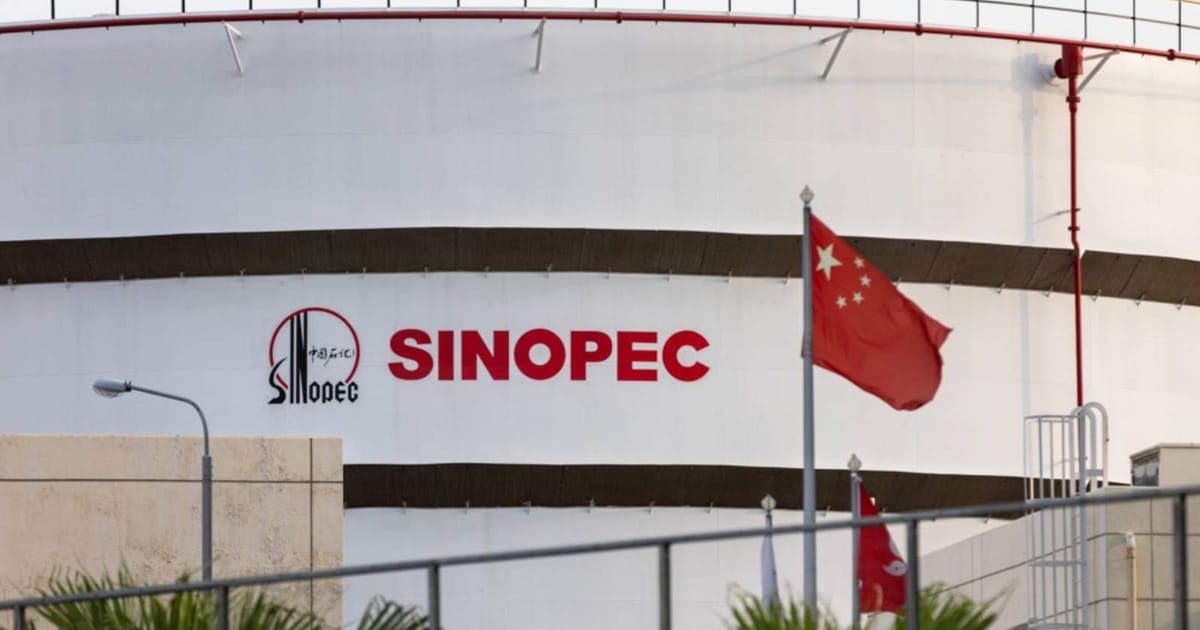
In a stark and unprecedented public condemnation, US Treasury Chief Bessent has leveled serious accusations against China, branding it an "unreliable partner" for allegedly hoarding oil amidst the escalating Middle East conflict. This charge, delivered with a pointed reference to China's controversial stockpiling of medical goods during the initial phases of the COVID-19 pandemic, signals a deepening rift in the already strained relationship between the world's two largest economies. The Treasury Chief's remarks underscore a growing frustration within Washington over Beijing's geopolitical conduct and its perceived self-serving approach to global crises.
Bessent, addressing reporters, confirmed that he had directly engaged Chinese officials on the matter, though he refrained from disclosing the specifics of those discussions. The timing of these allegations is particularly sensitive, as they emerge just weeks before a potential high-stakes visit by US President Donald Trump to Beijing in mid-May. While Bessent sidestepped questions regarding the potential impact of this dispute on Trump's travel plans, the underlying tension is palpable, suggesting that resource security and international cooperation – or the lack thereof – will be central to future diplomatic exchanges between President Trump and Chinese President Xi Jinping.
A Pattern of Resource Nationalism?
The accusation of oil hoarding is not an isolated incident but rather fits into a broader narrative that some Western officials are constructing around China's resource strategy. The explicit comparison to the COVID-19 pandemic and the stockpiling of medical supplies is designed to highlight a perceived pattern of behavior. During the early months of 2020, as the novel coronavirus began its global spread, reports emerged of China significantly increasing its imports of personal protective equipment (PPE) and other vital medical resources, even as the rest of the world faced severe shortages. Critics argued then, and are arguing now, that such actions demonstrate a prioritization of national interests over global solidarity, especially during times of acute crisis.
This approach, often termed resource nationalism, is not unique to China, but its scale and impact, given China's immense economic power and global footprint, are significant. For a nation that is the world's largest importer of crude oil, securing energy supplies is a paramount national security concern. China's strategic petroleum reserves (SPR) have been steadily growing for years, aimed at insulating the country from price volatility and supply disruptions. However, the current accusation suggests that these reserves might be being accumulated in a manner that actively exacerbates global market instability during a conflict, rather than merely serving as a domestic buffer.
The Geopolitical Chessboard: Middle East and Global Energy
The Middle East conflict, while not explicitly detailed in the source, invariably refers to geopolitical instabilities in a region critical for global oil supply. Any significant disruption or perceived threat to oil flows from the Persian Gulf can send shockwaves through international markets, driving up prices and creating economic uncertainty worldwide. For a major consumer like China, ensuring uninterrupted access to oil is crucial for its industrial engine and economic stability. However, if China's actions are indeed contributing to market tightness by excessively withdrawing supply during a crisis, it could be seen as undermining collective efforts to stabilize the global economy and mitigate the humanitarian impact of conflict.
This situation also shines a spotlight on the fragility of global supply chains and the interconnectedness of national economies. The accusation implies that China's domestic energy security strategy is having direct, negative consequences for international partners and global stability. It forces a re-evaluation of the principles of fair trade and responsible state behavior in times of global stress. The US, often positioning itself as a guarantor of global stability and free markets, views such actions as a direct challenge to the established international order.
Implications for US-China Relations and Global Trust
The public nature of Bessent's remarks, particularly the use of the term "unreliable partner," suggests a deliberate escalation of rhetoric. This is not merely an economic disagreement but a charge that cuts to the core of trust and cooperation between nations. For Washington, China's alleged actions undermine the very foundation of a stable international system, especially when global crises demand collective responses.
If these accusations hold weight, they could have several far-reaching implications:
* Increased Scrutiny on China's Resource Policies: Other nations may begin to scrutinize China's resource acquisition and stockpiling strategies more closely, potentially leading to calls for greater transparency or even coordinated international responses. * Impact on Trade and Investment: The perception of unreliability could deter foreign investment in China and lead to further decoupling efforts as countries seek to reduce their dependence on a partner perceived as opportunistic. * Diplomatic Fallout: The upcoming visit by President Trump, if it proceeds, will undoubtedly be overshadowed by these tensions. Discussions on trade, technology, and regional security will now be colored by this new accusation, making breakthroughs more challenging. * Erosion of Global Trust: Such actions, if proven, erode trust in China's commitment to multilateralism and its role as a responsible global stakeholder. This could have long-term consequences for its soft power and diplomatic influence.
The Path Forward: Dialogue Amidst Distrust
Despite the gravity of the accusations, the fact that Bessent has engaged Chinese officials directly suggests that channels for dialogue remain open. However, the tone of these discussions is likely to be confrontational. For China, the challenge will be to defend its actions as legitimate national security measures without further alienating key international partners. Beijing often frames its resource policies as essential for its development and stability, arguing that every sovereign nation has the right to secure its own supplies.
Looking ahead, the resolution of this dispute, or its continued escalation, will be a critical barometer for the future of US-China relations. It highlights the complex interplay of economic interests, national security imperatives, and geopolitical rivalries that define the current global landscape. As the world grapples with persistent conflicts and economic uncertainties, the question of whether major powers can act as reliable partners, or whether self-interest will consistently trump global cooperation, remains a defining challenge of our era. The international community will be watching closely to see how this latest chapter in the US-China saga unfolds, and what it means for the stability of global energy markets and the future of international relations.
Stay Informed
Get the world's most important stories delivered to your inbox.
No spam, unsubscribe anytime.
Comments
No comments yet. Be the first to share your thoughts!