Venice Biennale embroiled in controversy as pavilions protest Israel's inclusion
The prestigious Venice Biennale was recently marred by significant protests, with several national pavilions closing their doors on the preview's final day. Artists and cultural workers initiated a strike, citing Israel's continued participation amidst the Gaza conflict. This unprecedented move highlights the escalating politicization of major international cultural events and raises critical questions about art's role in global geopolitical discourse, challenging the Biennale's traditional stance of artistic neutrality.
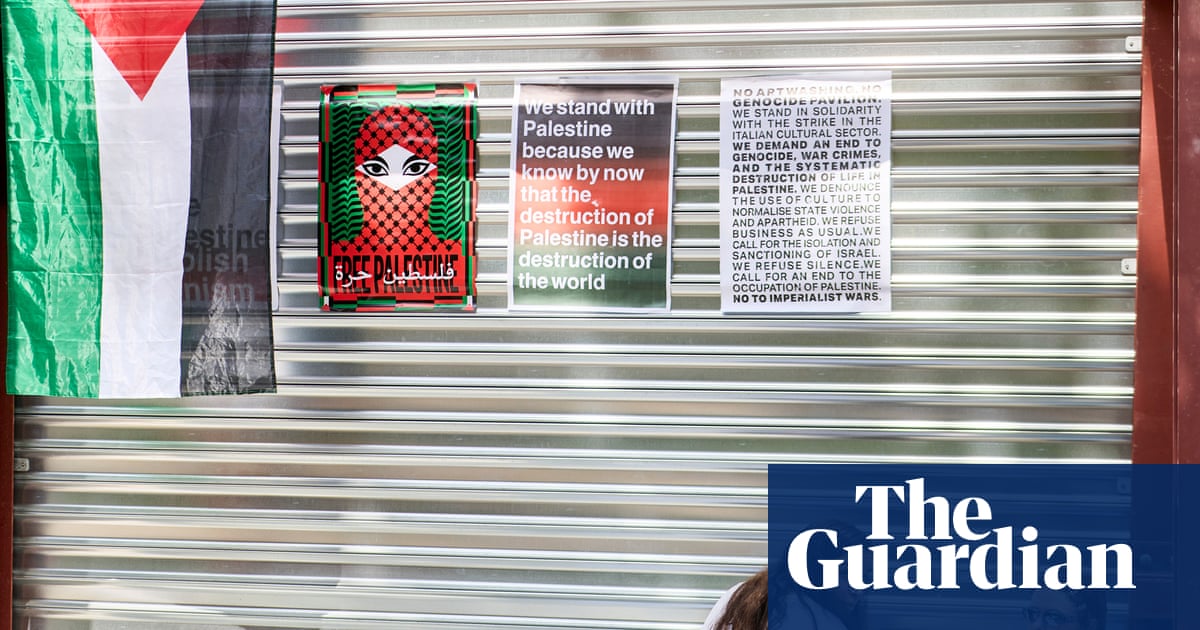
The hallowed halls and canals of Venice, typically a sanctuary for artistic expression and global cultural exchange during its renowned Biennale, recently became an unexpected battleground for geopolitical protest. On the final day of the preview for the 2024 edition, an unprecedented strike saw a dozen national pavilions, including Austria's critically acclaimed exhibit, either partially or fully shut down. This coordinated action was a direct response to calls from groups protesting Israel's inclusion in the prestigious art event amidst the ongoing conflict in Gaza, injecting a potent dose of real-world politics into a space traditionally dedicated to aesthetic contemplation.
The Genesis of Discontent: Art Meets Activism
The seeds of this controversy were sown months before the Biennale's official opening. A coalition of artists, cultural workers, and activist groups, notably the 'Art Not Genocide Alliance' (ANGA), launched a campaign demanding Israel's exclusion from the Biennale. Their argument centered on the premise that allowing Israel to participate would be tantamount to 'artwashing' its actions in Gaza, thereby legitimizing a state they accuse of genocide. This call for a boycott resonated with a significant segment of the international art community, leading to open letters, petitions, and ultimately, direct action at the event itself.
The strike on the preview's closing day was a culmination of these efforts. While some pavilions, like those of Spain and Belgium, closed for a few hours in solidarity, others, such as the Austrian pavilion featuring Anna Jermolaewa's work, remained shut for the entire day. This symbolic gesture, though temporary for many, sent a clear message: the art world, often perceived as an ivory tower, is increasingly unwilling to remain silent on pressing global humanitarian issues. The decision by some artists to incorporate subtle (and sometimes not-so-subtle) references to Palestine within their existing or modified works further underscored the deep moral quandary many participants felt.
A History of Politicization: From Cold War to Contemporary Conflicts
While the scale and coordination of the recent protests at the Venice Biennale might seem novel, the event has a long, albeit often understated, history of political entanglement. During the Cold War, national pavilions frequently served as soft power instruments, showcasing ideological superiority through artistic prowess. The exclusion of South Africa during the apartheid era, for instance, set a precedent for politically motivated decisions regarding national participation. However, these instances were often driven by official diplomatic pressure or international consensus, rather than an internal artist-led strike of this magnitude.
More recently, the 2022 Biennale saw Russia's pavilion remain closed, though this was due to the artists and curator withdrawing their participation in protest against the invasion of Ukraine, rather than an official ban by the Biennale organizers. This distinction is crucial: the current situation involves a direct challenge to the Biennale's curatorial independence and its stated position of neutrality by its own participants. The argument from the Biennale's foundation has consistently been that it hosts states recognized by the UN, and as such, cannot unilaterally exclude a nation based on political disputes. This stance, however, is being increasingly scrutinized by an art community that believes moral imperatives should sometimes supersede diplomatic protocols.
Implications for the Art World and Freedom of Expression
The protests at the Venice Biennale carry significant implications for the future of major international art exhibitions. Firstly, they highlight a growing tension between the desire for artistic freedom and the expectation of moral accountability from cultural institutions. Artists and curators are increasingly leveraging their platforms to advocate for social and political causes, blurring the lines between art and activism. This trend challenges the traditional notion of art as an autonomous sphere, separate from the messy realities of global politics.
Secondly, the incident underscores the difficulty for large-scale, state-sponsored events like the Biennale to maintain neutrality in an increasingly polarized world. As geopolitical conflicts intensify and become more visible through global media, cultural institutions find themselves under pressure to take stances, often alienating one group while appeasing another. The Biennale's organizers now face the unenviable task of balancing diplomatic relations, artistic integrity, and the moral conscience of its participants and audience.
Furthermore, the events raise questions about the nature of censorship and self-censorship within the arts. While the Biennale did not officially sanction Israel's exclusion, the internal pressure and the visible protests created an environment where artists felt compelled to act. This phenomenon could lead to a chilling effect, where artists or institutions pre-emptively avoid controversial topics or participants to sidestep potential backlash, or conversely, it could empower more artists to use their voice, even at the risk of professional repercussions.
A Precedent Set: The Future of Global Art Events
The protests at the 2024 Venice Biennale are unlikely to be an isolated incident. They represent a growing trend where major cultural events, from film festivals to music awards, are becoming stages for political dissent. This shift reflects a broader societal expectation for institutions and individuals to align with ethical positions, particularly concerning human rights and international justice. The 'Art Not Genocide Alliance' and similar groups are likely to continue their advocacy, making it increasingly difficult for any international event to claim complete political detachment.
For the Venice Biennale, this moment serves as a critical juncture. Its organizers must now grapple with how to navigate a future where its participants are not merely showcasing art but are also actively engaging in political discourse. Will the Biennale adapt its policies to reflect these changing dynamics, perhaps by establishing clearer ethical guidelines for participation, or will it steadfastly adhere to its current framework, risking further disruption and criticism?
The incident also prompts a re-evaluation of the power dynamics within the art world. The collective action of artists and cultural workers demonstrated their significant agency in shaping the narrative and even the physical experience of such a monumental event. This collective voice, amplified by global connectivity, suggests a future where artists are not just creators but also potent political actors, capable of influencing international policy and public opinion through their art and their actions. The 2024 Venice Biennale will be remembered not just for its artistic offerings, but for the powerful statement it made about the intersection of art, ethics, and global politics in the 21st century.
Stay Informed
Get the world's most important stories delivered to your inbox.
No spam, unsubscribe anytime.
Comments
No comments yet. Be the first to share your thoughts!