Zimbabwe's Economic Crossroads: Ncube's Controversial Link to Mnangagwa's Term Extension
Zimbabwe's Finance Minister, Mthuli Ncube, is under fire for controversially linking President Emmerson Mnangagwa's potential term extension to the nation's economic stability and investor confidence. Critics argue this move politicizes economic policy and undermines democratic principles, raising concerns about the country's future and its appeal to international markets. The debate highlights deep divisions within Zimbabwe regarding governance and economic direction.
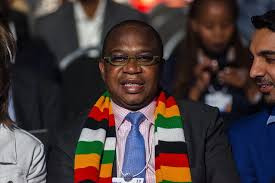
In the tumultuous political landscape of Zimbabwe, a storm is brewing around Finance Minister Mthuli Ncube, who has ignited a fierce debate by controversially linking the proposed extension of President Emmerson Mnangagwa’s term to the nation’s economic stability and investor confidence. This pronouncement has not only drawn sharp criticism from opposition parties and civil society but also raised eyebrows among international observers, casting a shadow over Zimbabwe’s already fragile economic recovery efforts.
Ncube’s remarks, made in support of a Constitutional Amendment that would allow Mnangagwa to seek a third term, have been widely interpreted as an attempt to legitimize a politically contentious move through economic rhetoric. The minister, a former academic and respected economist, argued that continuity in leadership is crucial for maintaining policy consistency and reassuring investors. However, this stance has been met with incredulity by many who view it as a dangerous blurring of lines between political expediency and sound economic governance.
The Economic Rationale Under Scrutiny
Minister Ncube's argument hinges on the premise that a stable political environment, characterized by leadership continuity, is a prerequisite for economic growth and attracting foreign direct investment (FDI). He suggested that any uncertainty surrounding the presidential succession could deter investors, who typically favor predictability and long-term policy horizons. From a purely theoretical economic standpoint, this argument holds some weight; political instability is indeed a significant risk factor for investment.
However, critics contend that Ncube’s application of this principle in the Zimbabwean context is deeply flawed. They argue that the nature of the continuity matters more than its mere existence. An extension of a presidential term, especially through constitutional amendments perceived as undemocratic or self-serving, can paradoxically increase political risk rather than reduce it. Such moves often lead to heightened internal dissent, protests, and a perception of weakening democratic institutions, all of which are red flags for investors.
Furthermore, Zimbabwe's economic woes are deeply rooted in structural issues, corruption, and a lack of adherence to the rule of law, rather than just leadership uncertainty. Inflation remains stubbornly high, unemployment is rampant, and access to foreign currency is limited. Many analysts believe that genuine economic stability requires fundamental reforms, transparency, and a commitment to democratic principles, not merely a prolonged stay in power for the incumbent.
Historical Context and Political Precedents
Zimbabwe has a complex history marked by political transitions and economic challenges. The era of Robert Mugabe, characterized by land reforms and economic decline, left a lasting impact on investor sentiment. When President Mnangagwa came to power in 2017, promising a “new dispensation” and an open-for-business approach, there was cautious optimism. However, progress has been slow, and the government has struggled to implement meaningful reforms.
Constitutional amendments, particularly those affecting presidential terms, carry significant historical weight in many African nations. Often, such changes have been used by leaders to consolidate power, leading to concerns about democratic backsliding. The proposed amendment in Zimbabwe is seen by many as following this troubling pattern, reminiscent of similar moves in other countries that have ultimately led to increased instability and economic stagnation rather than prosperity.
* 1987 Constitutional Amendment: Zimbabwe transitioned from a ceremonial presidency to an executive presidency, consolidating power under Robert Mugabe. * 2000 Referendum: A proposed constitutional amendment to extend Mugabe's term and allow the government to seize white-owned land without compensation was rejected by voters, a rare defeat for the ruling party. * 2013 Constitution: Introduced term limits of two five-year terms for the president, a provision now being targeted for amendment.
These historical precedents highlight the sensitivity surrounding constitutional changes, particularly when they involve presidential term limits. For many Zimbabweans, the current proposal evokes memories of past attempts to centralize power, undermining the democratic gains enshrined in the 2013 constitution.
Implications for Investor Confidence and International Relations
Minister Ncube’s assertion that extending Mnangagwa’s term would bolster investor confidence is largely contradicted by the reactions from international financial institutions and potential investors. While some might appreciate continuity, the overwhelming sentiment among serious long-term investors is a preference for strong institutions, rule of law, and predictable democratic processes over the longevity of a single leader.
* Increased Political Risk: A controversial term extension could signal a weakening of democratic checks and balances, increasing the perceived political risk for foreign investors. * Sanctions and Aid: International partners, particularly Western nations, often tie aid and investment to governance and human rights records. Moves seen as undermining democracy could trigger further sanctions or reduce development assistance. * Market Volatility: Uncertainty surrounding the legitimacy of political processes can lead to capital flight and currency instability, further damaging the economic outlook.
International bodies like the International Monetary Fund (IMF) and the World Bank consistently emphasize good governance, transparency, and democratic accountability as foundations for sustainable economic development. A move to extend presidential terms through contentious means is unlikely to align with these principles, potentially isolating Zimbabwe further from critical financial support and investment.
The Path Forward: Economic Reform vs. Political Expediency
The controversy surrounding Ncube’s statements underscores a fundamental tension within Zimbabwe’s governance: the struggle between genuine economic reform and political expediency. While the government faces immense pressure to revive the economy, many argue that sacrificing democratic principles for perceived stability is a short-sighted and ultimately self-defeating strategy.
For Zimbabwe to truly attract and retain investment, and to achieve sustainable economic growth, it needs to demonstrate a steadfast commitment to:
* Rule of Law: Ensuring that laws are applied fairly and consistently, protecting property rights, and combating corruption. * Institutional Strengthening: Building robust, independent institutions, including the judiciary, electoral bodies, and central bank. * Fiscal Discipline: Implementing sound macroeconomic policies, controlling inflation, and managing public debt responsibly. * Democratic Accountability: Upholding constitutional provisions, respecting human rights, and ensuring free and fair elections.
Minister Ncube, as the chief custodian of the nation’s finances, faces the unenviable task of balancing political realities with economic imperatives. However, his recent comments have complicated this balance, suggesting that the government might be prioritizing political survival over the long-term health of the economy and its democratic institutions. The coming months will reveal whether Zimbabwe chooses a path of genuine reform or one that further entrenches political power at the expense of its economic future.
Stay Informed
Get the world's most important stories delivered to your inbox.
No spam, unsubscribe anytime.
Comments
No comments yet. Be the first to share your thoughts!