Adobe Ignites Agentic AI Revolution: Firefly Assist Enters Public Beta, Reshaping Creative Workflows
Adobe is aggressively expanding its footprint in the agentic AI landscape, pushing its Firefly AI Assistant into public beta. This move, following a significant partnership with Anthropic, signals a new era where AI acts as a proactive creative partner, not just a tool. The integration promises to redefine how designers, marketers, and content creators interact with their software, streamlining complex tasks and fostering innovation. PulseWorld explores the implications of Adobe's strategic pivot and what it means for the future of creativity.
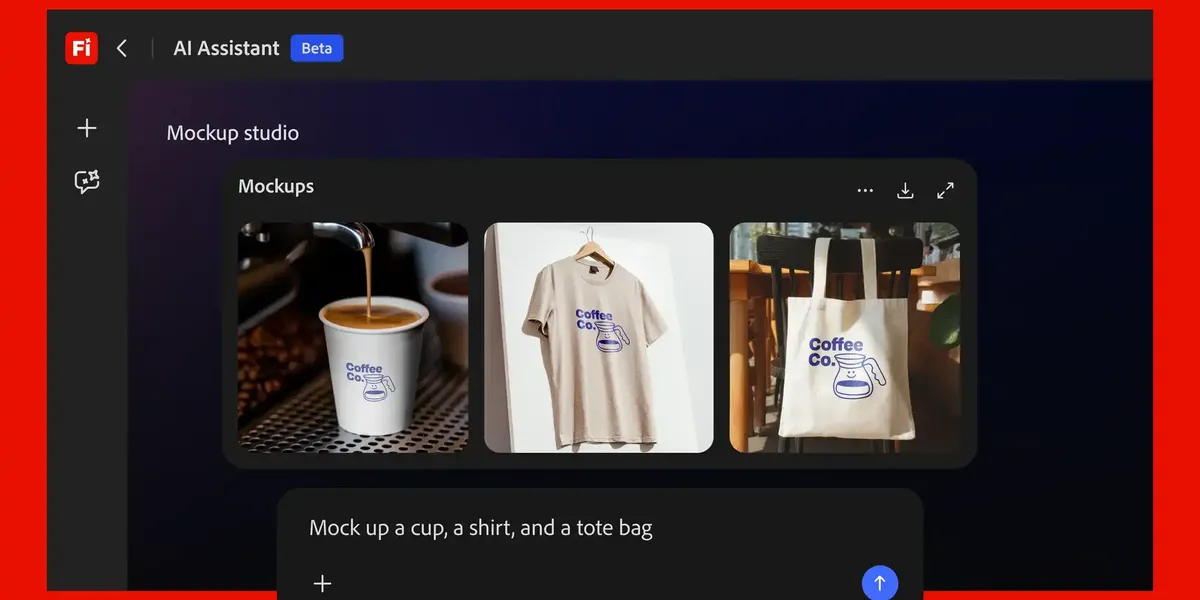
The year 2023 was unequivocally dubbed the 'Year of AI,' a period marked by explosive growth and widespread public awareness of artificial intelligence's transformative potential. Yet, as we navigate 2024, it's becoming clear that the narrative around AI is evolving beyond a vague, overarching concept. We are now witnessing the emergence of distinct, powerful subcategories, with agentic AI at the forefront—a paradigm shift where AI systems don't just execute commands but proactively understand context, anticipate needs, and autonomously complete complex tasks. Leading this charge in the creative sector is Adobe, a company synonymous with digital design, which is now doubling down on its commitment to agentic AI, most notably with the public beta launch of Firefly Assist and a strategic partnership with Anthropic.
This isn't merely an incremental update; it's a profound strategic pivot that could fundamentally alter the creative workflow for millions worldwide. For decades, Adobe products like Photoshop, Illustrator, and Premiere Pro have been indispensable tools, empowering artists and designers with unparalleled control. Now, the company is envisioning a future where these tools are augmented by intelligent agents that can interpret intent, generate variations, and even initiate actions, effectively becoming a collaborative partner rather than just a passive interface. The implications are vast, promising to democratize advanced creative capabilities and accelerate production cycles to an unprecedented degree.
The Rise of Agentic AI: Beyond Generative Capabilities
To understand Adobe's current trajectory, it's crucial to differentiate agentic AI from its more widely known cousin, generative AI. While generative AI, exemplified by tools like Firefly's initial image generation capabilities, focuses on creating new content from prompts, agentic AI takes this a significant step further. An agentic AI system is designed to: * Understand complex goals: It can break down a high-level objective into a series of actionable steps. * Plan and execute: It devises a strategy to achieve the goal and carries out the necessary operations. * Adapt and learn: It can adjust its approach based on feedback, new information, or unforeseen obstacles. * Proactively assist: Instead of waiting for explicit instructions for every minute detail, it anticipates user needs and offers solutions or completes tasks autonomously.
Firefly Assist, as it enters public beta, embodies this agentic philosophy. Imagine a scenario where a marketing professional needs to create a series of social media banners for a new product launch. Instead of manually adjusting dimensions, colors, and text for each platform, an agentic Firefly Assist could, with a single prompt, generate a suite of optimized assets, suggesting variations, incorporating brand guidelines, and even adapting content for different audience segments. This moves beyond simple 'text-to-image' and into 'intent-to-outcome,' significantly reducing repetitive tasks and freeing up creative professionals for higher-level conceptual work.
Adobe's Strategic Alliances and Ecosystem Integration
Adobe's aggressive push into agentic AI is not happening in a vacuum. The company has been meticulously building an ecosystem and forging key partnerships to support this vision. The recent announcement of a collaboration with Anthropic, a leading AI safety and research company known for its Claude large language model (LLM), is particularly telling. This partnership suggests that Adobe is not just developing its own proprietary AI models but is also leveraging external, cutting-edge LLMs to power the cognitive capabilities of its agentic systems. Claude's advanced reasoning and contextual understanding could provide the intelligence layer necessary for Firefly Assist to interpret complex creative briefs, understand nuances in design, and generate more sophisticated and contextually relevant outputs.
Furthermore, Adobe's strategy involves deep integration across its entire Creative Cloud suite. Firefly Assist isn't envisioned as a standalone application but as an intelligent layer woven into Photoshop, Illustrator, Premiere Pro, and other tools. This seamless integration means that users won't have to switch between different interfaces to leverage AI capabilities; instead, AI will be an inherent part of their existing workflow. This approach is crucial for widespread adoption, as it minimizes disruption and maximizes efficiency gains for professionals already deeply embedded in the Adobe ecosystem. The goal is to make AI an invisible, yet indispensable, partner in the creative process.
Impact on Creative Professionals and Industries
The advent of agentic AI, particularly through a platform as ubiquitous as Adobe Creative Cloud, carries profound implications for various industries and the creative workforce itself. For designers, marketers, video editors, and photographers, the immediate benefit is a dramatic increase in productivity and efficiency. Tasks that once took hours, such as resizing images for multiple platforms, generating multiple design variations, or even drafting initial content concepts, could be completed in minutes. This allows professionals to focus on strategic thinking, conceptualization, and refining the human touch that AI cannot replicate.
However, this transformation also raises important questions and challenges: * Skill Evolution: Creative professionals will need to adapt their skill sets, shifting from purely manual execution to becoming adept at 'prompt engineering' and effectively collaborating with AI agents. Understanding how to guide and refine AI outputs will be paramount. * Job Displacement vs. Augmentation: While some fear job displacement, the prevailing view among experts is that AI will primarily augment human capabilities, creating new roles focused on AI supervision, ethical AI deployment, and high-level creative direction. Repetitive, low-skill tasks are most likely to be automated. * Ethical Considerations and Copyright: Adobe has been proactive in addressing ethical concerns, particularly around data sourcing and copyright. Firefly models are trained on licensed content or public domain material, aiming to provide commercial safety for users. However, the rapid evolution of AI necessitates ongoing vigilance and clear guidelines regarding authorship and intellectual property. * Democratization of Creativity: Agentic AI could lower the barrier to entry for complex creative tasks, empowering a broader range of individuals and small businesses to produce high-quality content without extensive technical training or large budgets. This could foster a new wave of creative entrepreneurship.
The Future of Creativity: A Human-AI Partnership
Adobe's move with Firefly Assist is a clear signal that the future of creativity lies in a sophisticated partnership between human ingenuity and artificial intelligence. This isn't about AI replacing human artists, but rather about AI empowering them to achieve more, faster, and with greater innovation. The public beta phase will be critical, gathering user feedback to refine the agentic capabilities and ensure they truly meet the complex demands of creative professionals. As these systems become more sophisticated, we can anticipate a future where AI not only assists but also inspires, offering novel perspectives and pushing the boundaries of what's creatively possible.
The journey into agentic AI is just beginning, and Adobe is positioning itself at the vanguard of this revolution. The coming years will undoubtedly see an acceleration in the development of these intelligent creative partners, transforming industries and redefining the very essence of digital creativity. For PulseWorld readers, understanding this shift is not just about technology; it's about grasping the future of work, innovation, and human expression in an increasingly AI-driven world. The era of the truly intelligent creative assistant is no longer a distant dream, but a tangible reality unfolding before our eyes.
Stay Informed
Get the world's most important stories delivered to your inbox.
No spam, unsubscribe anytime.
Comments
No comments yet. Be the first to share your thoughts!