Airspace Barricade: Lithuania and Latvia Block Slovak PM's Moscow Flight, Deepening EU Divides
Slovak Prime Minister Robert Fico's plans to attend Russia's Victory Day celebrations in Moscow have been thwarted by Lithuania and Latvia, who denied him access to their airspace. This diplomatic rebuff highlights the deepening geopolitical chasm within the European Union regarding its stance on Russia and the war in Ukraine. The incident underscores the complex interplay of national sovereignty, EU solidarity, and historical grievances shaping contemporary European foreign policy.
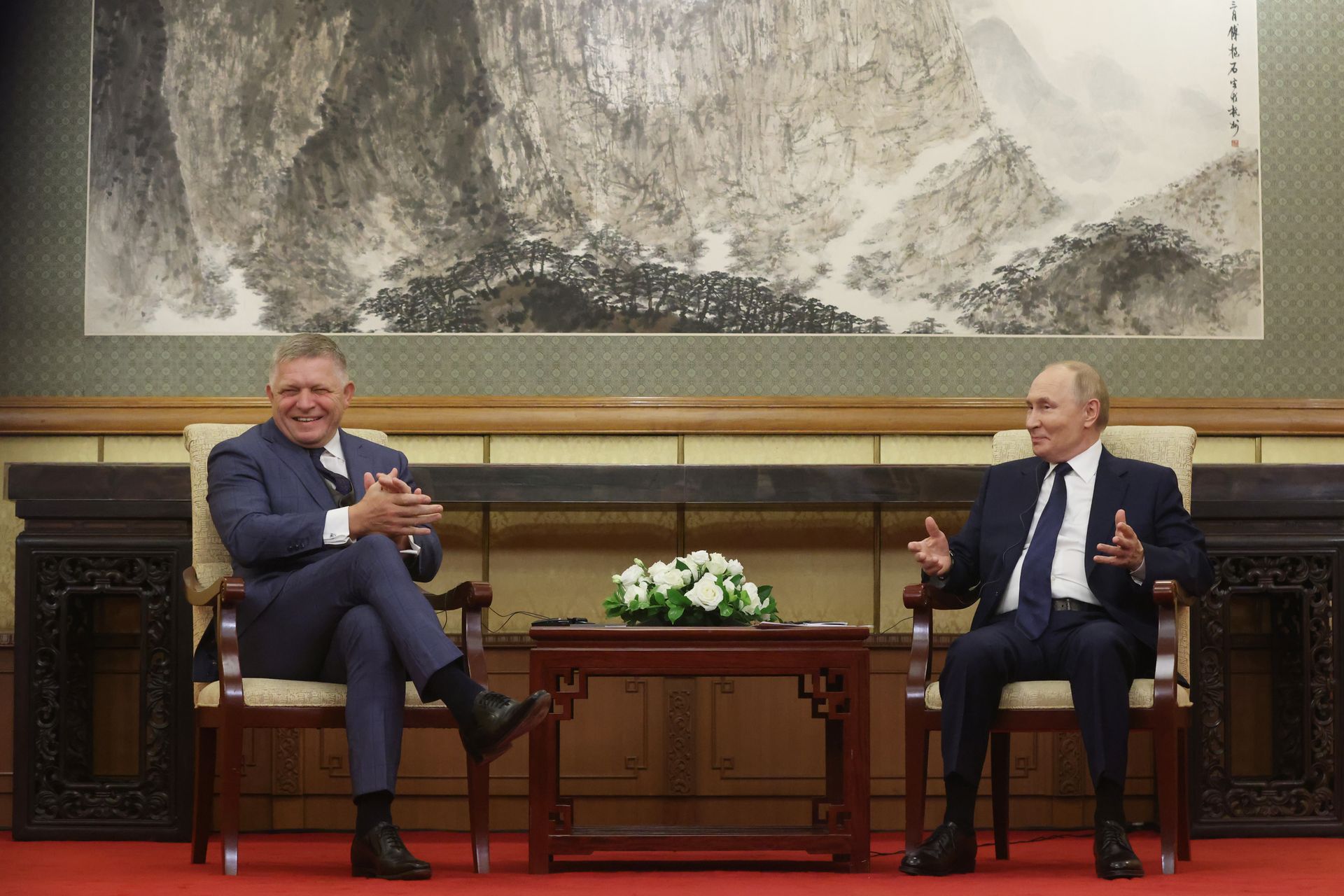
In a pointed diplomatic maneuver that underscores the deepening fissures within the European Union regarding its stance on Russia, Lithuania and Latvia have unequivocally denied Slovak Prime Minister Robert Fico permission to use their airspace for his intended journey to Moscow. Fico had planned to attend Russia's Victory Day celebrations in May, an event that has become a potent symbol of Russian national pride and, for many Western nations, a stark reminder of its military assertiveness. This decision, announced by Fico himself on April 18, casts a long shadow over the principle of free movement within Europe and highlights the complex, often conflicting, foreign policy priorities of member states.
The refusal by the Baltic states is more than a logistical inconvenience; it is a powerful political statement. It signals a resolute rejection of any perceived normalization of relations with Moscow, particularly amidst its ongoing full-scale invasion of Ukraine. For countries like Lithuania and Latvia, which share direct borders with Russia and have a fraught history of Soviet occupation, any gesture that could be interpreted as legitimizing the current Russian regime is anathema. The incident forces a critical examination of the EU's internal coherence and the extent to which individual nations can chart independent courses on matters of high geopolitics.
The Geopolitical Chessboard: A Divided Europe
The decision to bar Fico's flight is a stark illustration of the two-speed Europe that has emerged in response to the war in Ukraine. On one side are countries like Lithuania, Latvia, Estonia, and Poland, which advocate for an uncompromising stance against Russia, pushing for maximum sanctions, robust military aid to Ukraine, and complete diplomatic isolation of the Kremlin. Their historical experiences, marked by decades under Soviet domination, inform a deep-seated suspicion of Russian expansionism and a strong commitment to collective security through NATO and the EU.
On the other side are nations, including Fico's Slovakia, and to some extent Hungary under Prime Minister Viktor Orbán, that have adopted a more nuanced, or in some cases, openly conciliatory approach towards Russia. Fico, who returned to power in Slovakia in October 2023 on a populist, anti-establishment platform, has been vocal in his criticism of Western sanctions against Russia and has called for a more pragmatic dialogue with Moscow. He has also halted military aid to Ukraine from state stockpiles, though commercial contracts continue. This divergence in foreign policy priorities creates significant friction within the EU, complicating efforts to forge a unified front against Russian aggression. The airspace denial effectively draws a red line, indicating that some EU members are unwilling to facilitate actions that they perceive as undermining the bloc's collective security and moral standing.
Historical Echoes and National Sovereignty
For Lithuania and Latvia, the decision is deeply rooted in their historical memory and national security concerns. Both countries regained independence from the Soviet Union in the early 1990s and have since been at the forefront of advocating for a strong, united European response to Russian aggression. Victory Day, celebrated on May 9th in Russia, commemorates the Soviet Union's victory over Nazi Germany in World War II. While a day of solemn remembrance for many, it has increasingly been weaponized by the Kremlin as a display of military might and a justification for its current geopolitical ambitions, including the narrative of 'denazification' in Ukraine.
Allowing an EU leader to attend such an event, especially one who has expressed skepticism about Western policy towards Russia, would be seen by the Baltic states as a profound betrayal of their values and a direct affront to the victims of Russian aggression in Ukraine. It would also contradict their consistent efforts to isolate Russia diplomatically. The principle of national sovereignty allows these nations to control their airspace, and they are exercising this right to send an unambiguous message. This incident highlights the tension between the EU's aspiration for a common foreign and security policy and the inherent right of member states to conduct their own external relations, particularly when national security interests are perceived to be at stake.
Implications for EU Cohesion and Future Policy
The airspace denial is likely to have significant implications for EU cohesion and future policy debates. It underscores the difficulty of maintaining a unified stance when member states have vastly different historical experiences, geopolitical vulnerabilities, and domestic political landscapes. While the EU has largely presented a united front in condemning Russia's invasion and implementing sanctions, cracks have appeared, particularly concerning the pace and extent of support for Ukraine and the long-term strategy towards Moscow.
This incident could further embolden those within the EU who advocate for a more robust and unified foreign policy mechanism, potentially leading to discussions about strengthening the bloc's ability to override national decisions that are perceived to undermine collective security. Conversely, it could also fuel resentment among states like Slovakia, who might feel their sovereign right to conduct foreign policy is being curtailed by other members. The episode serves as a stark reminder that European unity is not a given, but a continuous, often challenging, process of negotiation and compromise, especially when confronted with external threats of this magnitude.
Furthermore, the incident sends a clear signal to Moscow. It demonstrates that despite attempts by some European leaders to maintain a semblance of dialogue, a significant portion of the EU remains committed to isolating Russia and will actively prevent actions that could be seen as legitimizing its current regime. This collective stance, even if not universally adopted by all 27 members, reinforces the geopolitical isolation of Russia on the European continent.
The Path Forward: Navigating a Fractured Landscape
As Europe navigates an increasingly complex and volatile geopolitical landscape, incidents like the airspace denial will likely become more frequent. The challenge for the EU will be to manage these internal divergences without allowing them to undermine the bloc's overall strategic objectives. This will require enhanced diplomatic efforts, clearer communication, and perhaps a re-evaluation of how consensus is reached on critical foreign policy matters.
For Slovakia, the incident forces a re-assessment of its diplomatic strategy. While Fico's government may seek to project an image of independent foreign policy, the reality of being an EU and NATO member means operating within certain parameters. The denial of airspace by fellow EU members is a tangible consequence of pursuing a path that deviates significantly from the bloc's perceived consensus. It highlights the interconnectedness of European security and the fact that national actions can have continent-wide repercussions.
Ultimately, the refusal by Lithuania and Latvia to grant Slovak Prime Minister Robert Fico access to their airspace for his Moscow trip is far more than a bureaucratic hiccup. It is a powerful symbol of Europe's ongoing struggle to define its identity and strategy in the face of a resurgent and aggressive Russia. It reflects deep-seated historical anxieties, divergent national interests, and the constant tension between national sovereignty and the imperative of collective European action. The path forward for the EU will require careful navigation of these internal divisions, ensuring that while individual voices are heard, the collective security and values of the Union remain paramount.
Stay Informed
Get the world's most important stories delivered to your inbox.
No spam, unsubscribe anytime.
Comments
No comments yet. Be the first to share your thoughts!