Anthropic's Claude Code Desktop & Routines: The Enterprise AI Revolution Takes Shape
Anthropic's recent launch of its Claude Code desktop app and 'Routines' marks a pivotal moment in enterprise AI. Moving beyond mere chatbots, these innovations position AI as an integral workforce component, streamlining complex development tasks and enhancing operational efficiency. This shift promises to redefine how businesses leverage AI, blending intuitive interfaces with powerful automation for a new era of productivity.
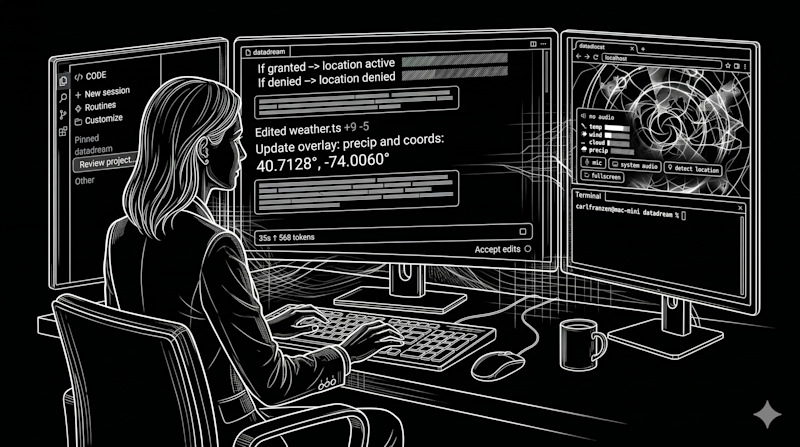
The narrative surrounding Artificial Intelligence has long been dominated by futuristic visions and theoretical projections. However, a significant paradigm shift is now underway, transforming AI from a conversational chatbot into an indispensable member of the enterprise workforce. This evolution is not merely incremental; it represents a fundamental redesign of the modern developer’s toolkit and, by extension, the operational fabric of businesses worldwide.
On April 14, 2026, Anthropic, a leading AI safety and research company, decisively signaled this transition with a dual release that has sent ripples across the technology landscape: a redesigned Claude Code desktop application and the introduction of 'Routines'. These innovations are not just new features; they are foundational elements of a new philosophy where AI is not just an assistant but a proactive, integrated force driving productivity and innovation, particularly within the enterprise sector.
The Desktop GUI: AI's New Command Center for Enterprises
For years, the command-line interface (CLI) has been the domain of power users, offering unparalleled control and flexibility for developers. While the CLI will undoubtedly remain the tool of choice for direct execution and scripting, Anthropic's new desktop GUI for Claude Code is poised to become the standard for management and review within enterprise environments. This distinction is crucial. Imagine a project manager or a team lead needing to oversee multiple AI-driven development tasks. A graphical interface provides an intuitive, visual dashboard for tracking progress, reviewing code generated by AI, and managing complex workflows without delving into intricate command structures.
This shift towards a desktop GUI acknowledges the diverse skill sets within an enterprise. Not every stakeholder is a command-line wizard. By offering a user-friendly, visually rich interface, Anthropic democratizes access to powerful AI capabilities, allowing a broader range of professionals—from project managers to quality assurance engineers—to interact with and leverage AI effectively. The desktop app is designed for orchestration and oversight, enabling enterprises to integrate Claude Code seamlessly into their existing development pipelines, ensuring compliance, consistency, and collaborative efficiency.
'Routines': Automating the Intricate Dance of Development
The true power of Anthropic's latest offering lies in 'Routines'. This feature represents a leap forward in AI's ability to handle multi-step, complex tasks autonomously. Traditionally, even advanced AI models required human intervention to string together sequences of operations. 'Routines' changes this by allowing users to define intricate workflows, essentially teaching Claude Code to perform a series of actions in a specific order, often involving multiple tools and stages.
Consider a typical software development cycle: requirement analysis, code generation, testing, debugging, and documentation. A 'Routine' could be configured to take a high-level requirement, generate initial code snippets, pass them through automated testing frameworks, identify and suggest fixes for errors, and even draft accompanying documentation—all with minimal human oversight. This capability transforms Claude from a mere code generator into a workflow orchestrator, significantly reducing manual effort and accelerating development cycles. For enterprises grappling with tight deadlines and complex projects, 'Routines' offers a compelling solution for scaling productivity without proportionally scaling human resources.
Historical Context: From Chatbots to Workforce Integration
The journey of AI from rudimentary rule-based systems to sophisticated large language models (LLMs) has been rapid. Early AI applications, often glorified as chatbots, focused primarily on conversational interfaces and basic information retrieval. While impressive, these tools largely served as assistants, augmenting human capabilities rather than replacing or automating complex, multi-stage processes.
The advent of more powerful LLMs, like Anthropic's Claude, marked a turning point. These models demonstrated an unprecedented ability to understand context, generate creative content, and even write functional code. However, their integration into enterprise workflows remained somewhat fragmented, often requiring developers to manually prompt the AI for each step of a task. The introduction of the desktop GUI and 'Routines' addresses this fragmentation head-on. It signifies a maturation of AI, moving it from a reactive tool to a proactive, integrated workforce component capable of managing and executing entire segments of complex projects. This evolution mirrors the historical progression of other transformative technologies, from standalone machines to integrated factory automation systems.
Implications for Enterprise Adoption and the Future of Work
The implications of Anthropic's dual release for enterprises are profound and multifaceted. Firstly, it promises a significant boost in developer productivity. By automating repetitive and time-consuming tasks, developers can focus on higher-level problem-solving, innovation, and strategic thinking. This doesn't necessarily mean fewer developers, but rather more efficient and impactful ones.
Secondly, the enhanced accessibility offered by the desktop GUI will foster broader AI adoption across different departments. Non-technical teams might leverage 'Routines' for automated data analysis, report generation, or even content creation, extending the benefits of AI beyond the traditional tech department. This democratization of AI tools can lead to a more AI-fluent workforce and uncover new applications for the technology within an organization.
Thirdly, the focus on management and review through the GUI underscores a commitment to responsible AI deployment. Enterprises need robust mechanisms to oversee AI-generated output, ensure compliance with internal standards and external regulations, and maintain quality control. The desktop app provides the necessary visibility and control points, mitigating risks associated with autonomous AI operations.
However, this transition also presents challenges. Enterprises must invest in training and upskilling their workforce to effectively utilize these new tools. Establishing clear governance frameworks for AI-driven workflows will be paramount to ensure ethical use, data privacy, and accountability. Furthermore, the integration of 'Routines' into existing IT infrastructure will require careful planning and execution to avoid disruptions.
The Road Ahead: A Symbiotic Future
Anthropic's latest offerings are more than just product updates; they are a blueprint for the future of human-AI collaboration in the enterprise. The desktop GUI provides the intuitive control panel, while 'Routines' offers the powerful automation engine. Together, they create a symbiotic relationship where humans define the strategic objectives and oversee the process, while AI executes the intricate details with speed and precision.
As AI continues to evolve, we can expect even more sophisticated 'Routines' capable of adapting to changing requirements and learning from past executions. The line between human and AI contributions will blur further, leading to highly efficient, intelligent workflows. Enterprises that embrace these advancements early will gain a significant competitive edge, transforming their operational models and unlocking unprecedented levels of innovation. The era of AI as a true workforce component has not just arrived; it is rapidly defining the next chapter of technological progress.
Stay Informed
Get the world's most important stories delivered to your inbox.
No spam, unsubscribe anytime.
Comments
No comments yet. Be the first to share your thoughts!