Beyond Moore's Law: New Memory Chip Shatters Miniaturization Barriers, Promises Ultra-Efficient Electronics
Scientists have developed a groundbreaking memory chip that defies conventional miniaturization challenges, offering a potential solution to overheating and battery drain in modern electronics. This novel device improves its energy efficiency as it shrinks, a paradigm shift that could revolutionize smartphones, AI systems, and wearables. By redesigning fundamental memory structures, researchers have paved the way for a new era of ultra-low-power computing.
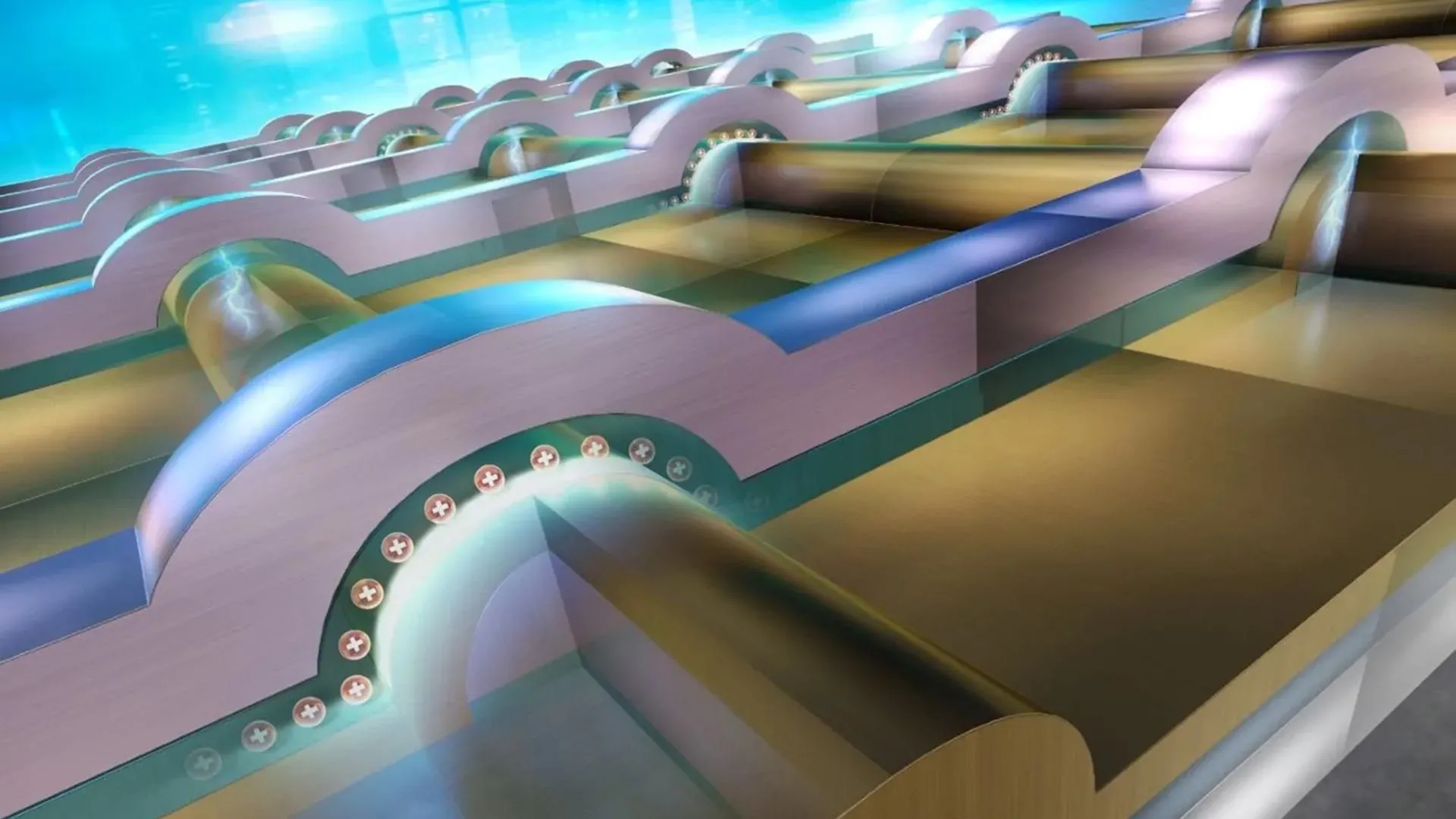
For decades, the relentless march of technological progress has been dictated by Moore's Law, the observation that the number of transistors on an integrated circuit doubles approximately every two years. This principle has driven the miniaturization of electronics, giving us ever-more powerful devices in smaller packages. However, this progress has come with an increasingly thorny problem: as components shrink, they tend to generate more heat and consume more power, leading to shorter battery life and performance bottlenecks. Now, a team of visionary scientists has unveiled a memory chip that not only sidesteps these limitations but actively thrives on miniaturization, promising a future where our devices are not just smaller, but dramatically more efficient.
This breakthrough represents a fundamental re-evaluation of how computer memory functions. At its core, memory stores information as binary 0s and 1s by controlling the flow of electricity through a material. Traditional memory designs often face a trade-off: higher density means more components packed together, which typically translates to increased energy demands and heat dissipation issues. The new memory device, however, flips this script entirely. By shrinking components to an extreme scale and fundamentally redesigning their internal structure, researchers have found a way to reduce energy loss rather than increase it, creating a tiny memory unit that paradoxically improves as it gets smaller—a feat once considered impossible.
The Miniaturization Paradox Solved
The conventional wisdom in semiconductor physics dictates that as electronic components shrink, their resistance to current flow tends to increase, leading to greater energy dissipation in the form of heat. This is a primary reason why high-performance processors require elaborate cooling systems and why smartphone batteries drain so quickly. The new memory chip addresses this by leveraging principles that become more advantageous at the nanoscale. Instead of fighting against the physical constraints of miniaturization, the researchers have harnessed them. They've engineered a material and architecture where the electrical properties become more favorable at smaller dimensions, allowing for more efficient data storage and retrieval with significantly less power.
This isn't just an incremental improvement; it's a paradigm shift. Imagine a future where your smartphone lasts not just a day, but a week, on a single charge, or where data centers consume a fraction of the electricity they do today. The implications for environmental sustainability are profound, given the massive energy footprint of global computing infrastructure. This novel approach to memory design could be the key to unlocking the next generation of computing, moving beyond the physical limitations that have begun to slow the pace of Moore's Law.
Redefining Energy Efficiency in Computing
The core innovation lies in the material science and structural engineering of the memory cells. While specific details are often proprietary or subject to ongoing research, the general principle involves creating pathways for electrons that become more efficient at smaller scales. This could involve novel quantum phenomena or highly optimized material interfaces that reduce electron scattering and resistance. The result is a memory unit that requires significantly less electricity to flip between its 0 and 1 states, the fundamental operation of all digital memory. This reduction in energy consumption directly translates to less heat generation, solving the twin problems of overheating and battery drain simultaneously.
Consider the current landscape: the global energy consumption of data centers alone is staggering, projected to reach significant percentages of total electricity usage in many countries. A memory technology that could cut this consumption by even a fraction would have an immense impact. For consumers, this means devices that are not only faster and more powerful but also cooler to the touch and capable of extended operation without constant recharging. For industries, it means more sustainable and cost-effective operations, particularly in areas like artificial intelligence, which demands vast computational resources.
Implications for Future Technologies: AI, Wearables, and Beyond
The potential applications of this breakthrough are vast and transformative. For smartphones and wearables, longer battery life and reduced heat mean more powerful features can be integrated without compromising user experience. Imagine smartwatches that monitor health metrics continuously for weeks, or augmented reality glasses that run complex applications all day long. The current limitations of battery technology often dictate the design and functionality of these devices; this new memory could effectively remove that bottleneck.
In the realm of Artificial Intelligence (AI), the impact could be even more profound. Training large AI models requires immense computational power and, consequently, massive amounts of energy. Energy-efficient memory could drastically reduce the operational costs and environmental footprint of AI development and deployment, making advanced AI more accessible and sustainable. Edge AI, where AI computations happen directly on the device rather than in the cloud, would also see a significant boost, enabling more intelligent and responsive local processing.
Furthermore, this technology could accelerate the development of Internet of Things (IoT) devices, allowing for tiny, self-sustaining sensors that can operate for years without maintenance, collecting data in remote locations. It could also find applications in specialized computing, such as space exploration, where power efficiency is paramount, or in medical implants, where long-term, low-power operation is critical.
The Road Ahead: From Lab to Market
While the announcement of such a revolutionary technology is exciting, the journey from laboratory breakthrough to widespread commercial adoption is often long and complex. There are several stages involved:
* Further Research and Optimization: Refining the materials, manufacturing processes, and scaling up production. This includes ensuring reliability and longevity under various operating conditions. * Integration Challenges: Adapting existing chip manufacturing infrastructure to produce these new memory types. This often requires significant investment and retooling. * Ecosystem Development: Creating the software and hardware interfaces that allow these new memory chips to seamlessly integrate with current computing architectures. * Cost-Effectiveness: Ensuring that the production costs are competitive with existing memory solutions to encourage widespread adoption.
Despite these hurdles, the fundamental nature of this breakthrough suggests a high probability of eventual success. The economic and environmental incentives for more energy-efficient computing are too strong to ignore. Industry leaders and governments worldwide are increasingly focused on sustainable technology, and this memory chip offers a compelling pathway forward.
A New Chapter in Computing History
The development of this memory chip marks a pivotal moment, potentially ushering in a new era of computing that is not just faster and more powerful, but also fundamentally more sustainable. By breaking the long-standing rules of miniaturization and energy consumption, scientists have opened the door to innovations that were previously constrained by physical limitations. As we look to a future filled with increasingly interconnected devices, sophisticated AI, and ubiquitous computing, this breakthrough offers a beacon of hope for a world where technological advancement goes hand-in-hand with environmental responsibility. The age of ultra-efficient electronics may finally be upon us, promising a future that is cooler, longer-lasting, and profoundly more capable.
Stay Informed
Get the world's most important stories delivered to your inbox.
No spam, unsubscribe anytime.
Comments
No comments yet. Be the first to share your thoughts!