Beyond Streaming: How a Browser Unlocks Your Smart TV's Hidden Potential
Smart TVs are often seen as mere content consumption devices, but a growing trend suggests they can be much more. This article explores how installing a full-featured web browser can transform your television into a versatile computing hub, challenging traditional notions of TV usage. Discover the unexpected capabilities and future implications of this evolving technology.
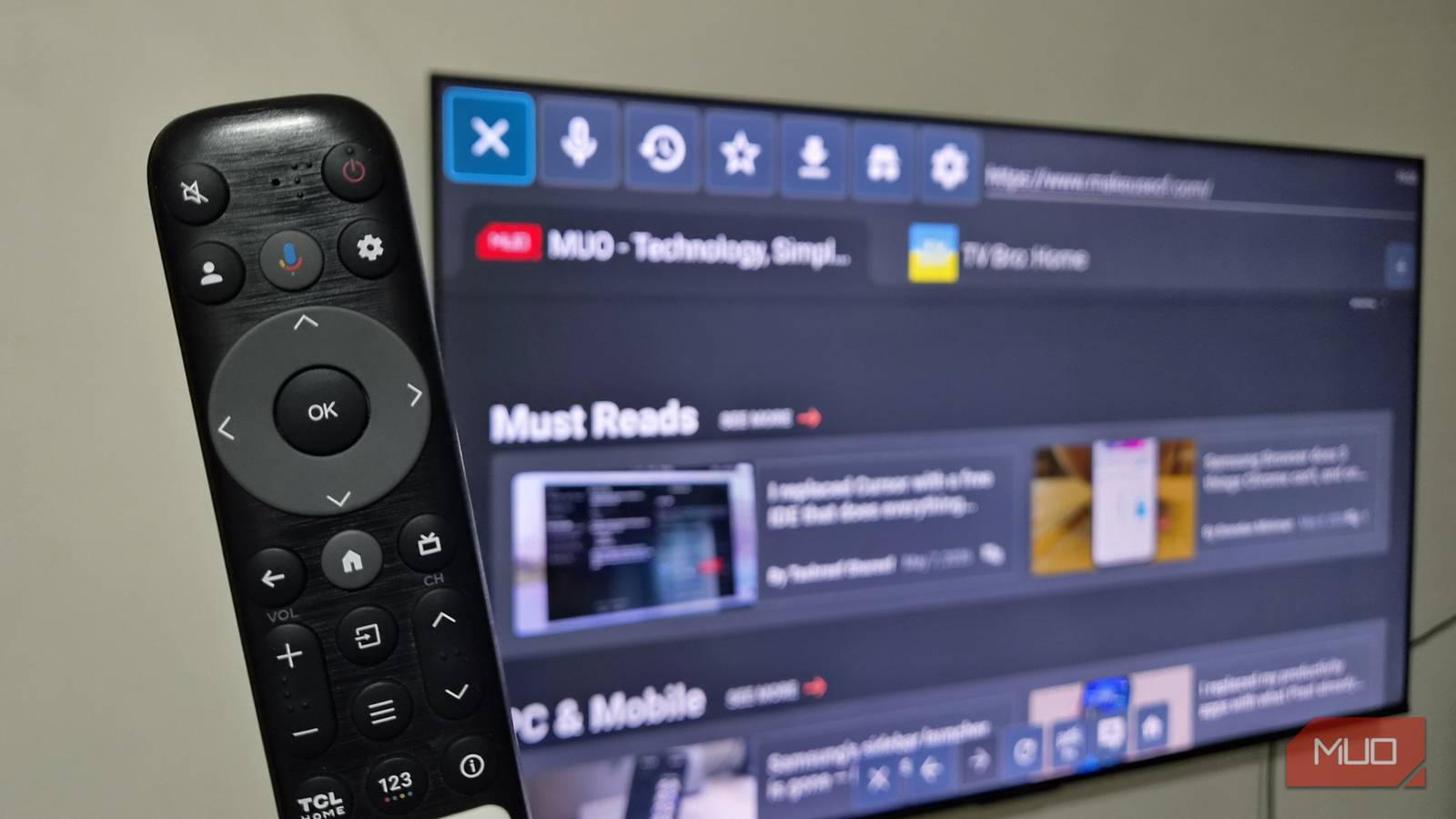
In an era dominated by streaming services and curated content feeds, our smart TVs have largely been relegated to passive entertainment consumption. We binge-watch, we game, we scroll through app menus, but rarely do we consider them as true computing devices. Yet, a quiet revolution is brewing, suggesting that the very screens we use for Netflix and Disney+ hold untapped potential, waiting to be unleashed by a simple, yet powerful, tool: a full-fledged web browser. This isn't about the clunky, often frustrating built-in browsers that come pre-installed; it's about reclaiming control and transforming your living room centerpiece into a dynamic portal to the entire internet.
The Evolution of the Smart TV: From Dumb Box to Digital Hub
To understand the significance of a robust browser on a smart TV, we must first trace the evolution of the television itself. For decades, the TV was a 'dumb' box, a receiver of broadcast signals. The advent of the VCR in the 1970s, followed by DVD players and eventually streaming devices like Apple TV and Roku, began to chip away at this passive role, introducing choice and on-demand content. However, the true paradigm shift arrived with the 'smart' designation. Early smart TVs, emerging in the late 2000s, promised internet connectivity and apps, but often delivered a clunky, frustrating experience. Navigation was sluggish, app stores were limited, and the built-in browsers were notoriously poor, designed more as an afterthought than a core feature. This left many users disillusioned, reinforcing the idea that TVs were for watching, not for interacting.
Fast forward to today, and the hardware has caught up. Modern smart TVs boast powerful processors, ample RAM, and stunning displays. Yet, the software often lags behind, particularly when it comes to web browsing. Manufacturers, focused on content partnerships and proprietary ecosystems, have historically neglected the browser experience. This has created a gap that savvy users are now exploiting, installing third-party browsers that offer a desktop-like experience, complete with tabbed browsing, bookmarking, and even extensions. This shift challenges the very premise of the walled garden approach favored by many TV manufacturers, opening up a world of possibilities previously confined to computers and smartphones.
Unlocking New Dimensions: Beyond Traditional Entertainment
The impact of a capable browser on a smart TV extends far beyond simply looking up movie reviews. Imagine using your TV for video conferencing with family on a large screen, transforming your living room into a more engaging virtual meeting space. Consider the educational potential: online courses, documentaries, and interactive learning platforms become immersive experiences when viewed on a 65-inch display. For those working from home, a smart TV with a browser can serve as a secondary monitor for web-based applications, allowing for a more expansive workspace without needing multiple dedicated screens. The possibilities are vast and varied:
* Cloud Gaming: Accessing platforms like Google Stadia or Xbox Cloud Gaming directly through a browser, bypassing dedicated apps or consoles. * Productivity: Using web-based office suites (Google Docs, Microsoft 365) for collaborative work or presentations. * Interactive Art & Galleries: Exploring virtual museums or displaying dynamic digital art on a large canvas. * Recipe Browsing: Following cooking instructions on a large screen in the kitchen, hands-free. * Home Automation Dashboards: Controlling smart home devices through web interfaces, visible to the whole family.
According to a recent survey by Statista, over 70% of households in developed nations now own a smart TV, indicating a massive installed base ready for enhanced functionality. While only a fraction currently use their TVs for extensive web browsing, the potential for growth is immense as users discover these new capabilities. "The TV is no longer just a passive display; it's a powerful computer with a giant screen," notes Dr. Anya Sharma, a technology analyst specializing in consumer electronics. "The browser is the key to unlocking its full versatility, bridging the gap between entertainment and utility."
Overcoming Challenges: Input, Interface, and Integration
Despite the exciting prospects, challenges remain. The most significant hurdle is input. Typing on a TV using a standard remote is notoriously slow and cumbersome. This is where innovation in peripherals comes into play. Bluetooth keyboards and mice are game-changers, transforming the TV browsing experience from frustrating to fluid. Voice control, while improving, still has limitations for complex web navigation. Furthermore, the user interface (UI) of many browsers, even third-party ones, is optimized for desktop use, not for a large screen viewed from a distance. Developers are beginning to address this with TV-optimized interfaces that feature larger buttons, simplified menus, and better readability.
Another challenge is integration. While a browser opens up the web, seamless integration with existing smart TV features and apps can be tricky. Users often want to switch effortlessly between a streaming app and a web page without jarring transitions. Manufacturers could play a crucial role here by offering more open platforms or better support for third-party browsers, rather than pushing their often-inferior proprietary solutions. The rise of open-source browsers tailored for embedded systems could also offer a more customizable and performant solution for smart TV platforms.
The Future is Open: A Paradigm Shift for the Living Room
The trend towards more versatile smart TVs, empowered by robust browsers, signals a significant paradigm shift. It moves the television from a dedicated entertainment appliance to a multi-purpose computing display. This has profound implications for how we interact with technology in our homes. Imagine a future where your TV is not just for watching movies, but for collaborating on projects, attending virtual reality meetings (with compatible peripherals), or even running complex simulations – all powered by the open web.
This evolution also puts pressure on content providers and app developers. If users can access virtually any web content directly on their TV, the need for specific, often redundant, TV apps might diminish. This could foster a more open and competitive ecosystem, benefiting consumers with greater choice and flexibility. The smart TV, once a passive recipient of content, is poised to become an active participant in our digital lives, blurring the lines between entertainment, productivity, and communication. The installation of a simple browser is not just a hack; it's a glimpse into a future where our largest screen is also our most versatile, truly earning its 'smart' designation by offering an unrestricted window to the world of information and interaction.
Stay Informed
Get the world's most important stories delivered to your inbox.
No spam, unsubscribe anytime.
Comments
No comments yet. Be the first to share your thoughts!