Beyond the Blank Slate: How 'Vibe Coding' is Revolutionizing Your Chrome New Tab Page
The humble Chrome new tab page, often overlooked, is emerging as an unexpected canvas for 'vibe coding' – a new paradigm in AI-assisted development. This article explores how natural language prompts are transforming this digital space into personalized, functional dashboards without complex programming. Discover the accessibility and creative potential of this trend, making coding more intuitive for everyone.
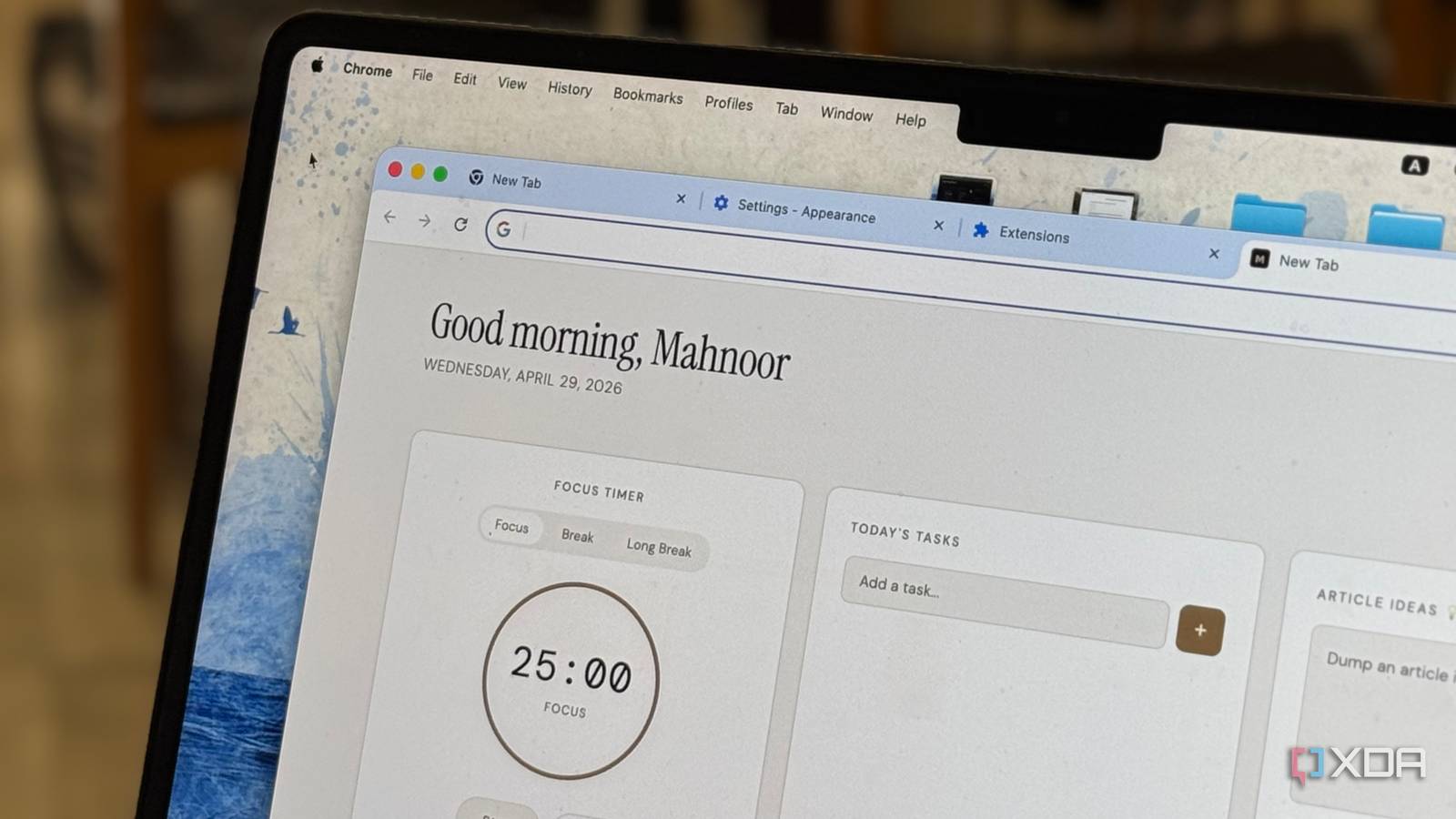
For many, the Chrome new tab page is merely a fleeting gateway, a blank slate or a collection of frequently visited sites before diving into the digital abyss. It's the browser's equivalent of a waiting room – functional, but rarely inspiring. Yet, this unassuming digital space is quietly becoming the latest frontier for a burgeoning trend known as 'vibe coding.' Far from the complex, full-stack applications often associated with AI-driven development, vibe coding, in its most accessible form, is transforming this mundane page into a personalized, dynamic, and surprisingly powerful dashboard, all through the magic of natural language prompts. This shift democratizes coding, turning casual users into creators and redefining what it means to 'build' in the age of artificial intelligence.
When the term "vibe coding" first entered the tech lexicon, it conjured images of sophisticated AI models churning out entire web applications or intricate software solutions from a few spoken commands. And indeed, that remains a significant, high-profile aspect of it. However, the true revolution might be happening at a much more granular, personal level. It's about empowering individuals to craft bespoke digital experiences without ever touching a line of traditional code. The new tab page, with its inherent simplicity and direct user interaction, offers the perfect low-stakes environment to experiment with this new paradigm, proving that powerful customization doesn't require a computer science degree.
The Essence of Vibe Coding: Intuition Meets Innovation
At its core, vibe coding is about intent-driven development. Instead of writing explicit instructions in a programming language, users describe their desired outcome in plain English (or any natural language). An AI assistant then translates this intent into functional code or configurations. For the Chrome new tab page, this could mean anything from displaying a custom weather widget, integrating a to-do list, pulling in RSS feeds from specific news sources, or even creating a dynamic mood board that changes with the time of day. The beauty lies in its accessibility: if you can articulate your vision, you can build it.
This approach significantly lowers the barrier to entry for creation. Traditionally, customizing browser interfaces required knowledge of HTML, CSS, JavaScript, and often browser extension APIs. These were skills typically acquired through dedicated study or professional experience. Vibe coding bypasses this technical overhead, allowing users to focus purely on the what rather than the how. It transforms the act of programming from a specialized skill into a form of creative expression, akin to designing a personalized physical space. This shift is particularly impactful in an era where digital environments are becoming increasingly central to our daily lives, making personal agency over these spaces more crucial than ever.
Historical Context: From Command Line to Conversational UI
To truly appreciate the significance of vibe coding, it's helpful to look at the evolution of human-computer interaction. Early computing was dominated by command-line interfaces (CLIs), requiring precise syntax and memorized commands. The advent of the graphical user interface (GUI) with its icons, windows, and mouse interactions revolutionized accessibility, making computers usable for the masses. However, even GUIs often require users to navigate complex menus and understand abstract concepts. The next logical step, and one that vibe coding embodies, is the conversational user interface (CUI), where interaction mimics natural human dialogue.
This progression reflects a continuous effort to make technology more intuitive and less demanding on the user. From punch cards to keyboards, from mice to touchscreens, and now to voice and text prompts, each leap has brought us closer to a seamless interaction where the machine understands human intent rather than demanding adherence to its own rigid logic. Vibe coding on the new tab page is a microcosm of this larger trend, demonstrating how even small, seemingly insignificant digital spaces can benefit from this paradigm shift. It's a testament to the idea that the most powerful technology often feels invisible, simply fulfilling our desires without drawing attention to its underlying complexity.
Practical Applications and Creative Freedom
The potential applications for a vibe-coded new tab page are vast and varied. Imagine a student setting up a page that displays their class schedule, upcoming assignment deadlines, and a motivational quote, all updated automatically. A professional might configure theirs to show stock market updates, their calendar, and quick links to frequently used tools. A creative individual could design an ever-evolving digital mood board, pulling images and quotes based on their current interests or projects. The possibilities are limited only by imagination and the capabilities of the underlying AI.
* Personal Productivity Hub: Integrate calendar, to-do lists, weather, and news feeds. * Learning Dashboard: Display study resources, flashcards, and progress trackers. * Creative Inspiration Board: Curate images, quotes, and links related to current projects. * Quick Access Portal: Custom shortcuts to frequently used websites and applications.
Moreover, the iterative nature of vibe coding means users can continuously refine their creations. A prompt like "add a weather widget for London" can be followed by "make the background blue and show a 5-day forecast," gradually building complexity and functionality without needing to restart or understand intricate code structures. This iterative feedback loop fosters experimentation and encourages users to push the boundaries of what's possible, transforming them from passive consumers into active designers of their digital environments.
The Future of Personal Computing: Empowerment Through AI
The rise of vibe coding, even in its simplest applications like the Chrome new tab page, signals a significant shift in how we interact with and customize our digital tools. It's a move towards greater personal agency in a world increasingly shaped by algorithms and standardized interfaces. As AI models become more sophisticated and capable of understanding nuanced human intent, the scope of vibe coding will undoubtedly expand far beyond browser pages.
We are entering an era where the line between user and developer blurs, where the ability to articulate a need is as powerful as the ability to write code. This democratization of creation holds immense promise for innovation, allowing diverse voices and perspectives to shape the digital landscape. The Chrome new tab page, once a mundane digital placeholder, is now a vibrant testament to this future – a small but significant battleground where the power of natural language is unlocking unprecedented levels of personalization and creativity. It's a clear indicator that the future of computing isn't just about more powerful machines, but about making those machines more intuitively responsive to human desire, transforming every user into a potential architect of their own digital world.
Stay Informed
Get the world's most important stories delivered to your inbox.
No spam, unsubscribe anytime.
Comments
No comments yet. Be the first to share your thoughts!