Beyond the 'Steel Porcupine': Why Ukraine Needs Russia's Decisive Defeat for Lasting Peace
Five years into the full-scale conflict, the concept of a 'steel porcupine' defense for Ukraine is proving insufficient for long-term peace. This analysis argues that mere deterrence against Russia is no longer viable, and a decisive defeat of Moscow's aggressive capabilities is essential. We explore why this shift in strategy is critical, examining the limitations of current approaches and the profound implications for global security.
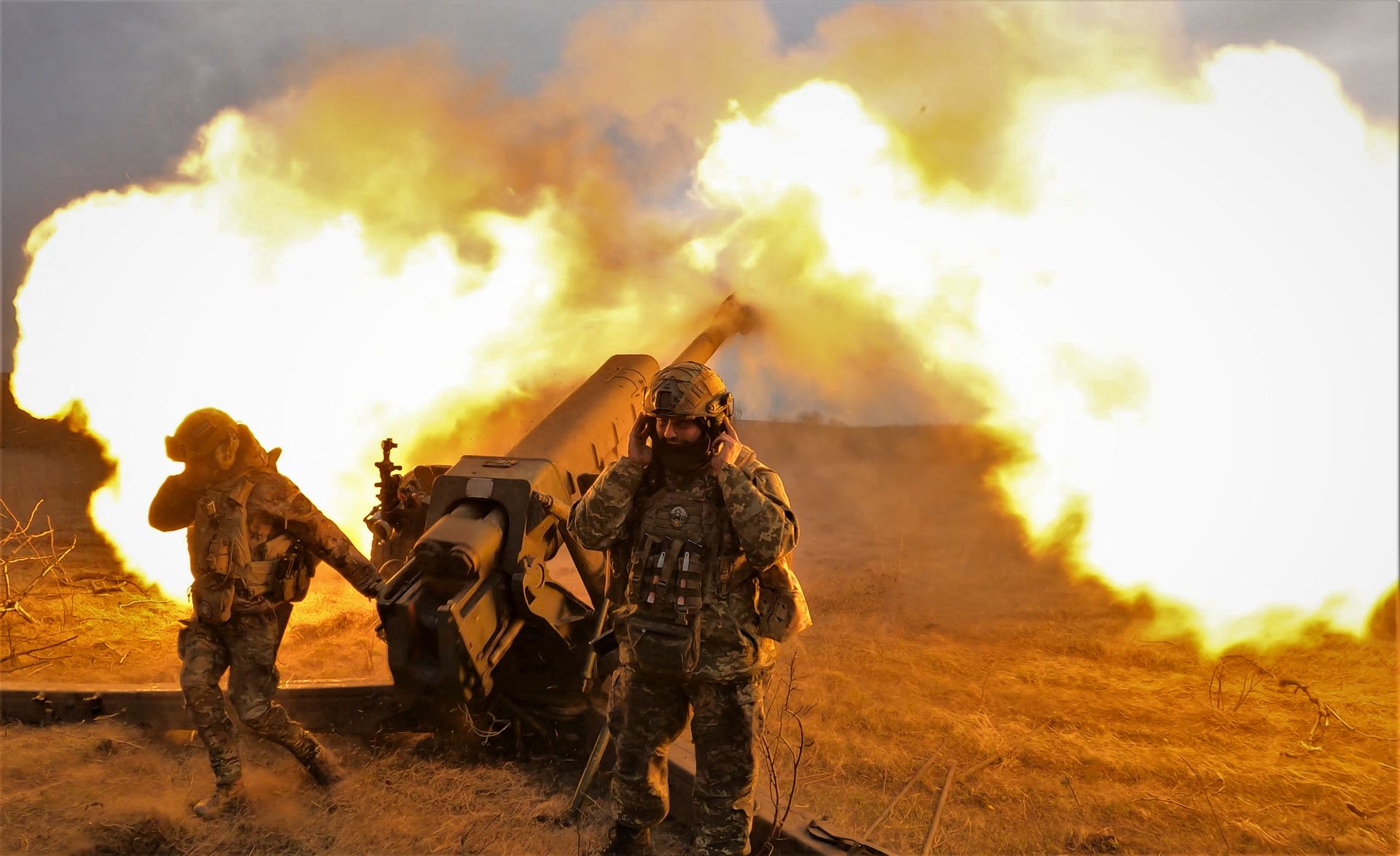
Five years into the full-scale conflict, the grim reality has crystalized: the model of strategic deterrence, often epitomized by Ursula von der Leyen's 'steel porcupine' analogy for Ukraine, offers no inherent guarantee of resilience or enduring peace. This strategy, predicated on making Russian aggression prohibitively costly through robust Ukrainian defense, is increasingly seen not as a pathway to stability, but as a prolonged, attritional stalemate. The evolving geopolitical landscape demands a re-evaluation, pushing the narrative towards a more definitive outcome: Russia's terminal defeat, rather than just its deterrence.
The Flaws of the 'Steel Porcupine' Doctrine
The 'steel porcupine' concept assumes that Ukraine, despite Russia's vast resource advantage, can build a defense so formidable that Moscow's continued aggression becomes unsustainable. This approach, while initially appealing for its focus on self-reliance and defensive strength, has revealed several critical limitations. Firstly, it implicitly accepts a protracted conflict, where Ukraine must perpetually defend against a larger, more resource-rich aggressor. This places an immense, unsustainable burden on Ukraine's economy, infrastructure, and human capital, even with significant Western aid. The constant threat of attack, even if successfully repelled, hinders reconstruction, economic development, and social stability.
Secondly, deterrence is inherently reactive. It aims to prevent future attacks by raising the cost, but it doesn't dismantle the aggressor's capacity or will to initiate conflict. Russia's historical patterns of aggression, from Chechnya to Georgia and Crimea, suggest a deep-seated imperial ambition that is unlikely to be curbed by mere defensive fortifications. As long as Russia retains the military and political capacity to launch large-scale invasions, the threat to Ukraine and its neighbors remains existential.
Furthermore, the 'steel porcupine' risks creating a frozen conflict scenario, where active hostilities might cease, but the underlying causes of instability persist. This would leave Ukraine in a perpetual state of vulnerability, unable to fully integrate into Euro-Atlantic structures and constantly under the shadow of renewed aggression. Such a state of affairs is not peace, but a precarious truce, detrimental to both Ukraine's future and broader European security.
Why a Decisive Defeat is Imperative
Moving beyond deterrence, the argument for Russia's terminal defeat centers on the need to fundamentally alter Moscow's strategic calculus and diminish its capacity for future aggression. This isn't merely about pushing Russian forces out of Ukrainian territory; it's about dismantling the military, economic, and political levers that enable Russia's revisionist foreign policy. A decisive defeat would entail:
* Irreversible Military Weakening: Degrading Russia's conventional military capabilities to a point where it cannot project power beyond its borders for a significant period. This includes destroying equipment, depleting ammunition stockpiles, and severely impacting its military-industrial complex. * Economic Isolation and De-coupling: Sustaining and expanding sanctions to cripple Russia's economy, particularly its energy sector, and sever its access to critical Western technology and finance. The goal is to make future military ventures economically unfeasible. * Internal Political Pressure: A prolonged and costly military failure, coupled with economic hardship, could generate significant internal dissent within Russia, potentially leading to a change in leadership or a shift in national priorities away from aggressive expansionism. * Restoration of International Law and Norms: A clear defeat would send an unequivocal message that territorial aggression and violations of sovereignty are unacceptable and will incur catastrophic costs. This would reinforce the international rules-based order, which has been severely challenged by Russia's actions.
Historical Precedents and Modern Realities
History offers numerous examples where decisive military outcomes, rather than prolonged stalemates, led to more stable long-term peace. The post-World War II order, for instance, was built on the unequivocal defeat of the Axis powers, leading to fundamental political and territorial restructuring. While direct comparisons are always complex, the principle remains: addressing the root cause of aggression often requires more than just containment.
In the modern context, Russia's actions are not merely opportunistic but stem from a deeply ingrained ideology of restoring a sphere of influence and challenging Western liberal democracy. This makes a purely defensive posture insufficient. The Kremlin views concessions or stalemates as signs of weakness, encouraging further adventurism. Therefore, the goal must be to demonstrate that aggression leads to catastrophic failure for the aggressor.
However, pursuing a decisive defeat is not without its risks. It necessitates sustained and significantly increased military, financial, and political support for Ukraine from its Western allies. It also raises questions about escalation, particularly concerning Russia's nuclear arsenal. Navigating these complexities requires astute diplomacy, clear communication of red lines, and a united front among democratic nations.
The Path Forward: A Coordinated Strategy for Victory
Achieving Russia's terminal defeat requires a multi-faceted and coordinated strategy. First and foremost, Ukraine needs a continuous and robust supply of advanced weaponry, including long-range precision strike capabilities, modern air defense systems, and sufficient artillery and ammunition to sustain offensive operations. The current drip-feed approach, often characterized by delays and hesitancy, only prolongs the conflict and increases Ukrainian casualties.
Secondly, Western sanctions must be tightened and more rigorously enforced, targeting Russia's remaining revenue streams and its ability to procure dual-use technologies. This includes cracking down on circumvention efforts and targeting third-party enablers. The aim is to make Russia's war economy unsustainable.
Thirdly, diplomatic efforts must focus on isolating Russia further and building a broader international coalition against its aggression. This involves engaging countries in the Global South and countering Russian disinformation campaigns.
Finally, long-term security guarantees for Ukraine must be established, ideally through its full integration into NATO or similar robust defense alliances. This would provide a credible deterrent against any future Russian resurgence and ensure Ukraine's sovereignty and territorial integrity are permanently secured.
The shift from deterrence to decisive defeat represents a profound strategic reorientation. It acknowledges that the current approach is failing to deliver lasting peace and that a more assertive, outcome-oriented strategy is necessary. For Ukraine, it is an existential struggle for survival and self-determination. For the world, it is a critical juncture in upholding international law and preventing a dangerous precedent for future aggressors. The 'steel porcupine' may offer temporary protection, but only a fundamental weakening of the predator can ensure the long-term safety of the prey, and indeed, the entire ecosystem.
Stay Informed
Get the world's most important stories delivered to your inbox.
No spam, unsubscribe anytime.
Comments
No comments yet. Be the first to share your thoughts!