Blue Origin's New Glenn: Reusable Booster Success Overshadowed by Upper Stage Failure
Blue Origin achieved a significant milestone with the successful reuse of its New Glenn rocket's first stage, a crucial step towards reducing launch costs. However, this triumph was marred by the failure of the upper stage to reach its intended orbit, casting a shadow over Jeff Bezos' ambitious space program. This incident highlights the inherent complexities and risks in cutting-edge space exploration, particularly for a company striving to become a dominant player in heavy-lift launches. The setback prompts a closer look at Blue Origin's trajectory and its role in the competitive space industry.
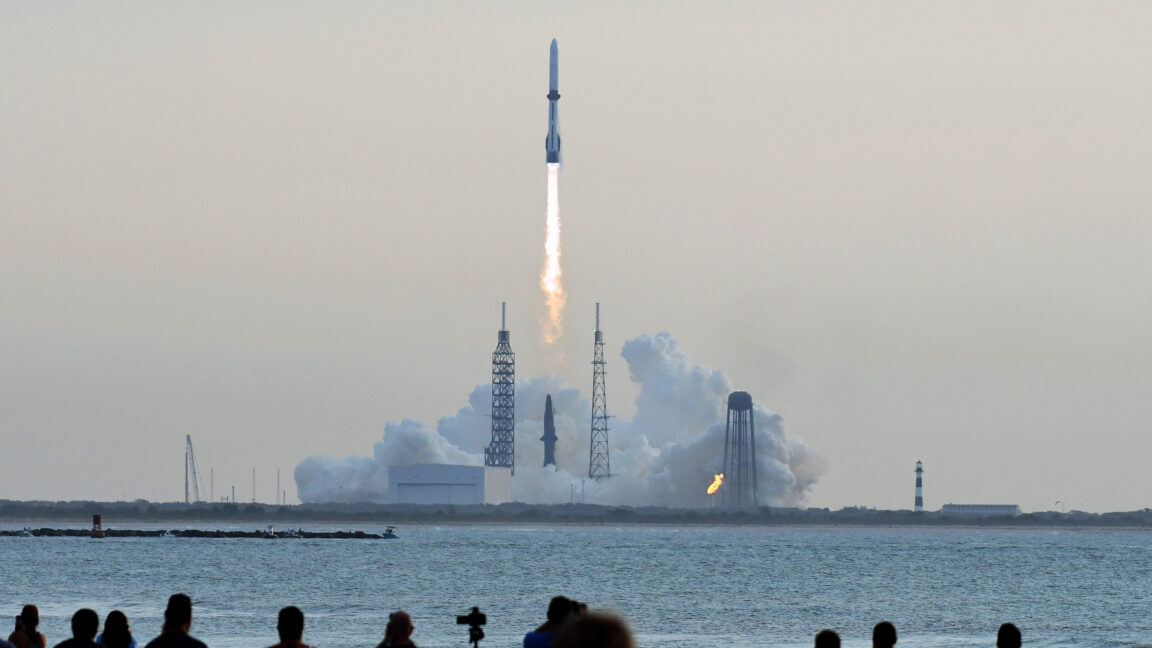
The roar of Blue Origin’s New Glenn heavy-lift launcher on Sunday marked a moment of both triumph and tribulation for Jeff Bezos’ ambitious space venture. While the company celebrated a pivotal achievement – the first successful reflight of an orbital-class booster – the mission ultimately concluded with a significant setback: the failure of the upper stage to perform as expected. This dual outcome encapsulates the high-stakes, often unpredictable nature of space exploration, where groundbreaking successes can quickly be tempered by unforeseen challenges. For a company positioned as a key player in NASA’s Artemis lunar program and vying for commercial dominance, this incident provides a stark reminder of the arduous path to reliable spaceflight.
A Milestone for Reusability, A Hurdle for Reliability
The successful return and landing of New Glenn’s first stage was undeniably a monumental engineering feat. This achievement is central to Blue Origin's long-term strategy, mirroring the reusability model pioneered by SpaceX, which has dramatically driven down launch costs and increased launch frequency. The ability to recover and reuse a booster is not merely an economic advantage; it represents a paradigm shift in how humanity accesses space. For years, the dream of routine, affordable space travel seemed distant, but reusability brings it closer to reality. Blue Origin has invested billions into New Glenn, with its immense size and payload capacity designed to compete directly with established giants and emerging players alike. The successful re-entry and landing of the first stage validates years of research, development, and testing, demonstrating the robustness of its BE-4 engines and the structural integrity of the booster itself. This puts Blue Origin firmly in the league of companies demonstrating advanced reusability capabilities.
However, the jubilation surrounding the booster's return was short-lived. Reports quickly confirmed that the upper stage failed to ignite or sustain its burn, preventing the payload from reaching its designated orbit. This type of failure is particularly concerning as it directly impacts mission success for customers. While booster reuse is vital for cost-efficiency, the ultimate goal of any launch is to deliver its cargo safely and precisely to its intended destination. An upper stage failure, especially after a successful first stage, can be more frustrating for customers who rely on mission completion. The implications extend beyond the immediate financial loss of the payload; it can damage customer confidence and potentially delay future contracts, especially in a sector where reliability is paramount.
Historical Context: The Long Road to Space
Blue Origin’s journey, much like the broader history of spaceflight, is punctuated by both spectacular successes and humbling failures. From the early days of the space race, with rockets like the Saturn V and the Soyuz, to modern marvels such as the Space Shuttle and Falcon 9, the development of launch vehicles has always been an iterative process of trial and error. Each failure, though costly, provides invaluable data that propels future improvements. For instance, the Challenger disaster in 1986 led to fundamental redesigns in the Space Shuttle program, and even SpaceX experienced numerous early failures with its Falcon 1 and Falcon 9 prototypes before achieving its current impressive reliability record.
Jeff Bezos founded Blue Origin in 2000 with the motto “Gradatim Ferociter” – “Step by Step, Ferociously.” This philosophy underscores a methodical, long-term approach to space development, often contrasting with the faster, more aggressive pace of competitors like SpaceX. While Blue Origin has achieved success with its suborbital New Shepard vehicle, carrying tourists and researchers to the edge of space, the orbital-class New Glenn represents a far more complex and ambitious undertaking. The company's slow and deliberate development process has often drawn criticism for its pace, but advocates argue it prioritizes safety and thoroughness. This recent upper stage failure, however, will undoubtedly intensify scrutiny and pressure on the company to accelerate its reliability improvements.
Implications for NASA and the Artemis Program
Blue Origin is a crucial partner in NASA's ambitious Artemis program, which aims to return humans to the Moon and establish a sustainable lunar presence. The company is developing the Blue Moon lunar lander, a vital component for transporting astronauts to the lunar surface. The reliability of New Glenn is intrinsically linked to the success of these broader lunar ambitions. While the immediate failure was with the New Glenn upper stage and not directly the lunar lander, any significant setback in Blue Origin's launch capabilities could have ripple effects across the Artemis timeline and budget. NASA relies on a robust and diverse set of commercial partners to achieve its goals, and the performance of each partner is closely monitored.
Furthermore, the competitive landscape of heavy-lift launches is intense. United Launch Alliance (ULA) with its new Vulcan Centaur, SpaceX with its Starship, and Blue Origin with New Glenn are all vying for lucrative government and commercial contracts. Each successful launch and each failure are meticulously analyzed by potential customers. Blue Origin's ability to quickly diagnose and rectify the upper stage issue will be critical in maintaining its competitive edge and reassuring stakeholders of its long-term viability as a reliable launch provider. The space industry is unforgiving, and even minor glitches can have major consequences for market perception and future revenue streams.
The Path Forward: Learning from Setbacks
This incident, while disappointing, is not uncommon in the highly complex world of rocket science. The history of spaceflight is a testament to humanity's resilience and capacity for learning from failures. Blue Origin will undoubtedly conduct a thorough investigation, analyzing telemetry data, engine performance, and structural integrity to pinpoint the exact cause of the upper stage malfunction. This process is crucial for implementing corrective measures and preventing future occurrences. Key areas of focus will likely include:
* Engine performance and ignition sequences: Ensuring the BE-3U engines on the upper stage fire reliably. * Fuel and oxidizer delivery systems: Verifying proper flow and pressure. * Software and avionics: Ruling out any command or control issues. * Structural integrity: Confirming the stage can withstand the stresses of launch.
Looking ahead, Blue Origin faces the dual challenge of maintaining the momentum gained from its first stage reusability success while rigorously addressing the upper stage failure. The company’s ability to transparently communicate its findings and implement effective solutions will be paramount. The space industry, while competitive, also fosters a spirit of shared learning, as advances by one company often benefit others. For Blue Origin, this setback is not an end but a critical learning experience on its ambitious journey to make space accessible for all. The next New Glenn launch will be under even greater scrutiny, as the company strives to demonstrate the full potential of its heavy-lift capabilities and solidify its position as a leader in the new space age.
Stay Informed
Get the world's most important stories delivered to your inbox.
No spam, unsubscribe anytime.
Comments
No comments yet. Be the first to share your thoughts!