China, Cambodia Forge Deeper Strategic Ties in Landmark '2+2' Dialogue
China and Cambodia have solidified their strategic partnership, reaching a six-point consensus during their inaugural '2+2' dialogue involving foreign and defense ministers. This historic meeting underscores a deepening alliance, focusing on enhanced cooperation in security, economy, and regional stability. The consensus signals a significant step in bilateral relations, reinforcing China's influence in Southeast Asia and Cambodia's pivotal role in its regional strategy.
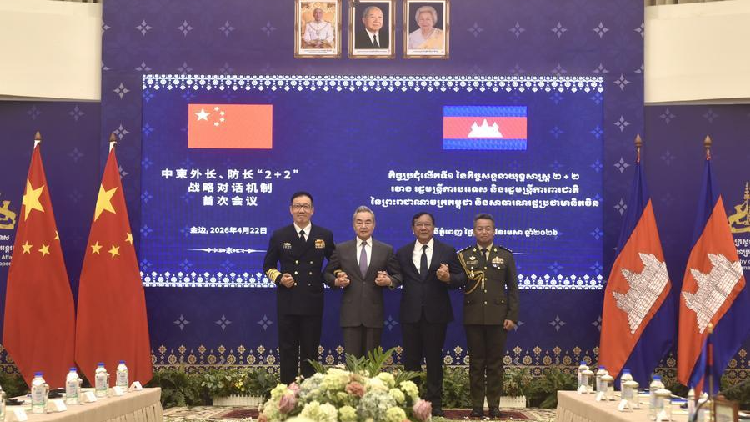
In a significant diplomatic development, China and Cambodia have elevated their long-standing relationship to a new strategic level, culminating in a six-point consensus during their inaugural '2+2' dialogue. This landmark meeting, bringing together the foreign ministers and defense ministers of both nations, marks a pivotal moment in bilateral ties, signaling a fortified alliance that has profound implications for regional geopolitics and economic cooperation. Chinese Foreign Minister Wang Yi, addressing the media after the Thursday briefing, emphasized the success of this new mechanism in fostering comprehensive collaboration.
A New Era of Bilateral Engagement
The '2+2' dialogue mechanism, a format typically reserved for nations with deeply intertwined strategic interests, signifies the robust and evolving nature of the China-Cambodia partnership. For decades, Beijing has been Phnom Penh's most steadfast ally and largest investor, a relationship rooted in historical solidarity and mutual strategic objectives. This recent meeting moves beyond traditional economic and political ties, embedding security and defense cooperation firmly within the bilateral framework. The six-point consensus, while specific details are often kept under wraps, is understood to cover areas ranging from enhanced defense cooperation and joint military exercises to increased economic aid, infrastructure development, and coordination on regional and international issues. This comprehensive approach aims to create a more resilient and mutually beneficial relationship, capable of navigating complex global challenges.
Historically, Cambodia has been a crucial partner for China in Southeast Asia, particularly within the Association of Southeast Asian Nations (ASEAN). Its unwavering support for China on various international forums, including issues related to the South China Sea, has been a cornerstone of Beijing's regional diplomacy. In return, China has provided substantial financial aid, investment, and infrastructure development, transforming Cambodia's landscape and economy. Projects like the Sihanoukville Special Economic Zone and various hydropower dams are testament to this deep economic engagement. The '2+2' dialogue serves to institutionalize and expand this multifaceted cooperation, ensuring a more coordinated and strategic approach to future endeavors.
Pillars of the Six-Point Consensus
While the full text of the six-point consensus has not been publicly detailed, expert analysis suggests several key areas of focus. One primary pillar is undoubtedly enhanced defense and security cooperation. This could include joint military training, intelligence sharing, and potentially even deeper collaboration on maritime security, given Cambodia's strategic coastline. Such cooperation would strengthen Cambodia's defense capabilities while providing China with a reliable partner in a strategically vital region. Another crucial aspect is likely economic integration and development. This would involve further Chinese investment in Cambodian infrastructure, manufacturing, and agriculture, bolstering Cambodia's economic growth and its role in China's Belt and Road Initiative (BRI). The BRI has already seen significant investment in Cambodia, and this consensus will likely accelerate such projects, creating jobs and improving connectivity.
A third pillar would be strengthening coordination on regional and international affairs. Both nations share a common stance on various global issues, advocating for multilateralism and a non-interventionist foreign policy. The consensus likely includes provisions for closer consultation and mutual support within ASEAN, the UN, and other international bodies. This alignment is particularly important for China as it seeks to counter Western influence in the region and promote its vision of a multipolar world order. Furthermore, cultural and people-to-people exchanges are often a significant component of such agreements, fostering deeper understanding and goodwill between the populations. This could involve educational programs, tourism promotion, and cultural festivals, building a stronger foundation for long-term friendship.
Finally, the consensus likely addresses capacity building and technological transfer, particularly in areas relevant to Cambodia's development goals, such as digital infrastructure, renewable energy, and public health. This aspect underscores China's commitment to assisting Cambodia's modernization efforts, providing expertise and resources that might be less accessible from other international partners. The final point could be a general affirmation of mutual respect for sovereignty and territorial integrity, a standard diplomatic phrase that reinforces the non-interference principle central to both countries' foreign policies.
Implications for Regional Dynamics
The deepening of China-Cambodia ties through this '2+2' dialogue carries significant implications for the broader Southeast Asian region and international relations. For China, Cambodia represents a reliable strategic partner that helps extend its influence and counter-balance the growing presence of other global powers, particularly the United States, in the Indo-Pacific. The ability to conduct high-level strategic dialogues with a key ASEAN member solidifies China's position as a dominant regional player. It also provides a valuable platform for Beijing to articulate its regional vision and garner support for its initiatives.
For Cambodia, the alliance with China offers substantial economic benefits, vital infrastructure development, and diplomatic backing on the international stage. This partnership allows Cambodia to pursue its development agenda with robust financial and technical support, often without the conditionalities associated with Western aid. However, this close alignment also raises concerns among some regional observers and Western nations about Cambodia's increasing dependence on China and its potential impact on ASEAN's unity and neutrality, particularly regarding contentious issues like the South China Sea disputes. The balance between national sovereignty and strategic alignment will remain a critical aspect of Cambodia's foreign policy maneuvering.
The Road Ahead: Navigating a Complex World
The first China-Cambodia '2+2' dialogue is not merely a ceremonial event; it is a strategic declaration of intent. It underscores a commitment to a comprehensive, long-term partnership that will shape the future trajectory of both nations and influence the geopolitical landscape of Southeast Asia. As global power dynamics continue to shift, the resilience and adaptability of such alliances will be tested. The consensus reached signifies a strong foundation upon which China and Cambodia intend to build, focusing on mutual development and strategic alignment.
Moving forward, observers will closely watch the implementation of the six-point consensus. The success of this enhanced partnership will depend on its ability to deliver tangible benefits for both countries while navigating regional sensitivities and international scrutiny. The dialogue mechanism itself is expected to become a regular feature, providing a consistent platform for high-level coordination and problem-solving. This robust engagement is a clear signal that China and Cambodia are committed to charting a shared future, one characterized by deeper cooperation, mutual support, and a collective vision for regional peace and prosperity in an increasingly complex world. The '2+2' framework provides a structured pathway for this journey, ensuring that their strategic bond continues to strengthen and evolve in the years to come.
Stay Informed
Get the world's most important stories delivered to your inbox.
No spam, unsubscribe anytime.
Comments
No comments yet. Be the first to share your thoughts!