China's Brain Trust: Scientists Ascend to Power in the Communist Party
A new report reveals a significant shift in China's political landscape, with the number of leading scientists and engineers in the Communist Party's top decision-making bodies doubling over the past decade. This strategic integration of scientific expertise into governance signals Beijing's intensified focus on technological self-reliance and innovation-driven development. The move reflects a deliberate effort to harness intellectual capital for national strategic goals, potentially reshaping China's future trajectory and its global standing.
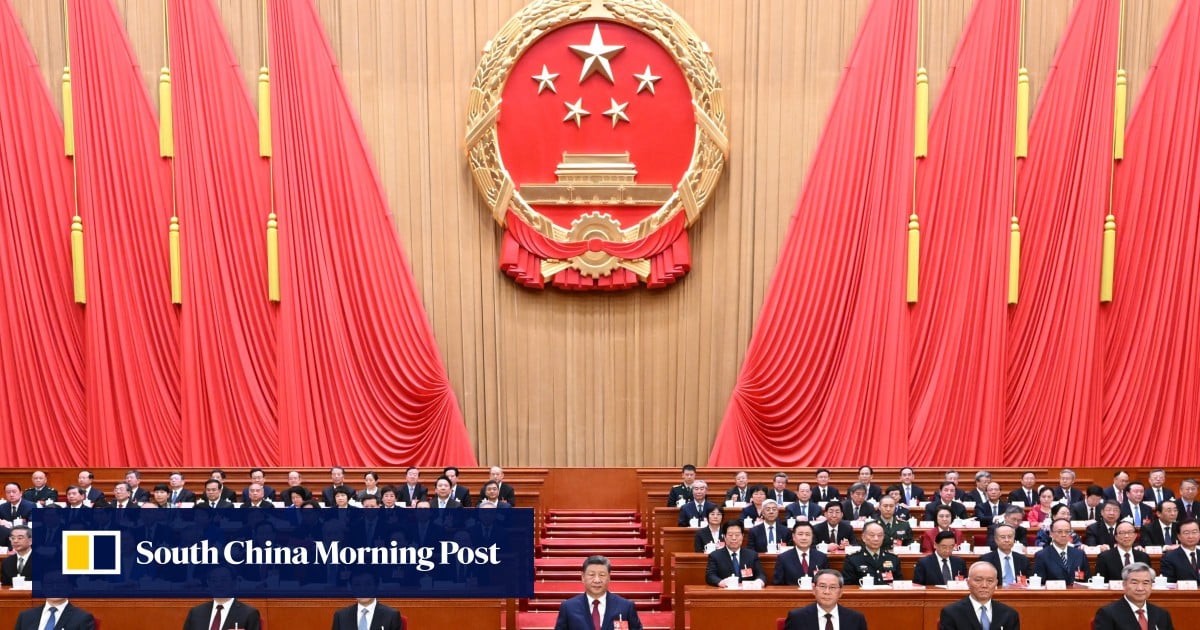
In a profound shift that underscores China's strategic pivot towards technological self-reliance and innovation, the nation's leading scientists and engineers are increasingly ascending to the highest echelons of the Communist Party. A recent report highlights a remarkable trend: the number of academicians from China’s elite scientific and engineering institutes within the Party's key decision-making bodies has doubled over the past decade. This phenomenon is not merely an incidental outcome but a deliberate, calculated strategy by Beijing to embed scientific expertise directly into the heart of its governance structure.
This integration of the 'brain trust' into political power signifies a deeper commitment to leveraging intellectual capital for national development and global competitiveness. As China navigates complex geopolitical challenges and strives for leadership in critical technologies, the elevation of these scientific minds is poised to have far-reaching implications for domestic policy, international relations, and the global scientific community.
The Strategic Imperative: Science as Statecraft
The doubling of scientific academicians in the Party's top ranks, particularly within the 18th Central Committee and subsequent iterations, is a clear indicator of China's evolving national priorities. Historically, political loyalty and administrative experience were paramount for advancement within the Communist Party. While these attributes remain crucial, there is now an undeniable emphasis on technical competence and scientific acumen. This shift is driven by several intertwined factors:
* Technological Self-Reliance: Facing increasing pressure from Western nations, particularly the United States, in areas like semiconductors, AI, and advanced manufacturing, China has prioritized indigenous innovation. Integrating top scientists into policy-making ensures that strategic decisions are informed by cutting-edge technical understanding, accelerating the nation's drive for self-sufficiency. * Economic Transformation: China is transitioning from a manufacturing-heavy economy to one driven by innovation and high-tech industries. Scientists in leadership roles can better guide policies related to R&D funding, intellectual property protection, and the development of emerging technologies, fostering a more robust innovation ecosystem. * Global Competition: In the 21st century, global power is increasingly intertwined with technological prowess. By empowering its scientific elite, China aims to solidify its position as a global leader in science and technology, influencing international standards and shaping the future of critical industries. * Addressing Grand Challenges: From climate change to public health crises, modern challenges require scientific solutions. Having experts at the helm allows for more informed and effective policy responses to these complex issues.
This strategic imperative marks a departure from earlier eras where scientific input might have been advisory. Now, it is becoming an integral part of the decision-making process itself, reflecting a recognition that science and technology are not just tools for development but instruments of state power.
A Decade of Deliberate Integration
The report's findings trace this trend back to the 18th Central Committee, where the presence of academicians began to noticeably increase. This period coincides with President Xi Jinping's ascent to power and his subsequent calls for China to become a
Stay Informed
Get the world's most important stories delivered to your inbox.
No spam, unsubscribe anytime.
Comments
No comments yet. Be the first to share your thoughts!