China's One-Child Legacy: How 'Little Emperors' are Reshaping the PLA and Xi's Strategic Calculus
China's military, the PLA, is overwhelmingly composed of only children, a direct consequence of the nation's decades-long One-Child Policy. This demographic reality presents unique challenges and opportunities for Beijing's strategic ambitions, particularly concerning potential conflicts like a Taiwan invasion. Experts debate whether this generation of 'little emperors' possesses the resilience and collective spirit required for sustained warfare, profoundly influencing how President Xi Jinping might weigh military action.
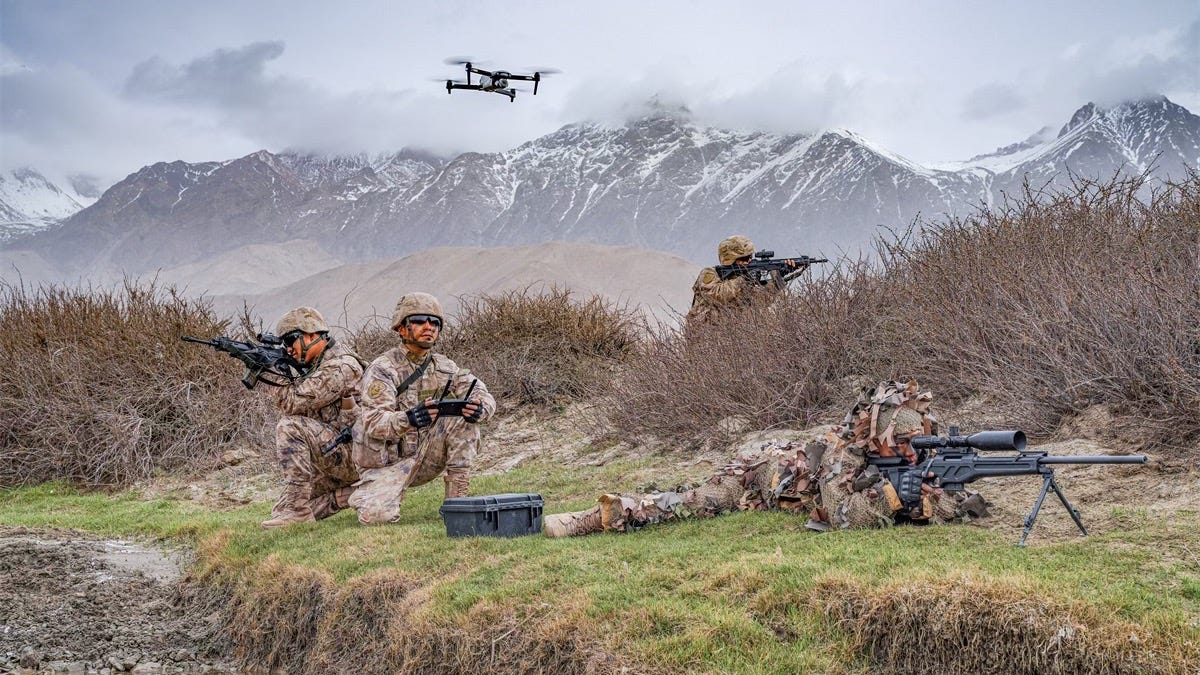
The People's Liberation Army (PLA), China's formidable military force, stands at a fascinating and potentially precarious crossroads. Decades of rapid economic growth and technological advancement have transformed it into a modern fighting machine. Yet, beneath the surface of its gleaming hardware and increasingly sophisticated doctrine lies a profound demographic reality: an estimated 70-80% of its soldiers are only children. This statistic is not merely a curiosity; it is a direct, enduring legacy of China's now-defunct One-Child Policy, and its implications are reshaping everything from military training and morale to President Xi Jinping's strategic calculus, especially concerning a potential conflict over Taiwan.
My recent research visit to Taiwan provided invaluable insights into this complex issue. Discussions with military strategists, academics, and civilian organizations consistently circled back to the unique psychological and sociological profile of the 'little emperor' generation now filling the PLA's ranks. The traditional image of the stoic, self-sacrificing Chinese soldier, forged in the crucible of revolution and collective struggle, is being tested by a generation raised in relative affluence, often as the sole focus of two parents and four grandparents. This demographic shift raises critical questions about the PLA's future effectiveness and resilience in high-intensity combat scenarios.
The 'Little Emperor' Phenomenon: A Double-Edged Sword
The One-Child Policy, implemented from 1979 to 2015, dramatically altered China's social fabric. For millions of families, their single offspring became the repository of all hopes, dreams, and resources. These 'little emperors' or 'little princesses' often experienced intense parental devotion, a lack of siblings, and, in many cases, a sheltered upbringing. When these individuals enter the military, they bring with them a distinct set of characteristics.
On one hand, these soldiers are often better educated and more accustomed to technology than previous generations. Their urban upbringing, access to information, and familiarity with digital tools can be an asset in a modern, technologically driven military. They may be quicker to adapt to advanced weaponry and complex operational systems, contributing to a more sophisticated fighting force. Furthermore, the immense family pressure to succeed could translate into a strong desire to perform well and avoid bringing shame upon their families.
However, the potential downsides are significant. Critics and analysts often point to concerns about their resilience, adaptability, and psychological fortitude under extreme duress. A soldier who is the sole heir to a family's lineage and the sole hope for their parents' and grandparents' old age carries an immense burden. The psychological impact of injury or death, not just on the individual but on an entire family unit, is profound. This raises questions about their willingness to endure prolonged hardship, make ultimate sacrifices, or even cope with the psychological trauma of combat. The absence of siblings might also affect their ability to form strong bonds of camaraderie and collective identity, traditionally crucial for military cohesion.
Training and Morale: Adapting to a New Reality
The PLA is acutely aware of these demographic shifts and has reportedly implemented various measures to address them. Training regimes are being adapted to foster greater resilience and teamwork. There's an increased focus on psychological conditioning, stress management, and team-building exercises. Military psychologists are likely playing a more prominent role in assessing recruits and providing support to active personnel. The military's propaganda machine also works tirelessly to instill a sense of national pride and duty, attempting to bridge the gap between individualistic upbringing and collective military ethos.
However, the effectiveness of these measures remains a subject of intense debate. Anecdotal evidence, though difficult to verify, sometimes surfaces regarding issues like homesickness, difficulty with discipline, or a perceived lack of 'grit' among some recruits. The PLA's internal publications and public statements often emphasize the importance of traditional values and the 'spirit of sacrifice,' suggesting an ongoing effort to reinforce these ideals within the ranks. The challenge lies in transforming deeply ingrained societal patterns through military training alone.
Strategic Implications for Xi Jinping and Taiwan
The 'one child, one soldier' phenomenon profoundly influences Beijing's strategic calculus, particularly regarding a potential invasion of Taiwan. A full-scale amphibious assault on Taiwan would be an extraordinarily complex and costly undertaking, likely resulting in significant casualties. For a military predominantly composed of only children, the political and social ramifications of such losses would be immense. Imagine tens of thousands of families losing their sole offspring; the potential for social unrest and a severe erosion of public trust in the Communist Party would be unprecedented.
This demographic reality could act as a powerful deterrent against aggressive military action. President Xi Jinping, while consistently asserting China's claim over Taiwan and refusing to rule out the use of force, must weigh the domestic stability implications of a war that could decimate a generation of only children. The human cost, amplified by the One-Child Policy, becomes a critical factor in any decision to launch a major military operation. It might incentivize Beijing to seek alternative strategies, such as prolonged economic pressure, cyber warfare, or more limited, less casualty-intensive military actions.
Conversely, some argue that the very uniqueness of this generation could be exploited. The immense pressure on these soldiers to succeed, combined with a highly nationalistic narrative, could potentially make them fiercely determined. Furthermore, the PLA's increasing reliance on automation, drones, and long-range precision strikes might be seen as a way to minimize direct human casualties, thereby mitigating the 'only child' risk. However, even in highly technological warfare, ground troops remain essential for securing objectives, and casualties are inevitable.
The Future of the PLA: A Shifting Landscape
The One-Child Policy has ended, and China is now grappling with a rapidly aging population and declining birth rates. However, its demographic legacy will continue to shape the PLA for decades to come. The current cohort of soldiers, born under the policy, will remain in service, and even future generations, though potentially having siblings, will grow up in a society profoundly influenced by the policy's effects.
The PLA will likely continue its efforts to professionalize, modernize, and adapt its human resource strategies. This includes focusing on attracting highly skilled recruits, investing in advanced training, and developing robust support systems for soldiers and their families. The emphasis on technological superiority and information warfare may also be seen as a way to compensate for potential vulnerabilities related to troop morale and resilience.
Ultimately, the 'one child, one soldier' dynamic adds a layer of complexity to China's military ambitions. It forces a re-evaluation of traditional assumptions about military strength and societal resilience. While the PLA continues to project an image of unwavering power, the internal demographic currents flow beneath, influencing every strategic decision and potentially shaping the future of regional and global security. The world watches closely to see how this unique generation of soldiers will perform if ever called upon for the ultimate sacrifice, and how their existence impacts the strategic choices of a rising global power.
Stay Informed
Get the world's most important stories delivered to your inbox.
No spam, unsubscribe anytime.
Comments
No comments yet. Be the first to share your thoughts!