Debian 14 Fortifies Digital Defenses: Reproducible Builds Tackle Supply Chain Attacks
Debian, a cornerstone of the open-source world, is set to revolutionize software supply chain security with its upcoming Debian 14 release. By mandating reproducible builds for all new packages, the distribution aims to make it virtually impossible for malicious actors to sneak tampered binaries onto users' systems. This move significantly enhances trust and transparency, marking a critical step forward in safeguarding digital infrastructure against increasingly sophisticated threats.
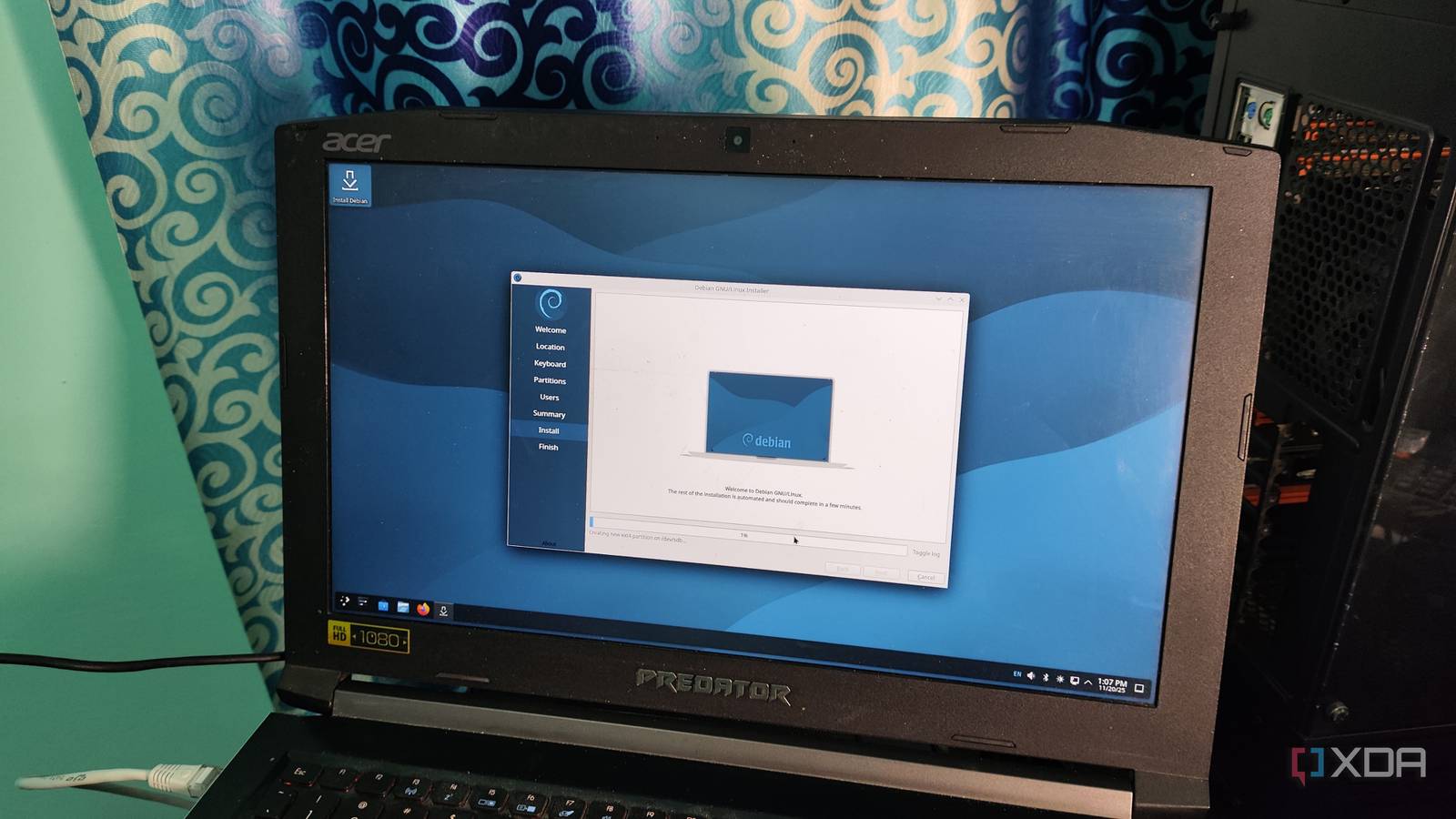
In an era where digital threats loom larger than ever, and sophisticated supply chain attacks can compromise millions of systems at once, a quiet revolution is brewing in the heart of the open-source community. Debian, one of the most venerable and widely used Linux distributions, is poised to dramatically elevate the security posture of the entire software ecosystem with its upcoming Debian 14 release. This isn't just another update; it's a fundamental shift towards mandating reproducible builds, a technical safeguard designed to make it near-impossible for malicious, tampered binaries to infiltrate users' personal computers and critical infrastructure. This bold move promises to usher in a new era of trust and transparency in software distribution, setting a gold standard for digital integrity.
The Looming Shadow of Supply Chain Attacks
The digital landscape is fraught with peril, and one of the most insidious threats is the supply chain attack. Unlike traditional malware that targets end-users directly, these attacks compromise software at an earlier stage – during development, compilation, or distribution. The infamous SolarWinds hack of 2020 served as a stark wake-up call, demonstrating how a single compromised software update could grant attackers access to thousands of government agencies and private companies worldwide. Attackers inject malicious code into legitimate software, which then propagates through trusted channels, making detection incredibly difficult. The problem is exacerbated by the sheer complexity of modern software, which often relies on hundreds, if not thousands, of third-party libraries and components. Each link in this chain represents a potential vulnerability, a backdoor for adversaries to exploit. The stakes are incredibly high, ranging from data theft and espionage to critical infrastructure disruption and financial ruin.
Historically, users have relied on cryptographic signatures from package maintainers to verify software authenticity. While essential, this only confirms that the package came from the expected source; it doesn't guarantee that the source itself wasn't compromised, or that the compiled binary accurately reflects the publicly available source code. This is where reproducible builds step in, offering a deeper, more profound layer of verification.
What are Reproducible Builds and Why Do They Matter?
At its core, a reproducible build means that given the same source code, build environment, and build instructions, anyone should be able to produce an identical binary output. If two independent parties compile the same source code and get different results, it's a red flag. This difference could indicate a benign variation (like different timestamps or build paths) or, more ominously, a malicious alteration. The goal of reproducible builds is to eliminate these benign variations, ensuring that the hash (a unique digital fingerprint) of a compiled package is always the same, regardless of who built it or where.
Imagine a scenario where a malicious actor gains access to a Debian developer's build server. Without reproducible builds, they could inject a backdoor into a commonly used utility like `sudo` or `openssh`, compile it, and distribute it as a legitimate update. Users would download and install this tampered binary, unknowingly compromising their systems. With reproducible builds, however, this attack becomes significantly harder. Multiple independent parties, including Debian's own build infrastructure and community members, would compile the same source code. If the malicious binary's hash doesn't match the hash produced by the clean builds, the discrepancy is immediately apparent, and the tampered package can be identified and rejected before it reaches users.
This process introduces a crucial layer of transparency and accountability. It shifts the trust model from relying solely on the package maintainer's integrity to a system where the community can collectively verify the authenticity of every binary. It's a powerful deterrent against state-sponsored attacks, insider threats, and sophisticated cybercriminal groups targeting the software supply chain.
Debian's Pioneering Role and the Path to Debian 14
Debian has been a long-standing advocate and pioneer in the reproducible builds movement. The project officially launched its Reproducible Builds initiative in 2013, recognizing the critical need for enhanced software verification. For over a decade, dedicated developers and volunteers have meticulously worked to identify and eliminate sources of non-reproducibility across thousands of packages. This has involved fixing build tools, standardizing build environments, and educating upstream projects on best practices. It's been an arduous, detail-oriented task, often likened to finding needles in a haystack, as even minor variations in compiler versions, operating system locales, or build timestamps can alter the final binary hash.
The progress has been remarkable. While achieving 100% reproducibility across all packages in a vast distribution like Debian is an immense undertaking, the project has made significant strides. For Debian 12 "Bookworm," over 90% of all source packages were reproducible. This extensive groundwork has paved the way for the policy change in Debian 14, where reproducible builds will become a mandatory requirement for all new packages. This means that any new software introduced into the Debian repositories must meet the reproducible build standard, and existing packages will be continually worked on to achieve full reproducibility. This isn't merely a suggestion; it's a policy that will block non-reproducible new packages from entering the official archives.
Implications for Users, Developers, and the Wider Ecosystem
For the average Debian user, this policy change translates directly into enhanced security and peace of mind. While the technical details might seem abstract, the practical benefit is concrete: a significantly reduced risk of unknowingly installing compromised software. This is particularly vital for servers, critical infrastructure, and security-conscious organizations that rely on Debian for their operations. It strengthens the trustworthiness of Debian as a foundational operating system for millions globally.
For developers, especially those contributing new packages to Debian, it means embracing best practices for reproducible builds from the outset. This might involve using specific build flags, standardizing build environments (e.g., using `sbuild` or `pbuilder`), and being mindful of non-deterministic elements in their build processes. While it adds an initial layer of complexity, the long-term benefits for security and maintainability far outweigh the effort. Furthermore, Debian's efforts serve as a powerful example and a blueprint for other Linux distributions and open-source projects to follow, potentially leading to a broader adoption of reproducible builds across the entire software industry.
This initiative also fosters greater collaboration within the open-source community. The ability for anyone to verify binaries independently encourages a more distributed and robust security model, moving away from a centralized point of trust that can be a single point of failure. It's a testament to the power of open source to self-correct and continuously improve its resilience against evolving threats.
The Road Ahead: Challenges and the Future of Software Integrity
While Debian's mandate for reproducible builds is a monumental achievement, the journey is far from over. Challenges remain, particularly with highly complex software, packages that rely on proprietary components, or those with deeply embedded non-deterministic elements. The ongoing maintenance of reproducible builds also requires continuous vigilance, as new compiler versions, build tools, and dependencies can introduce new sources of non-reproducibility. The Debian project will need sustained community effort and resources to ensure compliance and expand reproducibility to the vast existing package base.
Looking forward, Debian's leadership in this area is likely to have a ripple effect. As more distributions and projects adopt reproducible builds, the overall security posture of the internet will improve. This initiative aligns with broader industry trends towards "shift left" security, where security considerations are integrated early into the software development lifecycle, rather than being an afterthought. It also complements other security measures like secure boot, mandatory access control, and robust patching policies.
Debian 14, with its commitment to reproducible builds, isn't just delivering a new operating system; it's delivering a promise of greater digital integrity. It's a powerful statement that in the fight against cyber threats, transparency, verification, and community collaboration are our strongest weapons. As the digital world becomes increasingly interconnected and vulnerable, such foundational security enhancements are not just desirable – they are absolutely essential for the future of computing.
Stay Informed
Get the world's most important stories delivered to your inbox.
No spam, unsubscribe anytime.
Comments
No comments yet. Be the first to share your thoughts!